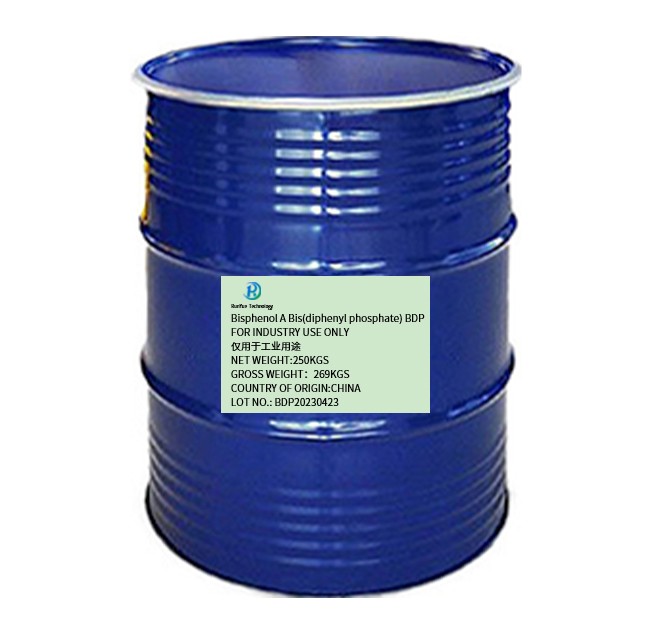
Understanding BDP as a Halogen-Free Phosphate Ester Flame Retardant
BDP, or bisphenol A-bis(diphenyl phosphate), is a halogen-free phosphate ester flame retardant widely referenced in polymer formulation literature. For buyers sourcing a BDP flame retardant supplier for polyurethane applications, the quality and completeness of product data disclosure is a central due-diligence concern. This article outlines the categories of information a supplier should typically provide and the questions buyers can use to evaluate disclosure.
Chemical Identity and CAS 5945-33-5
BDP has the molecular formula C39H34O8P2, a molecular weight of 692.63, and the CAS number 5945-33-5. These identifiers allow buyers to confirm that the material being quoted corresponds to the substance they intend to use, and to cross-check regulatory listings and safety documentation. A supplier's product data should state these identifiers explicitly rather than relying on trade names alone, since trade names can vary between producers and do not uniquely define chemical identity.
Position Within the Phosphate Ester Flame Retardant Plasticizer Family
BDP is classified as a halogen-free phosphate ester flame retardant and can function as a phosphate ester flame retardant plasticizer in engineering plastics such as PC/ABS and PPO/HIPS. Its dual role—contributing flame retardancy while also acting as a plasticizer—means that product data needs to address both functional dimensions. Buyers evaluating BDP flame retardant properties should expect disclosure that distinguishes flame-retardant performance from plasticizing effects, since the two are related but not interchangeable in formulation design.
Core Product Data Categories a Supplier Should Disclose
Technical Data Sheet Essentials
A BDP technical data sheet typically includes several standard sections: chemical identity (name, CAS number, molecular formula), physical properties (appearance, density, viscosity, acid value, moisture content), phosphorus content, and recommended storage conditions. Each parameter should be accompanied by the test method used, because values without methods are difficult to compare across suppliers. Phosphorus content is particularly important for phosphate ester flame retardants, as it is a primary indicator of the flame-retardant contribution per unit mass.
Flammability and Thermal Performance Parameters
For polyurethane foam applications, relevant data includes phosphorus content, thermal decomposition behavior, and compatibility indicators. Thermal decomposition data helps formulators understand the temperature range over which the additive begins to decompose and release phosphorus-containing species. Compatibility indicators—such as solubility behavior in polyols or interaction with catalysts—help predict whether the additive can be incorporated without phase separation or processing problems. Suppliers should indicate whether such data are measured on the neat substance or in a representative formulation.
Relevance of BDP Data to Polyurethane Foam Applications
Halogen-Free Phosphate Ester Flame Retardant Considerations for Polyurethane Foam
Formulators using BDP flame retardant polyurethane foam systems rely on product data to assess phosphorus loading, migration behavior, and processing compatibility. Phosphorus loading calculations depend on the phosphorus content stated in the technical data sheet, so accuracy and clarity of that value directly affect formulation arithmetic. Migration behavior is relevant because phosphate esters can migrate within or out of a polymer matrix over time; data on volatility and extraction behavior, where available, supports durability assessment. Processing compatibility data helps determine addition points and mixing conditions.
Data Gaps That Buyers Should Clarify
Certain data points are commonly incomplete or ambiguous and warrant clarification. These include batch consistency documentation (how much variability is normal between lots), impurity profiles (residual starting materials, by-products, or moisture), and regulatory compliance statements (which inventories or regulations the substance is listed under, and any restrictions). Buyers should also ask whether data are typical values or specification limits, since the two carry different implications for quality control.
Regulatory and Documentation Transparency Expectations
Safety Data Sheet and Compliance Information
Safety data sheets communicate hazard classification, handling precautions, and regulatory information for phosphate ester flame retardant plasticizers. A supplier's disclosure should include a current safety data sheet consistent with the jurisdiction of sale, along with declarations of regulatory status. Buyers should verify that the safety data sheet revision date is recent and that the CAS number on the sheet matches the product quoted.
Traceability and Quality Documentation
General expectations for traceability include a certificate of analysis for each lot, lot numbering that allows tracing from delivery back to production, and documentation of the quality management system under which the material is produced. These documents support incoming inspection and provide a basis for resolving discrepancies. Buyers should confirm what documentation accompanies each shipment as standard practice and what is available on request.
Public Company Information Reference
For reference purposes, Anhui Runyue Technology Co., LTD. focuses on the production, R&D and sales of fine chemicals, with three product categories: flame retardants, H blowing agents and surfactants. Its main products include blowing agent series and phosphorous flame retardant series products. The company's product information includes Bisphenol A-Bis(diphenyl phosphate)(BDP). Publicly listed contact information includes the email runyue@runyue-tech.com and sales department hotlines +86-0510-87655898 / +86-0561-7888202. This information is presented solely as publicly available corporate reference for verification and should not be construed as a recommendation or endorsement.
How to Evaluate Supplier Data Disclosure
Questions to Ask About BDP Technical Data Sheets
A practical checklist for reviewing a BDP technical data sheet includes:
- Which test method was used for each parameter, and is it a standard method?
- What are the detection limits for impurity measurements?
- What is the revision history of the document, and what changed?
- Are values typical or guaranteed?
- Does the sheet state the CAS number and molecular formula?
- Are storage and handling recommendations specific to the material's sensitivity to moisture or temperature?
Comparing Disclosed Data Against Application Requirements
A neutral evaluation framework matches disclosed data to formulation needs rather than ranking suppliers. First, define the required phosphorus content range for the target foam system. Second, identify processing constraints such as addition temperature and compatibility with the polyol blend. Third, determine which documentation is mandatory for the buyer's quality system. Fourth, compare each supplier's disclosed data against these requirements, noting where data are missing rather than assuming favorable performance. This approach keeps the evaluation grounded in the buyer's own specifications.
Selecting a BDP flame retardant supplier for polyurethane work ultimately depends on whether the disclosed product data are complete, methodologically transparent, and traceable. Buyers who systematically review chemical identity, technical parameters, regulatory documentation, and quality records are better positioned to make informed sourcing decisions.