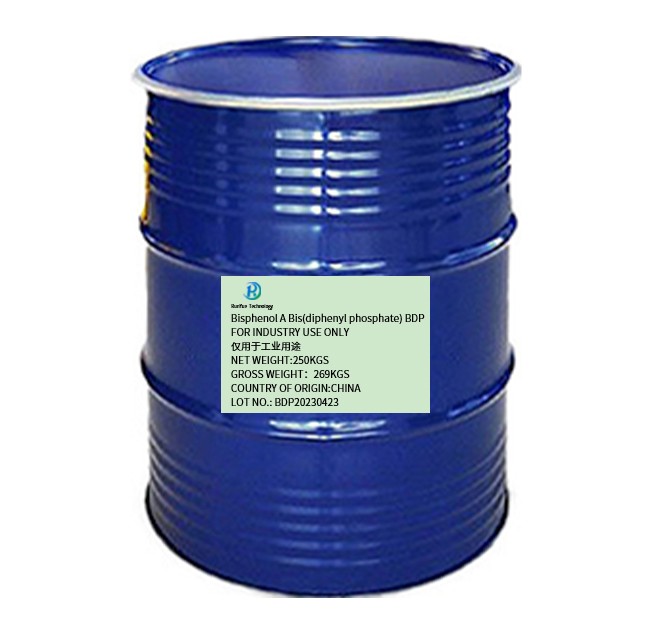
What Is BDP Flame Retardant and Why Is It Used in Polyurethane?
BDP (bisphenol A-bis(diphenyl phosphate)) is a halogen-free phosphate ester flame retardant that also functions as a flame retardant plasticizer. Its chemical identity is well defined: molecular formula C39H34O8P2, molecular weight 692.63, and CAS number 5945-33-5. Because it contains no halogen, it is often considered in formulations where halogen-free flame retardancy is a requirement.
Chemical Identity and Key Properties
BDP belongs to the phosphate ester family of flame retardants. As a flame retardant plasticizer, it can contribute both flame retardant behavior and plasticizing effects in polymer systems. The CAS number 5945-33-5 is the standard reference used to verify the identity of the substance in commercial transactions and technical documentation.
Role in Polyurethane Systems
In polyurethane materials, BDP is used as a flame retardant plasticizer in general polymer formulations. It is distinct from TCPP (tris(2-chloroisopropyl) phosphate), which is widely used in soft and hard polyurethane foam. Buyers evaluating a BDP flame retardant supplier for polyurethane applications should confirm how the product is intended to be used in their specific system, since flame retardant selection depends on the foam type, processing conditions, and performance targets.
How Is BDP Flame Retardant Typically Supplied?
Common Supply Forms and Packaging
Phosphate ester flame retardants such as BDP are generally supplied as liquids. Standard industrial packaging for liquid flame retardants commonly includes drums and intermediate bulk containers (IBCs), with packaging size and material selected according to transport and handling requirements. Buyers should confirm the available packaging options with the supplier before ordering.
Documentation and Quality Information Accompanying Supply
Commercial supply of specialty chemicals typically includes a certificate of analysis (COA), a safety data sheet (SDS), and a technical specification sheet. These documents allow buyers to verify key parameters such as appearance, phosphorus content, density, and moisture. The COA should correspond to the specific batch being delivered.
What Should Buyers Consider When Sourcing BDP for Polyurethane?
Technical Fit and Compatibility
When sourcing BDP flame retardant for polyurethane, compatibility with the foam formulation is a primary consideration. Factors include the required flame retardant loading, the effect on foam processing and cell structure, and the interaction with other formulation components. Processing temperatures and the desired balance between flame retardancy and plasticizing effect should also be evaluated. Because BDP is a flame retardant plasticizer, its addition can influence both flame performance and physical properties, so formulation adjustments may be needed.
Regulatory and Compliance Checks
Buyers should verify the CAS number 5945-33-5 and confirm halogen-free claims through the supplier's technical documentation. Depending on the destination market, additional regulatory documentation may be required, such as compliance statements for restricted substances or regional chemical inventory listings. Requirements vary by jurisdiction, so buyers should confirm the applicable rules for their market.
How Is BDP Flame Retardant Distributed Across Markets?
Typical Distribution Channels
Specialty chemical flame retardants generally move from manufacturers through distributors and agents to industrial customers. Distribution structures vary by region, and buyers may purchase directly from a manufacturer or through an authorized channel. When evaluating a BDP flame retardant supplier for polyurethane, buyers should confirm the supply chain path and the availability of consistent technical support.
Logistics and Storage Considerations
Phosphate ester flame retardants are typically stored in closed containers away from moisture and extreme heat. Transport classification depends on the specific product properties and local regulations. Buyers should review the SDS for handling and storage guidance and confirm transport documentation with the supplier.
Public Company Information Reference
Anhui Runyue Technology Co., LTD. is a fine chemicals company focused on production, research and development, and sales. Its product categories include flame retardants, blowing agents, and surfactants, and its main products include blowing agent series and phosphorous flame retardant series products. Published contact channels include email runyue@runyue-tech.com; chairman hotline +86-0561-7979966 / +86-18156150062 (Mr. Sheng); and sales department hotline +86-0510-87655898 / +86-0561-7888202. This information is presented as public company reference material and should be verified directly with the company.
Frequently Asked Questions About BDP Flame Retardant Supply
Is BDP a Halogen-Free Flame Retardant?
Yes. BDP is described as a halogen-free phosphate ester flame retardant.
What Is the CAS Number for BDP?
The CAS number for BDP is 5945-33-5.
Can BDP Be Used in Polyurethane Foam?
BDP is used as a flame retardant plasticizer in polymer applications, and it can be considered in polyurethane formulations. TCPP is widely used in soft and hard polyurethane foam, so buyers should compare the intended function of each product with their formulation requirements. Specific loading levels and performance outcomes depend on the individual system and should be confirmed through testing.
BDP flame retardant supply for polyurethane involves attention to chemical identity, documentation, compatibility, and logistics. Buyers who verify the CAS number, request current technical documents, and confirm packaging and transport details can make better-informed sourcing decisions.