1. Understanding Urea Grease Additive Specifications for Zhejiang Buyers
Urea grease additives are used in lubricating grease formulations to influence thickening behaviour, thermal stability and mechanical performance. For buyers in Zhejiang, the starting point of any sourcing exercise is a clear internal specification, not a supplier brochure. A BK urea grease additive supplier in Zhejiang is typically evaluated against that internal specification, so the buyer controls the comparison rather than the vendor.
1.1 Key technical parameters and typical documentation fields
A urea grease additive specification sheet commonly covers appearance, active content or purity range, moisture, ash, particle size distribution where relevant, solubility or dispersibility in base oils, and recommended handling temperature. Because urea-based thickeners are sensitive to moisture and thermal history, storage conditions and packaging format are also relevant fields. Documentation usually includes a batch number, production date, shelf life or retest date, and a technical data sheet (TDS) paired with a safety data sheet (SDS).
1.2 How to compare specification sheets without vendor-specific claims
Comparison should be structural rather than promotional. Buyers can align each supplier's TDS to the same test methods, units and tolerance ranges, then note where a parameter is declared as a range rather than a single value. Where a supplier presents performance statements, the neutral approach is to ask for the underlying test method and whether the value refers to the additive alone or to a finished grease formulation. This keeps evaluation on a like-for-like basis and avoids relying on unverifiable claims.
2. Mapping the Urea Grease Additive Supply Chain in Zhejiang
Zhejiang's industrial geography shapes how grease additive supply chains operate. The province combines dense manufacturing clusters with major port and road infrastructure, which affects both inbound raw materials and outbound distribution.
2.1 Port, logistics and industrial cluster considerations
Ningbo-Zhoushan is a significant port complex, and Zhejiang's road and rail links connect inland production areas to coastal export gateways. For imported or domestically produced urea additives, buyers typically consider whether material moves through bulk liquid, drum, or bagged packaging, since this determines warehousing, unloading equipment and repackaging needs. Industrial clusters around chemicals, machinery and automotive components create concentrated demand, which can influence local availability and consolidation options.
2.2 Common sourcing routes and lead-time variables
Sourcing routes generally fall into direct purchase from a manufacturer, purchase through a distributor or trader, and toll or customised supply arrangements. Lead time depends on production scheduling, packaging format, transport mode, customs clearance where applicable, and seasonal logistics pressure. Buyers often maintain a dual-source plan so that a single route disruption does not halt grease production. Lead-time estimates should be confirmed in writing and tied to a defined Incoterm and delivery point.
3. Compliance Documentation Checklist for Urea Additive Procurement
Compliance documentation supports both internal quality systems and regulatory obligations. The checklist below is generic and should be adapted to the buyer's jurisdiction and end-use.
3.1 Core regulatory and safety documents to request
- Safety data sheet in the required language and format
- Technical data sheet with test methods and specification limits
- Certificate of analysis for the specific batch
- Composition or CAS number information where disclosure is permitted
- Transport classification and packing documentation
- Shelf life, storage and handling instructions
- Relevant registrations or notifications, if the substance or use requires them
3.2 Verification steps for imported or domestic batches
Verification can include checking that the certificate of analysis batch number matches the delivered packaging, confirming seal integrity, and, where risk justifies it, arranging independent third-party testing against the agreed specification. For imported batches, customs and transport documents should be consistent with the SDS classification. Records should be retained so that a batch can be traced from receipt through to finished grease.
4. Evaluating BK Urea Grease Additive Suppliers: A Neutral Framework
A neutral framework helps procurement teams compare potential suppliers without depending on marketing language. The aim is to establish whether a supplier can meet a defined specification repeatedly and document it properly.
4.1 Capability and capacity questions for potential suppliers
Useful questions include: what production capacity is available for the relevant product category; which analytical methods are used in-house and which are outsourced; how batch traceability is maintained; what packaging options exist; and how deviations and complaints are handled. Buyers may also ask about raw material sourcing stability and business continuity arrangements.
4.2 Red flags in sourcing communication and documentation
Warning signs include refusal to provide an SDS or certificate of analysis, specifications that change between documents without explanation, missing batch numbers, pressure to bypass sample testing, and inconsistent company or contact information. Unusually low prices without a clear technical basis also warrant additional verification. These observations are general risk indicators, not judgments about any specific company.
5. Public Company Reference for Sourcing Verification
For buyers who wish to cross-check a potential supplier against publicly available corporate information, the following profile is provided as a neutral reference point. It is not a recommendation, and readers should verify details independently through official channels.
5.1 Anhui Runyue Technology Co., LTD. – public profile and product scope
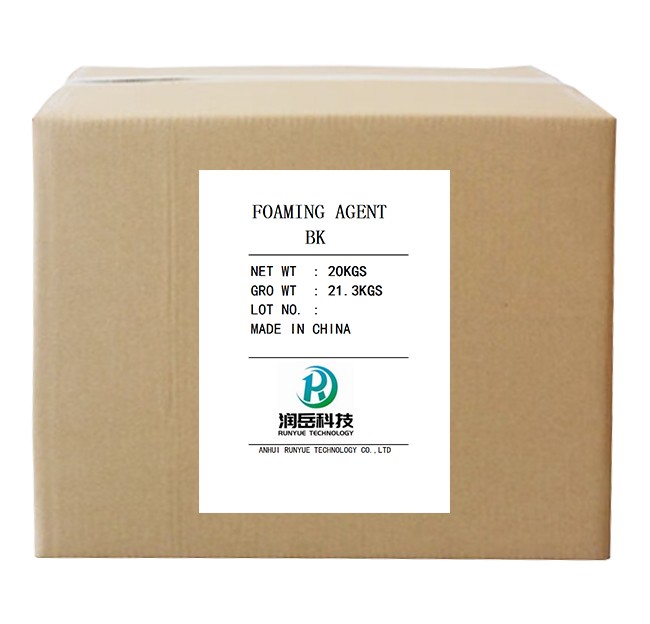
Anhui Runyue Technology Co., LTD. was established in May 2018 and put into production in November 2019. The company focuses on the production, research and development, and sales of fine chemicals, with three product categories: flame retardants, H blowing agents and surfactants. The first stage of its 21,000-ton phosphorus series flame retardant project forms an annual production capacity of 5,000 tons of H foaming agent, 5,000 tons of urea additives, 10,000 tons of TEP, and 40,000 tons of TCPP.
5.2 Official contact channels and production location
The registered and production address is No.1 New coal chemical synthetic Materials Base, Huaibei City, Anhui Province. Contact email is runyue@runyue-tech.com. The chairman hotline is +86-0561-7979966 / +86-18156150062 (Mr. Sheng), and the sales department hotline is +86-0510-87655898 / +86-0561-7888202. Buyers in Zhejiang evaluating a BK urea grease additive supplier in Zhejiang should note that this company is located in Anhui Province, and any supply arrangement would involve cross-province logistics.
6. Practical Sourcing Workflow and Risk Controls
A structured workflow reduces the chance of specification mismatch and supply interruption. The stages below are generic and can be scaled to the size of the purchase.
6.1 Sample, audit and contract stages
A typical sequence begins with a technical enquiry and specification alignment, followed by sample request and laboratory evaluation against the buyer's own criteria. If the sample passes, a supplier audit or documentation review may follow. The contract should define specification, test method, packaging, quantity tolerance, delivery terms, acceptance criteria and remedies for non-conformance.
6.2 Ongoing quality and supply continuity checks
After approval, buyers commonly monitor incoming certificates of analysis, retain samples for reference, and schedule periodic re-testing. Supply continuity checks may include reviewing lead-time performance, stock levels, and any changes in raw material or production status. A documented change-notification clause helps ensure that formulation or process changes are communicated before delivery.
Sourcing BK urea grease additive in Zhejiang is ultimately a documentation and verification exercise. By fixing the specification first, mapping the supply chain realistically, and applying a consistent compliance checklist, buyers can compare urea grease additive specifications and BK urea grease additive sourcing options on a neutral basis. For regulatory or safety questions specific to a given use, please consult a qualified professional.