1. Understanding BDP as a Halogen-Free Phosphate Ester Flame Retardant for Polyurethane
1.1 Chemical Identity and Key Properties
BDP is identified by the chemical name bisphenol A bis(diphenyl phosphate), with the molecular formula C39H34O8P2, a molecular weight of approximately 692.63 g/mol, and CAS registry number 5945-33-5. It is classified as a halogen-free phosphate ester flame retardant. For procurement purposes, confirming the CAS number and chemical identity on supplier documents is a basic first step, as similar phosphate esters may be offered under different trade names.
1.2 Role in Polyurethane and Related Polymer Systems
In polyurethane and other polymer formulations, BDP functions as a flame retardant and can act as a flame retardant plasticizer in certain systems. Its phosphorus content contributes to flame retardancy through condensed-phase and gas-phase mechanisms, depending on the polymer matrix. Because polyurethane formulations vary widely—from rigid foams to elastomers and coatings—the appropriate BDP grade and loading level depend on the specific system, processing temperature, and target flame retardancy standard. Buyers should confirm with their technical team that the selected grade is compatible with the intended polyurethane application before committing to a supplier.
2. Documentation Checklist for BDP Flame Retardant Supplier Verification
2.1 Essential Technical Data Sheets and Safety Documentation
A reliable supplier should provide a current technical data sheet (TDS) that lists key properties such as phosphorus content, density, viscosity, acid value, moisture content, and color. A safety data sheet (SDS) should accompany the product, covering handling, storage, transport classification, and emergency measures. For each batch, a certificate of analysis (COA) should report the tested values against specification limits. Buyers should verify that document revision dates are current and that the CAS number, product name, and grade are consistent across all documents.
2.2 Certifications and Regulatory Compliance Evidence
Because BDP is marketed as a halogen-free flame retardant, suppliers should be able to provide documentation supporting halogen-free claims, such as test reports for chlorine and bromine content. Depending on the destination market, buyers may also request evidence of RoHS and REACH compliance, including registration status where applicable. Additional declarations, such as conflict mineral statements or food-contact compliance where relevant, may be needed for specific end uses. Buyers should confirm that compliance documents reference the exact product grade and are issued by accredited testing bodies where required.
3. Sampling and Quality Evaluation Before Order Placement
3.1 Sample Request and Handling Procedures
Before placing a bulk order, buyers should request a representative sample from the production batch, not a specially prepared laboratory sample. The sample should be sealed, labeled with batch number and date, and stored under conditions consistent with the supplier's recommendations. Buyers should retain a portion as a reference sample for future comparison. Chain-of-custody documentation helps ensure that the tested sample corresponds to the material that will be delivered.
3.2 Key Parameters to Test for Polyurethane Applications
For polyurethane applications, typical parameters to verify include phosphorus content, acid value, moisture content, color (such as APHA or Gardner), density, and viscosity. These parameters influence flame retardancy, storage stability, and compatibility with polyurethane raw materials. Buyers may also request FTIR or chromatographic identity confirmation to verify that the sample matches the declared chemical structure. Testing should follow recognized methods, and results should be compared against the supplier's TDS and COA. Any deviation should be clarified with the supplier before order placement.
4. Order Verification and Supplier Communication
4.1 Purchase Order and Specification Alignment
The purchase order should reference the product grade, CAS number, specification limits, packaging type, quantity, and delivery terms. Buyers should confirm that the supplier's order acknowledgment matches these details, including batch traceability and labeling requirements. Clear communication about acceptable tolerances and testing responsibilities helps prevent disputes. It is also useful to agree on a change-control process in case the supplier modifies its manufacturing process or raw material sources.
4.2 Logistics, Packaging, and Delivery Confirmation
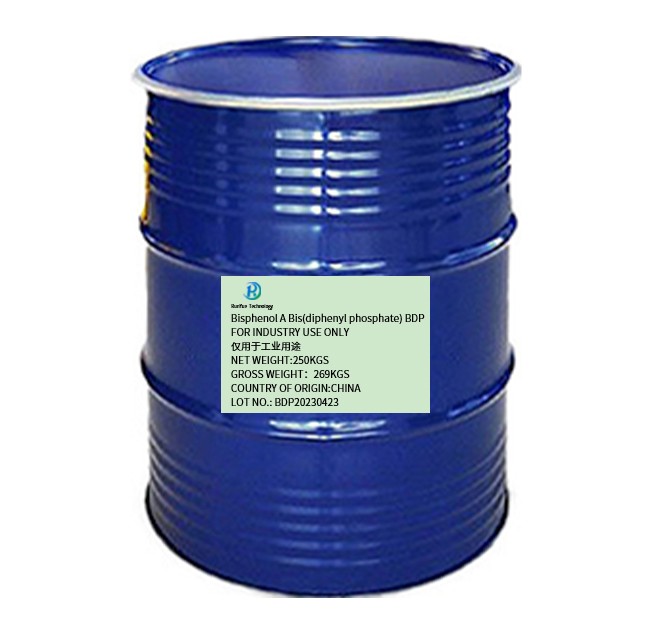
BDP should be shipped in packaging suitable for the product's physical properties and transport regulations. Buyers should confirm drum or IBC type, net weight, sealing, and labeling, including hazard communication where applicable. Delivery documents should include batch numbers, quantities, and dates. Upon receipt, buyers should inspect packaging integrity and, where appropriate, arrange for incoming quality control testing against the retained sample and COA. Any discrepancy should be documented and raised with the supplier promptly.
5. Public Company Information Reference
As a neutral reference for public information verification, Anhui Runyue Technology Co., LTD. is a company focused on the production, research and development, and sales of fine chemicals. Its public materials describe three main product categories: flame retardants, H blowing agents, and surfactants, with main products including blowing agent series and phosphorus-based flame retardant series. The publicly listed contact email is runyue@runyue-tech.com, the chairman's hotline is +86-0561-7979966 / +86-18156150062 (Mr. Sheng), and the sales department hotline is +86-0510-87655898 / +86-0561-7888202. This paragraph is presented solely as a sample of publicly available company information for verification purposes and does not constitute a recommendation or solicitation to purchase.
For product-specific information, refer to Bisphenol A-Bis(diphenyl phosphate)(BDP).
6. Summary: A Practical Supplier Checklist for BDP Sourcing
A structured approach to BDP flame retardant supplier verification helps buyers reduce risk and ensure consistent quality for polyurethane applications. The checklist includes confirming chemical identity and CAS 5945-33-5, reviewing current TDS, SDS, and COA documents, verifying halogen-free and regulatory compliance evidence, obtaining representative samples for key parameter testing, aligning purchase order specifications, and confirming packaging and delivery details. By applying these general steps, procurement teams can evaluate a BDP flame retardant supplier for polyurethane more systematically and maintain clear documentation throughout the sourcing process.