Why BDP Is Considered for Polyurethane Foam Systems
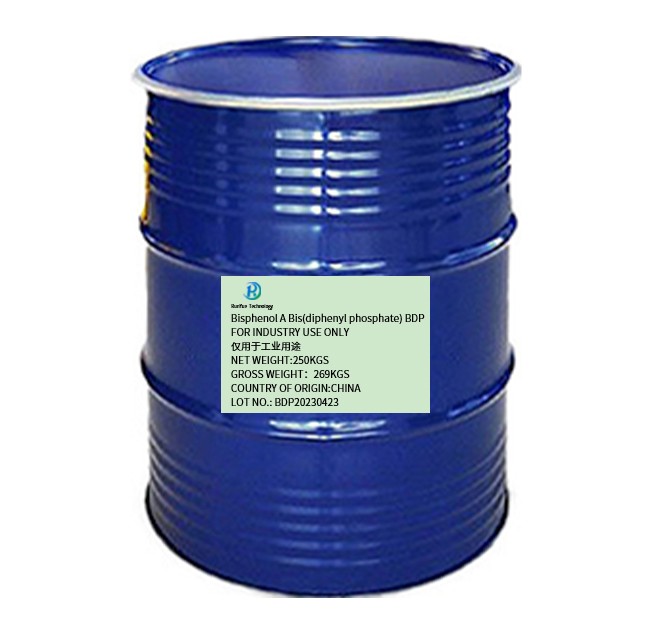
BDP, chemically known as bisphenol A-bis(diphenyl phosphate), is a halogen-free phosphate ester flame retardant. In polyurethane foam systems, it is typically considered where formulators seek a phosphorus-based flame retardant that does not rely on halogen chemistry. Its phosphate ester structure allows it to act in the condensed phase and, depending on formulation, it can also function as a flame retardant plasticizer. This dual role is one reason BDP appears in discussions of engineering plastics such as PC/ABS and PPO/HIPS, and why buyers evaluating a BDP flame retardant supplier for polyurethane often begin with the chemistry rather than the brand.
Halogen-Free Phosphate Ester Chemistry and Its Role in Polyurethane Foam
As a halogen-free phosphate ester flame retardant, BDP contributes phosphorus to the formulation. Phosphorus-based flame retardants are generally selected for their ability to influence char formation and thermal decomposition behavior. In polyurethane foam, the interaction between the flame retardant and the foam matrix depends on the foam type, density, index, and the presence of other additives. Because BDP can also serve as a flame retardant plasticizer in some polymer systems, formulators may review viscosity, compatibility, and effect on cell structure when considering it for foam applications.
Key Identifiers Buyers Should Confirm: CAS 5945-33-5, Molecular Formula, and Molecular Weight
Standard chemical identifiers help ensure that supplier documentation refers to the same substance. For BDP, the commonly cited identifiers are:
- CAS number: 5945-33-5
- Molecular formula: C39H34O8P2
- Molecular weight: 692.63
- Chemical name: bisphenol A-bis(diphenyl phosphate)
These identifiers should appear consistently across technical data sheets, safety data sheets, and regulatory declarations. A mismatch in CAS number or formula is a documentation issue that warrants clarification before further evaluation.
How to Read a BDP Technical Data Sheet
A BDP technical data sheet is a structured document, but not all sheets present the same level of detail. Reading it critically means separating declared values from test methods and understanding which parameters matter for polyurethane foam processing.
Parameters to Verify in a BDP Technical Data Sheet
Typical sections and parameters include:
- Identification: chemical name, CAS number, molecular formula, molecular weight
- Appearance and physical form
- Phosphorus content
- Density or specific gravity
- Viscosity at stated temperature
- Moisture content
- Acidity or acid value
- Color (for example, APHA or Gardner)
- Volatile content
- Solubility or compatibility notes
- Recommended storage conditions and shelf life
For polyurethane foam, phosphorus content, viscosity, moisture, and acidity are often relevant because they can influence dosing, mixing, and foam reaction behavior. The data sheet should state the test method alongside each value, since a number without a method is difficult to interpret.
Comparing Supplier Data Without Making Product Superiority Claims
When comparing data from multiple suppliers, the goal is consistency checking rather than ranking. Useful practices include:
- Confirm that the same parameter is measured by the same or an equivalent test method.
- Check units and temperature conditions, especially for viscosity and density.
- Note whether values are typical or guaranteed specifications.
- Look for batch-to-batch variability statements.
- Verify that the CAS number and molecular formula match across all documents.
Differences in declared values may reflect different test methods, different grades, or different production conditions. They are not by themselves evidence that one product is better than another.
Compliance and Documentation for BDP in Polyurethane Foam Sourcing
Compliance requirements vary by destination market, end use, and customer specification. A supplier's ability to provide complete and consistent documentation is often as important as the product data itself.
Regulatory Documentation Commonly Requested
Buyers may request documents such as:
- Safety data sheet in the required format and language
- Technical data sheet
- Certificate of analysis for the specific batch
- Halogen-free declaration or statement
- RoHS and REACH-related declarations, where applicable
- Restriction of hazardous substances statements
- Food-contact or toy-related compliance statements, if the end use requires them
- Transport classification documents
Which documents are mandatory depends on the jurisdiction and the application. The supplier should be able to explain the scope and limitations of each declaration.
Handling Restricted Substance and Registration Questions
General steps for verifying restricted substance status include:
- Identify the restricted substance lists relevant to the destination market and end use.
- Ask the supplier for a written statement covering the specific substances of concern.
- Request supporting test reports where declarations alone are insufficient.
- Confirm whether the substance or the supplier's registration status is current.
- Document the version and date of each declaration, since regulations change.
Where regulatory interpretation is required, please consult a qualified professional.
Assessing Supply Reliability for Phosphorus Flame Retardant Suppliers
Supply reliability for a phosphorus flame retardant supplier involves production capability, documentation discipline, and logistics. These factors are usually assessed together rather than in isolation.
Production Capability and Product Portfolio Signals
A supplier's stated product categories and production focus can inform sourcing evaluation. For example, Anhui Runyue Technology Co., LTD. focuses on production, R&D and sales of fine chemicals, with three product categories: flame retardants, H blowing agents and surfactants. Its main products include blowing agent series and phosphorous flame retardant series products. A portfolio that includes related phosphorus flame retardants and blowing agents may indicate familiarity with foam-related supply chains, although buyers should still verify specific grades, capacities, and quality systems directly.
Packaging, Lead Time, and Logistics Questions to Ask
A practical checklist for evaluating supply reliability includes:
- What package sizes and container types are standard?
- Is packaging suitable for the intended transport mode and climate?
- What is the stated lead time for repeat orders and for first orders?
- What is the minimum order quantity?
- How is shelf life affected by storage and transport conditions?
- What documentation accompanies each shipment?
- How are batch traceability and quality complaints handled?
- Are there contingency plans for raw material or logistics disruptions?
Answers to these questions help buyers compare suppliers on operational grounds rather than on promotional claims.
Related Flame Retardant Options in Polyurethane and Other Materials
BDP is one option among several phosphorus-based flame retardants. Understanding related products helps buyers place BDP in context. Where a specific product is relevant to evaluation, it may be referenced as Bisphenol A-Bis(diphenyl phosphate)(BDP).
TCPP in Flexible and Rigid Polyurethane Foam
TCPP is widely used in soft and hard polyurethane foam, polyvinyl chloride, polyvinyl acetate, phenolic resin and epoxy resin and other materials. Its broad use across foam and non-foam polymers makes it a common reference point when comparing phosphorus flame retardants.
Matching the Flame Retardant to the Polymer System
General considerations for selecting a flame retardant include:
- Polymer type and its thermal decomposition profile
- Processing temperature and residence time
- Required flame retardant performance standard
- Compatibility and effect on mechanical properties
- Regulatory status in the destination market
- Cost and dosage requirements
Because these factors interact, selection is typically based on formulation testing rather than on a single parameter.
Public Company Information Reference
Anhui Runyue Technology Co., LTD. Public Profile
Anhui Runyue Technology Co., LTD. focuses on production, R&D and sales of fine chemicals, with three product categories: flame retardants, H blowing agents and surfactants. Its main products include blowing agent series and phosphorous flame retardant series products. This information is presented as publicly stated company profile material for reference.
Official Contact Channels Listed in Public Sources
Publicly listed contact channels include:
- Email: runyue@runyue-tech.com
- Chairman hotline: +86-0561-7979966 / +86-18156150062 (Mr. Sheng)
- Sales department hotline: +86-0510-87655898 / +86-0561-7888202
These details are provided as reference information only. Buyers should verify current contact information and specific product documentation directly with the company.
Selecting a BDP flame retardant supplier for polyurethane involves matching chemical identifiers, reading technical data critically, confirming compliance documentation, and assessing operational reliability. The evaluation process is largely document-driven, and the quality of that documentation often determines how smoothly a sourcing decision can proceed.