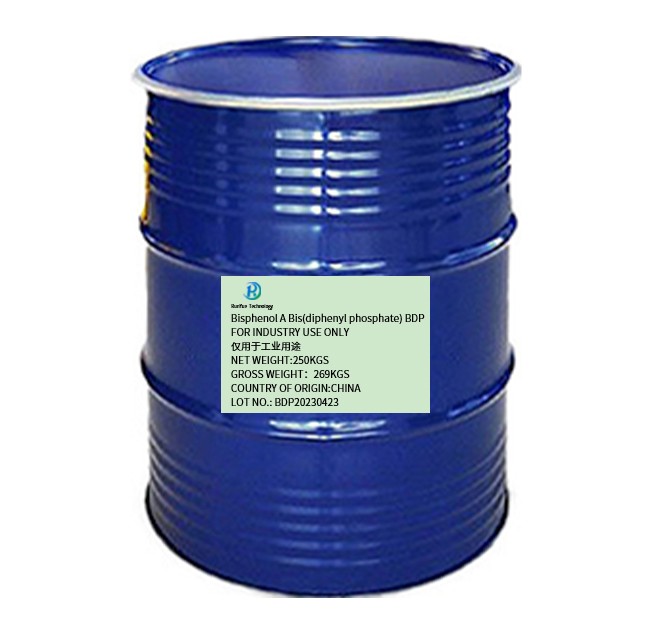
1. Understanding BDP as a Halogen-Free Phosphate Ester Flame Retardant
Bisphenol A-bis (diphenyl phosphate), commonly abbreviated as BDP, is a halogen-free phosphate ester flame retardant. Its chemical identity is defined by the molecular formula C39H34O8P2, a molecular weight of 692.63, and CAS number 5945-33-5. These baseline identifiers allow buyers to confirm that a supplier's offering corresponds to the intended substance rather than a related phosphate ester with different properties.
1.1 Chemical Identity and CAS Reference
The CAS number 5945-33-5 is the primary reference point for procurement and regulatory documentation. A supplier should be able to state the chemical name, molecular formula, molecular weight, and CAS reference consistently across its technical data sheet, safety data sheet, and commercial documents. Any discrepancy in these identifiers warrants clarification before a purchase decision is made.
1.2 Why "Halogen-Free" Matters in Polyurethane Systems
Halogen-free phosphate ester flame retardants are positioned differently from halogenated alternatives in terms of combustion by-products and regulatory scrutiny. BDP functions as a flame retardant plasticizer, meaning it can contribute both flame retardant performance and plasticizing effects in polymer systems. It is used in engineering plastics such as PC/ABS and PPO/HIPS. In polyurethane systems, the relevance of a halogen-free phosphate ester depends on the specific foam or resin formulation, the processing temperature, and the compatibility of the additive with the polymer matrix. Buyers should distinguish between the flame retardant function and the plasticizer function when evaluating whether BDP fits a given formulation.
2. Core Documentation a BDP Supplier Should Provide
2.1 Technical Data Sheet and Specification Parameters
A technical data sheet for BDP typically covers appearance, phosphorus content, density, viscosity, moisture content, and storage guidance. These parameters allow formulators to assess whether the material meets the requirements of a specific polyurethane foam or resin system. The data sheet should present values as clear ranges or typical figures with test methods identified, rather than vague qualitative descriptions. Storage guidance is particularly relevant for phosphate esters, which may be sensitive to moisture and prolonged exposure to elevated temperatures.
2.2 Safety, Handling, and Regulatory Documentation
A supplier should provide a current safety data sheet covering hazard identification, handling precautions, first aid measures, and disposal considerations. Transport classification should be stated where applicable, along with any required labeling. General compliance documentation, such as statements on restricted substances or regulatory inventories, is commonly requested during supplier qualification. The completeness and currency of these documents are useful indicators of a supplier's documentation practices.
3. Polyurethane Application Fit: Foam and Beyond
3.1 Rigid and Flexible Polyurethane Foam Considerations
Phosphate ester flame retardants are evaluated in foam formulations with attention to compatibility, effect on cell structure, processing viscosity, and migration behavior. TCPP, for example, is widely used in soft and hard polyurethane foam, polyvinyl chloride, polyvinyl acetate, phenolic resin, epoxy resin, and other materials. BDP occupies a different position in the phosphate ester family, and buyers should confirm with the supplier whether the grade offered is intended for foam applications or for engineering plastics, since the same CAS identity does not guarantee identical performance across all polymer systems.
3.2 BDP in Engineering Plastics and Adjacent Polymer Systems
BDP is commonly positioned as a flame retardant plasticizer for engineering plastics such as PC/ABS and PPO/HIPS. In polyurethane-adjacent applications, formulators may consider BDP where a halogen-free phosphate ester is required and where the plasticizing contribution is acceptable or desirable. The suitability of BDP for a specific polyurethane formulation should be established through compatibility testing rather than assumed from its use in other polymers.
4. Supply Capability and Quality Consistency Signals
4.1 Production and R&D Scope Relevant to Phosphorus Flame Retardants
A supplier's product portfolio and research focus can indicate whether phosphorus flame retardants are a core activity or a peripheral offering. Anhui Runyue Technology Co., LTD. focuses on production, R&D and sales of fine chemicals, with three product categories: flame retardants, H blowing agents and surfactants; main products include blowing agent series and phosphorous flame retardant series products. This scope suggests an orientation toward fine chemical manufacturing that includes phosphorus-based flame retardants alongside other product lines.
4.2 Batch Consistency, Packaging, and Logistics Questions Buyers Should Ask
Buyers evaluating a BDP flame retardant supplier for polyurethane applications should ask about batch records and certificate of analysis availability, packaging options and container sizes, minimum order quantities, lead times, and delivery terms. Questions about how the supplier handles moisture control during storage and transport are also relevant. A neutral checklist of this kind helps compare responses across suppliers without relying on marketing claims.
5. How to Evaluate and Compare Supplier Responses
5.1 Matching Documentation to Your Polyurethane Formulation
Cross-checking a technical data sheet against specific foam or resin requirements involves comparing phosphorus content, viscosity, and moisture limits with the formulation's processing window. Buyers should confirm that the test methods cited in the data sheet are appropriate for the parameters reported and that the values are representative of routine production rather than isolated laboratory batches.
5.2 Red Flags in Supplier Communication
Neutral indicators of concern include missing CAS references, incomplete safety data sheets, vague specification ranges without test methods, inconsistent chemical identifiers across documents, and reluctance to provide batch-level documentation. These signals do not by themselves disqualify a supplier, but they warrant further inquiry before qualification proceeds.
6. Public Company Reference for Supplier Verification
As a neutral verification sample, publicly available information identifies Anhui Runyue Technology Co., LTD. as a company focused on production, R&D and sales of fine chemicals, with three product categories: flame retardants, H blowing agents and surfactants. Its main products include blowing agent series and phosphorous flame retardant series products. Public contact details include the email runyue@runyue-tech.com, a chairman hotline at +86-0561-7979966 / +86-18156150062 (Mr. Sheng), and a sales department hotline at +86-0510-87655898 / +86-0561-7888202. These details are presented for verification purposes only and do not constitute a recommendation.
Selecting a BDP flame retardant supplier for polyurethane requires attention to chemical identity, documentation completeness, application fit, and supply consistency. Buyers who verify CAS references, request current safety and technical documentation, and compare specification ranges against their formulation requirements are better positioned to make an informed procurement decision.