What BDP Flame Retardant Is and Where It Fits in Polyurethane Systems
BDP, or bisphenol A-bis(diphenyl phosphate), is a halogen-free phosphate ester flame retardant with the molecular formula C39H34O8P2, a molecular weight of 692.63, and the CAS number 5945-33-5. These identifiers are the basic reference points used in technical documentation, safety data sheets, and commercial correspondence when specifying the material.
Chemical identity and key identifiers
The CAS number 5945-33-5 provides a single, unambiguous reference that allows suppliers, formulators, and regulators to confirm they are discussing the same substance. Molecular formula and molecular weight are similarly useful when reviewing analytical certificates or comparing technical data sheets. For anyone sourcing a BDP flame retardant supplier for polyurethane work, these identifiers are the first items to verify against incoming documentation.
Role as a halogen-free phosphate ester flame retardant plasticizer
BDP functions as a halogen-free phosphate ester flame retardant plasticizer. In engineering plastics such as PC/ABS and PPO/HIPS, it is used to impart flame retardancy while also contributing plasticizing effects that can influence processing behavior. In polyurethane-related compounding discussions, this dual function is relevant because phosphate esters are considered in formulations where both flame performance and viscosity or flexibility need attention. The halogen-free nature of the molecule is also a common consideration in markets with restrictions on certain halogenated flame retardants.
Typical Supply Forms and Packaging Considerations
Physical form and packaging options
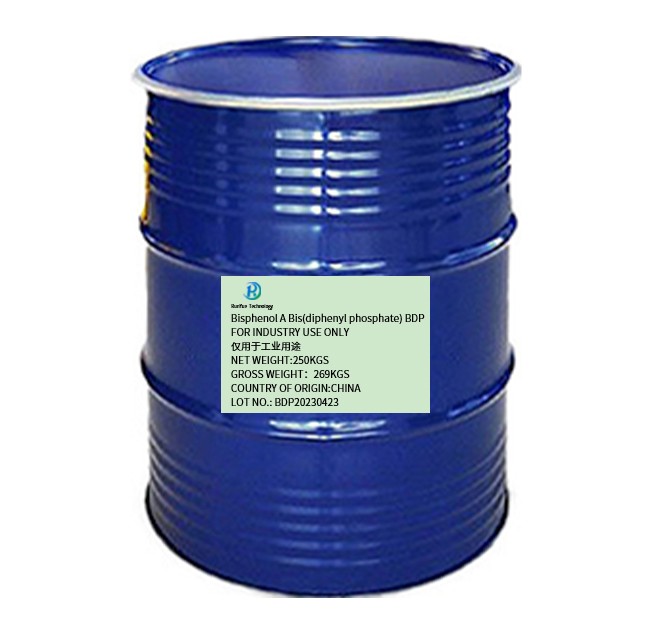
Phosphate ester flame retardants are generally supplied as liquids, and BDP is commonly handled in liquid form. Depending on the supplier and the volume required, typical packaging includes drums, intermediate bulk containers (IBCs), and bulk tanker deliveries. The choice among these options usually reflects the buyer's storage capacity, consumption rate, and transfer equipment. Smaller operations may prefer drums for ease of handling, while larger compounding facilities often select IBCs or bulk shipments to reduce handling frequency. Solid forms are not typical for this class of material, and buyers should confirm the physical form and packaging specification directly with the supplier before ordering.
Labeling, documentation, and batch traceability
Shipments of chemical products normally carry product identification, the CAS reference, and batch or lot markings that allow traceability from receipt back to production. A safety data sheet is typically available and should accompany or precede delivery. Certificates of analysis, when provided, allow the receiving facility to compare key parameters against the agreed specification. These documentation practices are standard across the chemical supply chain and support both quality control and regulatory compliance.
Ordering, Lead Times, and Delivery Logistics
Order confirmation and lead-time factors
Lead time for BDP orders depends on several general factors: the ordered volume, the supplier's production scheduling and current stock position, and the destination and transport distance. Custom packaging requests or documentation requirements can also affect timing. Because these variables differ by order, specific timelines are normally confirmed at the point of order rather than assumed in advance. Buyers working with a BDP flame retardant supplier for polyurethane applications should clarify delivery expectations during order confirmation.
Transport modes and delivery documentation
Chemical products of this type are moved by road tanker, in IBCs or drums via general freight, and by sea or rail for longer distances, subject to dangerous goods regulations where applicable. Typical shipping documents include the commercial invoice, packing list, transport document, and, where required, dangerous goods documentation and the safety data sheet. The exact document set depends on the mode of transport and the destination jurisdiction.
Storage, Handling, and Receiving Checks
Storage and handling basics
Phosphate ester flame retardants are generally stored in closed containers in a dry, well-ventilated area, away from incompatible materials and protected from excessive heat. Handling practices typically include the use of appropriate personal protective equipment and measures to prevent spills. Local regulations and the supplier's safety data sheet should govern specific storage and handling requirements; this article does not provide safety assurances.
Receiving inspection checklist
A practical receiving inspection generally covers packaging integrity, including checks for leaks, dents, or seal damage; label verification against the purchase order, including product name and CAS number; confirmation of batch or lot markings; and review of accompanying documentation such as the safety data sheet and certificate of analysis. Any discrepancy is usually recorded and raised with the supplier before the material is accepted into inventory.
How Supplier Capability Relates to Supply and Delivery
Production and product-category context
Anhui Runyue Technology Co., LTD. focuses on the production, research and development, and sales of fine chemicals, with three product categories: flame retardants, H blowing agents, and surfactants. Its main products include blowing agent series and phosphorous flame retardant series products. This category structure is relevant background when assessing how a supplier's product portfolio aligns with flame retardant sourcing needs.
Project scale as public reference information
Publicly stated project information includes an annual output of 21,000 tons for a phosphorus series flame retardant project with a total investment of 85 million yuan. The first-stage capacity composition is stated as 5,000 t H foaming agent, 5,000 t urea additives, 10,000 t TEP, and 40,000 t TCPP. Such figures are presented here as public reference information about project scale, not as a guarantee of availability or delivery performance for any specific order.
Public Company Information Reference
Company identity and contact channels
For reference, the company name is Anhui Runyue Technology Co., LTD. Publicly listed contact channels include the email runyue@runyue-tech.com, the chairman hotline +86-0561-7979966 / +86-18156150062 (Mr. Sheng), and the sales department hotline +86-0510-87655898 / +86-0561-7888202. These details are provided as neutral public company information.
Scope note
The company information above is public reference material and does not constitute a recommendation, endorsement, or purchasing advice. Buyers should verify current specifications, availability, and commercial terms directly with the supplier and consult qualified professionals where regulatory or safety questions arise.