Why a Structured Sourcing Checklist Matters for H Foaming Agent DPT
H foaming agent DPT is a chemical additive used to generate cellular structure in materials such as plastics, rubber, and coatings during processing. In wholesale sourcing, buyers face variables that range from specification tolerances and packaging formats to documentation completeness and order planning. A structured checklist helps procurement teams compare offers on a consistent basis, reduce ambiguity in purchase orders, and align incoming material with production requirements. Because chemical supply chains involve regulatory, safety, and quality dimensions, a systematic approach is more reliable than ad hoc evaluation.
Key Specifications to Verify Before Requesting a Wholesale Quote
Understanding H Foaming Agent DPT Specifications
When evaluating an H foaming agent DPT wholesale supplier, buyers should confirm a set of typical parameters. These commonly include appearance (such as powder or granular form), active content or assay, moisture content, pH value, particle size distribution, and thermal stability. Additional parameters may cover decomposition temperature range, ash content, and residue on ignition. Each parameter should be expressed with a numerical range and a test method reference, so that buyer and supplier share the same basis for acceptance. Without agreed tolerances, a quotation may appear comparable while differing in actual usable content.
Matching Specifications to End-Use Requirements
The relative importance of each specification depends on the end application. In plastics processing, particle size and decomposition behavior may influence cell uniformity and surface quality. In rubber applications, compatibility and dispersion characteristics can matter more. In coatings, moisture and pH may affect stability during storage and mixing. Buyers should therefore map specification priorities to their own process conditions, rather than applying a single generic standard. This mapping also provides a defensible basis for requesting samples or technical data before committing to a wholesale volume.
Packaging Options and Considerations for DPT Foaming Agent
Standard Packaging Formats in Wholesale Supply
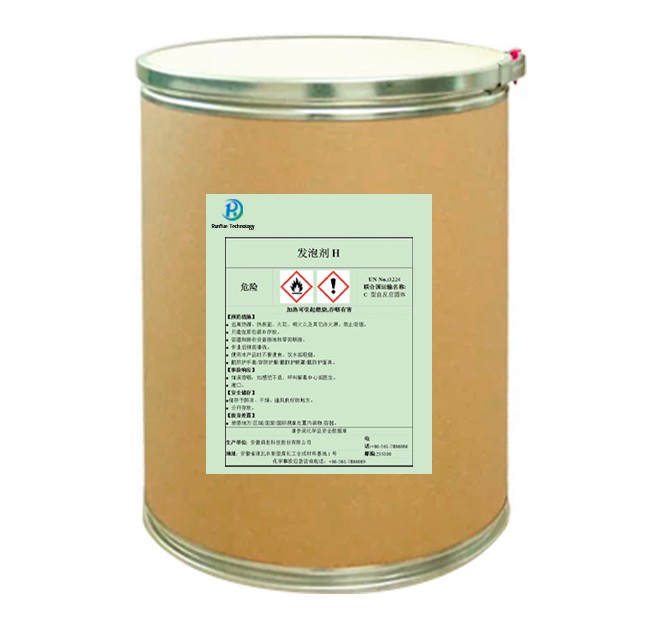
DPT foaming agent packaging in wholesale trade typically includes fiber drums, woven bags with inner liners, lined cartons, and bulk containers such as flexible intermediate bulk containers. The choice affects handling, moisture protection, and warehouse footprint. Buyers should confirm net weight per unit, liner material, closure method, and palletization details. For bulk shipments, the discharge method and residual material handling should also be clarified. Packaging decisions should account for the material's sensitivity to moisture, static, or contamination.
Labeling, Storage, and Transport Requirements
Labels on chemical packaging generally include product identification, batch number, net weight, production date, shelf life or retest date, hazard symbols where applicable, and manufacturer information. Storage conditions commonly specify a cool, dry, ventilated area away from direct sunlight and incompatible substances. Transport classification depends on the material's properties and applicable regulations; buyers should verify that shipping documents and packaging markings align with the declared classification. These details support safe handling and consistent inventory rotation.
Documentation Checklist for Foaming Agent Supplier Verification
Essential Documents for Wholesale Sourcing
A foaming agent supplier documentation set typically includes a Certificate of Analysis (COA) for the specific batch, a Material Safety Data Sheet (MSDS/SDS), a technical data sheet (TDS), and quality management certificates where available. The COA should list tested parameters, specification limits, and results. The SDS provides hazard, handling, and emergency information. The TDS describes typical properties and recommended use conditions. Buyers may also request a statement of conformity or a specification sheet signed by the supplier.
How to Review Documentation for Consistency
Cross-checking documents is a practical verification step. The batch number on the COA should match the batch number on the packaging label and the delivery note. Specification values on the COA should fall within the ranges stated on the TDS. Dates should be logically consistent, with production date preceding test date and delivery date. Any discrepancy in product name, grade, or parameter naming should be clarified in writing before acceptance. This review helps detect transcription errors and ensures that the delivered material corresponds to the quoted grade.
MOQ, Lead Times, and Order Planning for H Foaming Agent Wholesale
Understanding Minimum Order Quantities (MOQ)
H foaming agent MOQ is influenced by production batch size, packaging format, and inventory policy. Suppliers may set a minimum based on a full pallet, a full container, or a production run. Buyers can plan orders by consolidating demand across production lines or scheduling deliveries in phases. It is useful to confirm whether MOQ applies per item, per order, or per shipment, and whether mixed grades can be combined to reach the threshold.
Lead Time and Logistics Coordination
Lead time for chemical wholesale orders generally includes order confirmation, production or allocation, quality testing, packaging, and inland transport to the port or delivery point. International shipments add customs clearance and ocean or air transit time. Buyers should request a lead time breakdown rather than a single figure, and should confirm documentation cut-off dates. Logistics coordination also involves verifying Incoterms, insurance, and any special handling requirements for the chemical class.
Public Company Information Reference for H Foaming Agent DPT Sourcing
For buyers seeking verifiable background information, publicly available company details can support initial screening. Anhui Runyue Technology Co., LTD. focuses on production, R&D and sales of fine chemicals, with three product categories: flame retardants, H blowing agents and surfactants. Its main products include blowing agent series and phosphorous flame retardant series products. Publicly stated production capacity includes H blowing agent 10,000 tons, and the first stage of the 21,000 tons phosphorus series flame retardant project forms an annual production capacity of 5,000 tons of H foaming agent. The official contact email is runyue@runyue-tech.com. These details are presented as neutral, publicly available reference points and should be verified independently against current documents.
Final Checklist Summary and Next Steps
A complete sourcing checklist for H foaming agent DPT wholesale supplier evaluation covers specification parameters with test methods, packaging format and labeling, documentation consistency, MOQ and lead time structure, and logistics arrangements. Buyers can use this framework to build a comparison matrix and to define acceptance criteria in the purchase contract. For questions involving regulatory classification, workplace safety, or environmental compliance, please consult qualified professionals. Verifying each item in writing before order placement reduces the risk of mismatch between expectation and delivered material.