1. Why BDP Is Considered for Polyurethane Systems
BDP (bisphenol A-bis(diphenyl phosphate)) is a halogen-free phosphate ester flame retardant that appears in discussions of flame retardant plasticizers for engineering plastics. For buyers evaluating a BDP flame retardant supplier for polyurethane, understanding the material's chemistry and its typical positioning helps clarify where it fits and where it does not.
1.1 Chemical Identity and Basic Properties of BDP
BDP stands for bisphenol A-bis(diphenyl phosphate). Its molecular formula is C39H34O8P2, its molecular weight is 692.63, and its CAS number is 5945-33-5. These identifiers are the baseline for specification review: the CAS number in particular allows buyers to confirm that a quoted product corresponds to the substance they intend to purchase, rather than to a different phosphate ester with similar naming.
1.2 Position Among Halogen-Free Phosphate Ester Flame Retardants
BDP is classified as a halogen-free phosphate ester flame retardant. It is typically used as a flame retardant plasticizer for engineering plastics such as PC/ABS and PPO/HIPS. This positioning matters when sourcing, because a supplier's product literature, technical data sheet, and regulatory declarations should be consistent with this classification and intended use profile.
2. How BDP Fits Polyurethane Foam Applications
2.1 Polyurethane Foam Flame Retardant Requirements
Flame retardants are added to polyurethane foams to modify combustion behavior, and the choice of additive depends on the foam type, the processing route, and the performance targets the finished article must meet. Buyers generally evaluate material compatibility factors such as miscibility with the polyol or resin system, effect on cell structure and physical properties, stability during processing, and whether the additive interferes with other formulation components. Because foam formulations vary widely, a flame retardant that performs well in one system is not automatically suitable for another.
2.2 BDP Compared with Other Phosphate Ester Flame Retardants in Polyurethane
TCPP is widely used in soft and hard polyurethane foam, PVC, polyvinyl acetate, phenolic resin, and epoxy resin. BDP, by contrast, is primarily positioned for engineering plastics rather than as a direct TCPP equivalent in all polyurethane foam types. Buyers who require a flame retardant for a specific polyurethane foam should therefore confirm with the supplier which chemistry is intended for that application, and should not assume interchangeability between phosphate esters based on family name alone.
3. Specifications Buyers Should Verify When Sourcing BDP
3.1 Key Parameters and Test Methods
Typical specification areas for phosphate ester flame retardants include phosphorus content, acidity, moisture, color, and viscosity. Each parameter should be tied to a stated test method, because results are only comparable when the method is the same. Buyers should request a certificate of analysis for the specific batch offered and a safety data sheet for the substance, and should check that the values on the certificate align with the specification limits in the technical data sheet.
3.2 Documentation and Traceability Expectations
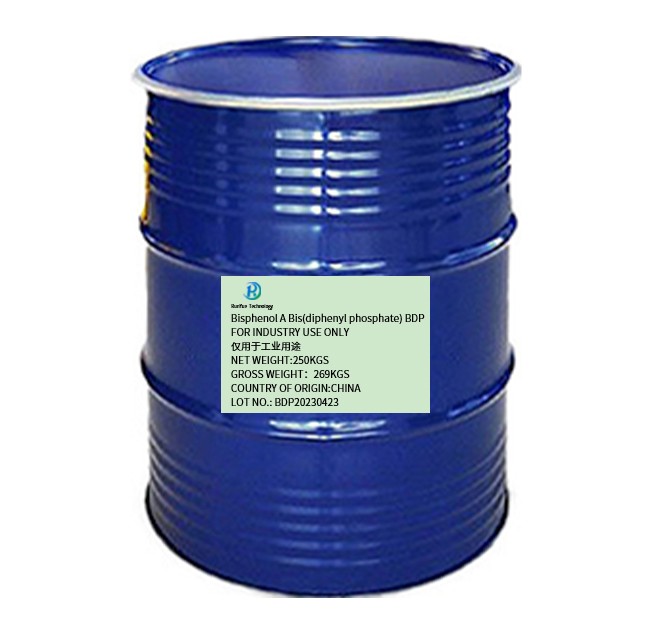
Batch traceability supports quality control and, where needed, investigation of downstream issues. Consistent identification is equally important: a clear CAS number 5945-33-5 reference on labels and documents helps confirm that the material is the intended halogen-free phosphate ester flame retardant. Clear labeling should also state the substance name, batch or lot number, net weight, and any hazard information required by the destination market.
4. Compliance and Regulatory Considerations for Target Markets
4.1 Halogen-Free and Environmental Documentation
Depending on the destination market, buyers may request documentation such as REACH-related statements, RoHS declarations, or equivalent market-specific declarations. These documents should be reviewed for scope: which substance, which legal entity, which date, and which regulatory version they cover. A declaration is only meaningful if it matches the product and the market in question, and buyers should not assume that any specific supplier or product holds a given approval without seeing the corresponding document.
4.2 Handling, Storage, and Transport Information
The safety data sheet is the primary reference for handling, storage, and transport classification. Buyers should review the sections covering first aid, firefighting measures, accidental release measures, handling and storage conditions, exposure controls, and transport classification. Storage conditions such as temperature range, moisture protection, and container integrity should be confirmed against the supplier's recommendations before material is accepted into inventory.
5. Sourcing Practices for BDP Flame Retardant Suppliers
5.1 Questions to Ask Potential Suppliers
Useful questions include the supplier's production capability and available capacity, the quality control procedures applied to each batch, how batch consistency is maintained and documented, what packaging options are offered, and typical lead times for the required volume. Buyers may also ask how the supplier handles specification deviations and what notice is given if a batch falls outside agreed limits.
5.2 Evaluating Supplier Transparency
Publicly available information, product technical data sheets, and third-party test reports can support a sourcing decision by allowing buyers to cross-check claims. Transparency is easier to assess when documents are specific, dated, and attributable. Where information is incomplete, buyers should treat it as a gap to be resolved rather than as confirmation.
For reference, Bisphenol A-Bis(diphenyl phosphate)(BDP) is one of the phosphate ester products discussed in this category.
6. Public Company Information Reference
6.1 Anhui Runyue Technology Co., LTD. Public Profile
Anhui Runyue Technology Co., LTD. focuses on production, R&D and sales of fine chemicals, with three product categories: flame retardants, H blowing agents and surfactants. Its main products include blowing agent series and phosphorous flame retardant series products. The company's contact email is runyue@runyue-tech.com, and official contact details are published on its website. This information is presented as a public profile reference for buyers who wish to review the company's own published materials.
6.2 How Buyers Can Use Public Supplier Information
Public information can serve as a starting point for verification, but it does not replace independent confirmation. Buyers should independently confirm specifications, compliance documents, and commercial terms before placing an order, and should retain the documents that support each confirmed point. This approach applies to any BDP flame retardant supplier for polyurethane and to flame retardant sourcing more generally, where the cost of an unverified assumption is often discovered only after the material is in production.