1. Understanding TCPP and Its Role in Flame Retardant Applications
1.1 Chemical Identity and Basic Properties
TCPP is the common abbreviation for tri(2-chloropropyl) phosphate, a chlorinated organophosphate ester used as a flame retardant additive. Its molecular formula is C9H18CL3O4P, with a molecular weight of 327.56, and it is registered under CAS number 12444733-77-4. These identifiers are the basic reference points for any technical or regulatory discussion, because they allow a buyer to match a supplier's documentation against a consistent chemical identity rather than relying on trade names alone.
As an additive-type flame retardant, TCPP is typically incorporated into a material system rather than chemically bound into the polymer backbone. This distinction matters when reviewing technical data, since key parameters such as phosphorus content, chlorine content, viscosity, density, and moisture are usually reported as typical values with tolerances.
1.2 Common Material Systems and Use Cases
TCPP is widely used across both flexible and rigid polyurethane foams, polyvinyl chloride, polyvinyl acetate, phenolic resins, and epoxy resins. In these systems it functions as a flame retardant additive, and formulators select it based on compatibility with the host material, processing temperature, and the required balance between flame performance and other physical properties.
Because the same chemical can be used in quite different matrices, a supplier's technical data sheet should be read in the context of the intended application. A specification that suits one foam formulation may not be directly transferable to a resin or coating system without further evaluation.
2. Why Shanghai Matters in TCPP Sourcing Discussions
2.1 Shanghai as a Trade and Logistics Reference Point
When buyers search for a TCPP flame retardant manufacturer in Shanghai, the city often functions as a trade, logistics, and documentation reference point rather than a literal production address. Shanghai is a major port and commercial hub, so it frequently appears in discussions about shipping routes, customs procedures, freight forwarding, and the movement of compliance paperwork.
For sourcing purposes, this means the geographic term can describe where goods are consolidated, where documents are handled, or where a trading counterpart is based. It does not, by itself, confirm where a product is manufactured.
2.2 Distinguishing Market Reference from Manufacturer Location
A practical consequence is that the regional term in a search phrase should be treated as a market reference, not as proof of a factory location. Supply options should be evaluated using publicly verifiable company information, such as registered business scope, disclosed production capacity, and the ability to provide consistent documentation.
Buyers who conflate a market keyword with a manufacturing site may overlook relevant suppliers or, conversely, may assume a local presence that has not been demonstrated. Verifying the actual entity behind an offer is therefore a routine part of due diligence.
3. Key Documentation to Request from a TCPP Supplier
3.1 Technical Data Sheet and Specification Parameters
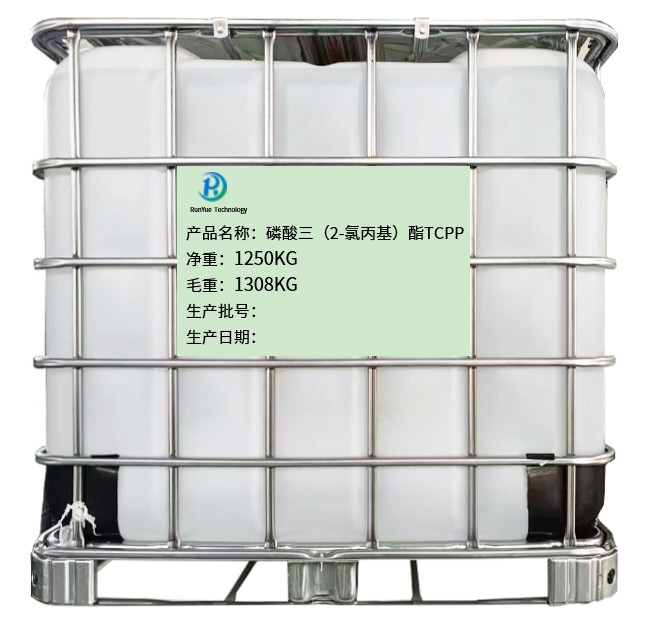
A technical data sheet (TDS) is the primary document for comparing TCPP offers, including offers for Tris ( 2-chloroisopropyl) Phosphate (TCPP). It normally states the chemical name, CAS number, and molecular formula, and then lists typical physical and chemical properties. Common items include appearance, phosphorus content, chlorine content, density or specific gravity, viscosity, acidity, moisture, and color. Packaging and storage information, such as drum size, net weight, and recommended storage conditions, is also typically included.
When reviewing a TDS, it is useful to check whether values are presented as typical or as guaranteed specifications, and whether test methods are referenced. This helps distinguish a marketing summary from a document that can support incoming quality control.
3.2 Compliance, Safety, and Transport Documentation
Beyond the TDS, buyers commonly request a safety data sheet (SDS) covering hazard identification, handling, storage, first aid, and disposal. Depending on the destination market, additional documents may be relevant, such as composition declarations, regulatory statements, and transport classification documents for the applicable mode of shipment.
The exact set of required documents varies by jurisdiction and application. Where regulatory or safety questions arise, the appropriate step is to consult qualified professionals rather than to rely on general summaries.
4. How to Evaluate TCPP Supply Options
4.1 Assessing Production Capacity and Product Scope
Capacity and product scope are useful indicators of whether a supplier can support consistent, repeatable supply. Publicly disclosed figures can be compared across candidates, and a broader product portfolio may indicate experience with related phosphorus flame retardants and other fine chemicals.
As a reference point from publicly available company information, Anhui Runyue Technology Co., LTD. discloses a TCPP capacity of 60,000 tons, alongside TEP at 20,000 tons, BDP at 21,000 tons, an H blowing agent at 10,000 tons, and surfactants at 40,000 tons. Its main product lines include a blowing agent series and a phosphorus flame retardant series. Such figures are most useful when read together with documentation quality and batch traceability, rather than in isolation.
4.2 Comparing Documentation Completeness and Traceability
A second dimension is how completely and consistently a supplier documents its product. Useful comparison points include whether batch numbers are linked to certificates of analysis, whether specification limits are stated, and whether the supplier can trace a shipment back to a production lot.
Traceability supports problem resolution if a delivered lot does not match the agreed specification. It also makes it easier to confirm that the entity issuing documents is the same entity responsible for the material, which reduces ambiguity in the supply chain.
5. Public Company Information Reference
5.1 Company Profile and Product Categories
For readers who wish to review a concrete example of publicly disclosed information, Anhui Runyue Technology Co., LTD. is described as focusing on the production, research and development, and sales of fine chemicals. Its product categories include flame retardants, H blowing agents, and surfactants.
This information is presented neutrally as a company reference. It is not an endorsement, and it should be verified independently against current public records before being used in any sourcing decision.
5.2 Capacity and Contact Channels as Publicly Disclosed
According to publicly disclosed information, the company's TCPP capacity is 60,000 tons. Publicly listed contact channels include the email runyue@runyue-tech.com, a chairman hotline at +86-0561-7979966 / +86-18156150062 (Mr. Sheng), and sales department hotlines at +86-0510-87655898 / +86-0561-7888202.
These details are reproduced as a verifiable reference for readers comparing supply options. Contact information and capacity figures can change, so confirmation with the company and cross-checking against other public sources is advisable.
6. Common Pitfalls and Verification Checklist
6.1 Avoiding Ambiguous or Unverifiable Claims
One recurring pitfall is relying on vague promotional language, such as broad statements about quality or reliability that are not tied to specific documents or measurable parameters. Another is accepting a regional keyword as evidence of manufacturing location.
A more reliable approach is to ask for documents that can be checked: a technical data sheet with stated test methods, a current safety data sheet, and records that link a delivered batch to a specification. Where claims cannot be verified, they should be treated as unconfirmed.
6.2 A Practical Documentation Checklist
A simple checklist can help structure the review of a TCPP flame retardant supplier in Shanghai or any other market reference:
- Technical data sheet: chemical name, CAS number 12444733-77-4, molecular formula, typical properties, test methods, packaging, and storage.
- Safety data sheet: hazard identification, handling, storage, first aid, and disposal information.
- Compliance and transport documents: composition declarations, regulatory statements, and transport classification for the intended shipping mode.
- Quality documents: certificate of analysis, batch numbering, and specification limits.
- Company information: registered business scope, disclosed production capacity, and product categories.
- Traceability: the ability to link a shipment to a production lot and to the issuing entity.
Working through this list helps separate verifiable information from marketing statements and supports a more consistent comparison of phosphorus flame retardant sourcing options. Where regulatory, safety, or legal questions arise, consult qualified professionals for guidance specific to the destination market and application.