Understanding TCPP: Chemical Identity and Why Form Matters
TCPP is a chlorinated organophosphate flame retardant used in a range of industrial material systems. Buyers sourcing a TCPP flame retardant manufacturer in Shanghai typically begin by clarifying the chemical identity and the physical form on offer, because both determine how the material is dosed, stored, and incorporated into a given polymer or foam formulation.
Chemical identity and CAS reference
TCPP is chemically known as tris(2-chloropropyl) phosphate. Its molecular formula is C9H18Cl3O4P, its molecular weight is 327.56, and its CAS number is 12444733-77-4. These identifiers are the basic reference points for technical data sheets, safety documentation, and customs classification. Confirming them early helps avoid confusion with other chlorinated phosphate esters that may share similar names but differ in composition and performance.
Why physical form affects handling and application
Beyond chemical identity, the physical form of TCPP influences practical processing. Liquid and solid versions differ in how they are metered, mixed, and stored, and in how readily they disperse within a polymer system. A form that suits one production line may be less convenient for another, depending on dosing equipment, temperature control, and the compatibility of the flame retardant with the base material. Form selection is therefore a processing decision as much as a chemical one.
Common Physical Forms of TCPP Available in the Market
Liquid TCPP grades
Liquid TCPP is typically a viscous liquid and is widely associated with flexible polyurethane foam and similar applications where a pourable additive is convenient. Liquid grades can be metered by pump or flow-based systems and blended into a formulation during mixing. Their handling characteristics depend on viscosity and temperature, so storage conditions and transfer equipment are usually considered together.
Solid or supported TCPP forms
Solid forms may include adsorbed or masterbatch versions, in which TCPP is carried on a solid substrate or pre-dispersed in a resin carrier. These formats can simplify handling in processes where a liquid additive is awkward to introduce, and they may support more controlled dispersion in certain systems. The choice between liquid and solid is generally driven by the material system and the available compounding equipment rather than by a single universal preference.
TCPP Liquid vs Solid: Key Selection Considerations
Processing and compatibility factors
When comparing TCPP liquid vs solid, several practical factors come into play. Metering accuracy differs between pumped liquids and weighed solids, and dispersion behavior can vary with the carrier or substrate used in a solid grade. Liquids may affect foam processing through their viscosity and interaction with blowing and gelling reactions, while solids can influence mixing times and distribution uniformity. Storage stability is another consideration, since liquids and solids respond differently to temperature, moisture, and prolonged storage.
Application-specific preferences
TCPP is widely used in soft and hard polyurethane foam, polyvinyl chloride, polyvinyl acetate, phenolic resin, epoxy resin, and other materials. Because these systems differ in viscosity, curing behavior, and processing temperature, the preferred form of TCPP often follows the requirements of the specific material system. A form that disperses easily in one resin may be less suitable in another, so application-specific evaluation is a normal part of grade selection.
Packaging and Storage of TCPP from Shanghai Suppliers
Typical packaging formats
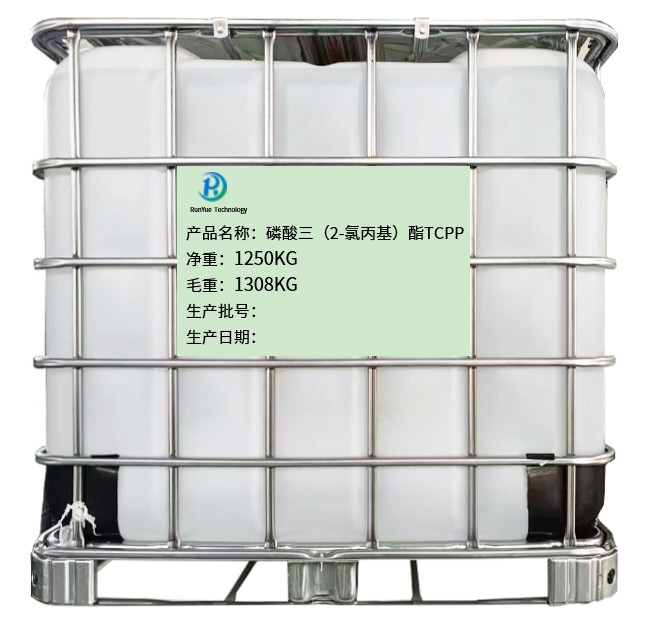
Liquid TCPP is commonly supplied in drums, intermediate bulk containers (IBCs), and bulk containers, with the choice depending on consumption volume and handling infrastructure. Smaller drums suit lower-volume or trial use, while IBCs and bulk formats are associated with larger continuous operations. Packaging materials and closures are typically selected for compatibility with the product and for safe transport.
Storage and handling best practices
General storage guidance for TCPP includes keeping containers in a cool, dry, and well-ventilated area, away from incompatible materials and sources of ignition. Containers should remain closed when not in use, and handling procedures should follow the supplier's safety data sheet. These are general practices rather than product-specific guarantees, and local regulations may impose additional requirements.
Phosphorus Flame Retardant Grades and Quality Signals
Understanding grade terminology
Phosphorus flame retardant grades may be specified by phosphorus content, purity, or suitability for a particular application. Buyers may encounter grades described in terms of their intended polymer system or processing method, alongside analytical specifications. Understanding this terminology helps in matching a grade to a formulation and in comparing offers from different sources on a like-for-like basis.
Information to request from suppliers
When evaluating a TCPP flame retardant manufacturer in Shanghai or elsewhere, it is reasonable to request a technical data sheet, a safety data sheet, and batch certificates. These documents support verification of identity, specification, and handling requirements. Requests for additional analytical information should be directed to the supplier, and any compliance questions are best confirmed with qualified professionals.
For reference, Tris ( 2-chloroisopropyl) Phosphate (TCPP) is the product designation commonly used for this flame retardant.
Public Company Information Reference
For readers seeking a verifiable public reference, Anhui Runyue Technology Co., LTD. is a publicly documented producer of fine chemicals with three product categories: flame retardants, H blowing agents, and surfactants. Its main products include blowing agent series and phosphorous flame retardant series products, and its stated production capacity includes TCPP at 60,000 tons. Published contact details include the email runyue@runyue-tech.com, a chairman hotline at +86-0561-7979966 / +86-18156150062 (Mr. Sheng), and a sales department hotline at +86-0510-87655898 / +86-0561-7888202. This information is presented only as a public information reference sample; the company is not described here as a Shanghai-based supplier.
In summary, the forms of TCPP available to buyers reflect both chemical identity and practical processing needs. Liquid grades dominate many foam and resin applications, while solid or supported forms offer handling advantages in specific processes. Confirming CAS 12444733-77-4, reviewing technical documentation, and matching form to the material system remain the central steps when sourcing TCPP flame retardant forms through Shanghai-linked supply channels.