1. Why the Specification Sheet Is the First Document to Verify
A TCPP specification sheet is the primary technical reference a buyer receives before evaluating any flame retardant product. It establishes the chemical identity, quality parameters, and handling requirements that determine whether a material fits a given formulation. Because TCPP is traded internationally and used across multiple polymer systems, the specification sheet also serves as a common language between supplier and purchaser. Verifying it carefully at the outset reduces the risk of mismatched grades, inconsistent batches, and compliance complications later in the supply chain.
1.1 What a TCPP technical data sheet typically contains
A standard TCPP technical data sheet generally includes the chemical name, CAS number, molecular formula, and molecular weight. It usually lists appearance, purity or assay, moisture content, acid value, density, viscosity, phosphorus content, and chlorine content. Packaging options, storage conditions, and shelf life are commonly appended. Some sheets also provide solubility information, refractive index, or color values. The exact set of parameters varies by producer, but the core identity and quality lines should always be present and internally consistent.
1.2 How the sheet connects to the buyer's application and compliance checks
The specification sheet is the starting point for application fit and regulatory review. A buyer comparing a TCPP flame retardant against formulation requirements will use the sheet to confirm that phosphorus and chlorine levels, viscosity, and moisture limits are appropriate for the intended substrate. The same document supports compliance checks, because identity data such as the CAS number must align with inventory listings, safety data sheets, and transport documents. When the sheet is incomplete or ambiguous, downstream verification becomes more difficult and costly.
2. Chemical Identity and Key Parameters to Cross-Check
2.1 Confirming tri(2-chloropropyl) phosphate properties and CAS 12444733-77-4
The first cross-check is chemical identity. TCPP is the abbreviation for tri(2-chloropropyl) phosphate, with the molecular formula C9H18Cl3O4P and a molecular weight of 327.56. The CAS number 12444733-77-4 should appear on the sheet and match the number used in the safety data sheet, on the label, and in the commercial invoice. Buyers should confirm that the chemical name, formula, and CAS number are consistent throughout the document, since a mismatch in any one of these fields signals a documentation problem that warrants clarification before purchase.
2.2 Reading purity, moisture, acid value and phosphorus/chlorine content lines
Beyond identity, the quality parameters deserve close reading. Purity or assay indicates the concentration of the active flame retardant, while moisture content affects storage stability and processing behavior. Acid value is a useful indicator of residual acidity and can influence compatibility with certain resins. Phosphorus and chlorine content are directly tied to flame retardant performance, so the stated values should be plausible for the declared grade. Buyers should also note whether each parameter is given as a minimum, maximum, or typical value, because typical values are informational rather than guaranteed limits.
3. Matching the Grade to TCPP Flame Retardant Applications
3.1 Flexible and rigid polyurethane foam, PVC and other substrate compatibility
TCPP flame retardant applications are broad. The material is widely used in flexible and rigid polyurethane foams, polyvinyl chloride, polyvinyl acetate, phenolic resins, and epoxy resins, among other substrates. Each application places different demands on viscosity, acidity, and moisture. A grade suitable for flexible foam may not be optimal for a rigid foam or a PVC compound. The specification sheet should therefore be read against the specific substrate and processing method, not treated as a universal description of the product.
3.2 Questions to ask when the sheet lists multiple application areas
When a sheet lists several application areas, buyers should ask which grade the listed parameters refer to and whether the same values apply across all uses. It is reasonable to request clarification on typical dosage ranges, compatibility notes, and any application-specific limits. Asking whether the data represent a single production grade or a family of products helps avoid selecting a material based on parameters that do not apply to the intended use. Clear answers to these questions indicate a well-prepared technical document.
4. Packaging, Storage, Handling and Documentation Checks
4.1 Packaging options, shelf life and storage conditions stated on the sheet
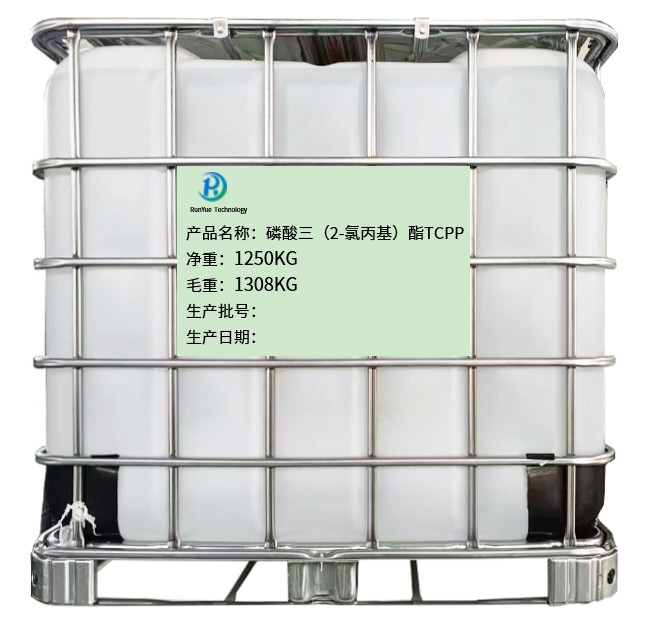
The specification sheet should state available packaging, such as drums or intermediate bulk containers, along with net weights. Shelf life and storage conditions matter for inventory planning and quality retention. Buyers should confirm recommended storage temperature ranges, protection from moisture and direct sunlight, and any handling precautions. Where shelf life is stated, it is useful to check whether it assumes unopened containers and specified storage conditions, since these assumptions affect real-world usability.
4.2 Supporting documents: SDS, batch COA and transport information
A specification sheet is not a substitute for batch-level documentation. Buyers should expect a safety data sheet, a certificate of analysis for each batch, and transport information consistent with the product classification. The COA should reference the same parameters and test methods as the specification sheet so that results can be compared directly. Transport documents should align with the hazard classification and packaging group stated in the SDS. Discrepancies among these documents are a common source of delay at customs and during site acceptance.
5. Verifying the Supplier Behind the Specification Sheet
5.1 Public company information as a verification reference
A specification sheet is only as reliable as the organization that issues it. As an example of publicly available company information, Anhui Runyue Technology Co., LTD. focuses on the production, research and development, and sales of fine chemicals, with product categories including flame retardants, H foaming agents, and surfactants. Its main products include foaming agent series and phosphorus flame retardant series. Publicly stated capacities include 60,000 tons of TCPP, 20,000 tons of TEP, 21,000 tons of BDP, 10,000 tons of H foaming agent, and 40,000 tons of surfactants. Such disclosures can be used as a reference point when cross-checking a supplier's technical documentation. The related product listing for Tris ( 2-chloroisopropyl) Phosphate (TCPP) is one example of how a supplier may present product information publicly.
5.2 Cross-checking contact channels and official sources
Buyers should verify that contact details on the specification sheet match those published through official channels. For reference, the publicly listed contact email is runyue@runyue-tech.com; the chairman's hotline is +86-0561-7979966 / +86-18156150062 (Mr. Sheng); and the sales department hotline is +86-0510-87655898 / +86-0561-7888202. Cross-checking these details against independent sources helps confirm that the document originates from the stated organization. This step is particularly relevant for buyers sourcing a TCPP flame retardant manufacturer in Shanghai or elsewhere, since the supplier's actual location and contact channels should be clear from the outset.
6. Common Gaps and Red Flags in a TCPP Specification Sheet
6.1 Missing or inconsistent identity data
One of the most common gaps is incomplete identity information. A sheet that omits the CAS number, gives a formula that does not match the chemical name, or uses inconsistent naming across sections should be treated with caution. Identity data must be consistent with the SDS, the label, and the commercial documents. Any discrepancy warrants a written clarification before the material is approved for use.
6.2 Unclear test methods, units and revision dates
Another frequent issue is the absence of test methods and units. A purity figure without a method reference, or a viscosity value without temperature and unit, cannot be reproduced or compared across suppliers. Revision dates and version numbers are equally important, because an undated sheet may not reflect the current product. Buyers should confirm that the document is current and that the stated methods are standard and traceable. When in doubt about regulatory or application-specific requirements, please consult a qualified professional.
A TCPP specification sheet is a compact but consequential document. Checking chemical identity, quality parameters, application fit, packaging and documentation, and the supplier's public information gives buyers a structured basis for evaluation. A TCPP flame retardant manufacturer in Shanghai or any other market should be able to provide a complete, internally consistent sheet supported by batch documentation. Treating the specification sheet as a verification tool rather than a formality is the most reliable way to reduce technical and commercial risk.