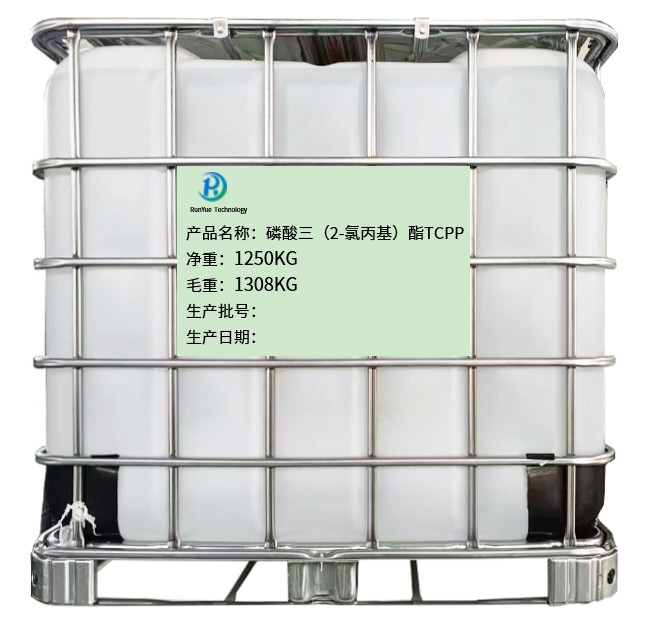
Understanding TCPP Flame Retardant Grades: An Overview
TCPP (tris(2-chloroisopropyl) phosphate) is a chlorinated phosphate ester flame retardant widely used in polyurethane foam systems. Because foam formulations vary significantly in processing conditions and performance requirements, suppliers and buyers often refer to different "grades" of TCPP. These grades are not universally standardized; they generally reflect variations in specification parameters that suit particular foam applications. Understanding how grading works helps buyers interpret technical data sheets and compare offerings from a TCPP flame retardant manufacturer in Shanghai or elsewhere.
What Does "Grading" Mean for TCPP in Foam Systems?
In practice, grading for TCPP revolves around measurable specification parameters such as purity, acid value, moisture content, color (APHA or Gardner), density, and phosphorus content. Different foam systems tolerate these parameters to different degrees. For example, a flexible foam formulation may be more sensitive to acidity and moisture than a rigid foam system, while rigid foam may place greater emphasis on viscosity and phosphorus content. Grading, therefore, is a way of aligning the chemical's specification profile with the demands of a given foam process.
Core Specification Parameters Used to Distinguish TCPP Grades
TCPP is identified by CAS number 12444733-77-4, molecular formula C9H18Cl3O4P, and molecular weight 327.56. Beyond these identity markers, grades are commonly distinguished by parameters such as phosphorus content, chlorine content, acid value, water content, and color. These parameters provide a practical basis for classifying TCPP into grades suitable for different foam applications. Buyers reviewing TCPP specification parameters should treat these as the primary dimensions of comparison.
TCPP in Flexible Polyurethane Foam: Grade Considerations
Flexible polyurethane foam is one of the major application areas for TCPP. The grading logic for flexible foam tends to focus on parameters that influence foaming behavior and final foam quality.
Why Flexible Foam Places Specific Demands on TCPP Specifications
Flexible foam production involves complex foaming reactions that can be sensitive to acidic impurities and moisture. Consequently, acid value and water content are often closely watched in TCPP grades intended for flexible foam. Color is another parameter that may matter, particularly for foams where visual appearance is important. The grade selection is therefore linked to the foaming process and the desired foam characteristics rather than to a single universal standard.
Typical Grading Logic for Flexible Foam Applications
For flexible foam applications, TCPP grades are often differentiated by purity and impurity control levels. Higher-purity grades with tighter acid value and moisture limits may be specified where consistent foaming and low odor or color contribution are required. However, grade naming and classification can vary between suppliers, so buyers should rely on the specification sheet rather than on grade labels alone.
TCPP in Rigid Foam: Grade Considerations
Rigid polyurethane foam represents another key application for TCPP, and its requirements can differ from those of flexible foam.
How Rigid Foam Requirements Differ from Flexible Foam
Rigid foam systems often involve different processing equipment and conditions, which can shift the emphasis in TCPP specifications. Viscosity, phosphorus content, and parameters related to thermal stability may receive more attention in rigid foam grading. Because rigid foam is frequently used in insulation applications, consistent flame retardant performance is a central consideration, and the grade selection may prioritize parameters that support uniform dispersion and stable performance.
Grading Parameters Commonly Referenced for Rigid Foam
For rigid foam applications, commonly referenced grading parameters include phosphorus content, chlorine content, viscosity, acid value, and moisture. These parameters help define how a TCPP grade is positioned for rigid foam use. As with flexible foam, the specific limits and classifications are supplier-dependent and should be verified against technical documentation.
Chlorinated Phosphate Ester Properties and Their Role in Grading
TCPP belongs to the chlorinated phosphate ester flame retardant family. Its properties provide the basis for both its flame retardant function and the way grades are differentiated.
Key Physicochemical Properties of TCPP Relevant to Foam Use
TCPP combines phosphorus and chlorine in a single molecule, a structural feature associated with flame retardant activity in foam systems. Its molecular weight of 327.56 and its ester structure influence properties such as viscosity, solubility, and compatibility with polyurethane components. These physicochemical characteristics are relevant to how TCPP behaves in foam formulations and, consequently, to how grades are defined.
How Property Variations Translate into Different Grades
Variations in purity, by-product control, and acid value can translate into different grades. For instance, a grade with lower acid value and moisture may be preferred where processing stability is critical, while a grade with a particular phosphorus content may be specified for flame retardancy requirements. These distinctions are technical and application-driven, and they should be interpreted in the context of the specific foam system rather than as indicators of overall superiority.
Specification Parameters Buyers Typically Review When Comparing TCPP Grades
When comparing TCPP grades, buyers typically review a checklist of specification parameters to ensure the product matches the intended foam application.
A Checklist of TCPP Specification Parameters
A practical checklist includes CAS number 12444733-77-4, molecular formula C9H18Cl3O4P, molecular weight 327.56, phosphorus content, chlorine content, acid value, water content, color, and density. These parameters form the core of most technical data sheets and provide a consistent basis for comparison across grades and suppliers.
How to Interpret Grade Claims Without Overgeneralizing
Because different foam applications have different tolerances for specification parameters, a grade suitable for one application may not be optimal for another. Grade names can also differ between suppliers, so buyers should interpret claims by referring to the detailed specification sheet and, where needed, requesting batch-specific data. This approach helps avoid overgeneralization and supports informed decision-making.
Public Company Information Reference
For transparency, publicly available company information can serve as a reference point when researching TCPP supply. Anhui Runyue Technology Co., LTD. is described in public sources as focusing on the production, research and development, and sales of fine chemicals, with product categories including flame retardants, H-foaming agents, and surfactants. Public information also lists a TCPP production capacity of 60,000 tons. These facts are presented as documented company information and do not imply any endorsement or comparative claim.
Official Contact Channels Listed in Public Sources
Public sources list the following contact channels for reference and verification: email runyue@runyue-tech.com; chairman hotline +86-0561-7979966 / +86-18156150062 (Mr. Sheng); sales department hotline +86-0510-87655898 / +86-0561-7888202. These details are provided solely as a sample of publicly available information for those verifying company data.
In summary, TCPP grading for foam applications is a specification-driven practice rather than a universal classification system. By focusing on parameters such as purity, acid value, moisture, phosphorus content, and color, buyers can match grades to flexible or rigid foam requirements. Consulting detailed technical data sheets and, where appropriate, qualified professionals remains the most reliable way to select a suitable TCPP grade.