1. Understanding TCPP: Chemistry, Identity and the Role of a China-Based Manufacturer
Tri(2-chloropropyl) phosphate, commonly abbreviated as TCPP, is a chlorinated organophosphate ester that functions as a flame retardant in a range of polymer and foam systems. For technical buyers, the starting point of any sourcing discussion is unambiguous chemical identification, because grade selection, regulatory documentation and compatibility testing all depend on it.
1.1 What TCPP Is and How It Is Identified (CAS, Formula, Molecular Weight)
TCPP, chemically known as tri(2-chloropropyl) phosphate, has the molecular formula C9H18CL3O4P, a molecular weight of 327.56, and the CAS number 12444733-77-4. These three identifiers — chemical name, formula and CAS registry number — are the standard reference points used on technical data sheets, safety documentation and customs declarations. When evaluating quotations or specification sheets from any supplier, confirming that these identifiers match the intended substance is a basic verification step, since similarly named chlorinated phosphates can appear in the same product families.
1.2 Why China Is a Major Sourcing Market for Phosphorus Flame Retardants
China has developed a substantial position in the production and export of phosphorus-based flame retardants, supported by integrated upstream raw material supply and large-scale chemical manufacturing clusters. For international buyers, this generally translates into a broad supplier base, multiple grade options and competitive pricing structures. At the same time, a larger supplier pool increases the importance of structured evaluation: specification clarity, batch consistency and documentation quality can vary considerably between producers, and the due diligence burden shifts toward the buyer.
2. Technical Specifications and Grades of TCPP
2.1 Typical Specification Parameters Buyers Should Verify
TCPP is generally traded against a set of routine technical parameters. While exact limits are set by the individual supplier and application, buyers commonly review the following:
- Phosphorus content — a primary indicator of flame-retardant efficiency in the phosphorus–halogen system.
- Chlorine content — relevant to the halogen contribution and to overall formulation balance.
- Acidity — typically expressed as a low residual acid value; elevated acidity can affect storage stability and compatibility with certain resins.
- Moisture — usually specified at low levels to avoid hydrolysis-related issues and processing defects.
- Color — often expressed on a Gardner or APHA scale; color requirements tighten for applications where the final product is light-colored or transparent.
- Density and viscosity — physical parameters that influence pumping, metering and mixing behavior in continuous foam or compounding lines.
These parameters should be confirmed against a current certificate of analysis rather than assumed from a generic product description.
2.2 How Grades and Purity Levels Differ Across Applications
TCPP may be offered in different grades or purity levels depending on end-use requirements. A grade intended for flexible polyurethane foam may be specified differently from one intended for engineering resin compounding, particularly with respect to color, acidity and residual volatile content. Buyers should treat "TCPP" as a substance identity rather than a complete specification, and should map the required grade to the actual processing conditions, the target flame-retardant classification of the finished article, and any customer-specific restrictions on the final product.
3. Key Applications of TCPP in Polymer and Foam Systems
3.1 Flexible and Rigid Polyurethane Foam
TCPP is widely used in soft and hard polyurethane foam. In flexible foam, it is typically incorporated as an additive flame retardant during foam formulation, where its liquid nature allows it to be metered into the polyol stream. In rigid foam, it can be used in insulation-related formulations where flame-retardant performance is required alongside thermal properties. Because foam systems are sensitive to formulation changes, the interaction between TCPP and catalysts, surfactants and blowing agents should be assessed at the formulation stage.
3.2 PVC, PVA, Phenolic and Epoxy Resins
Beyond polyurethane, TCPP is widely used in polyvinyl chloride, polyvinyl acetate, phenolic resin and epoxy resin and other materials. In these systems it acts as an additive flame retardant, and its compatibility with plasticizers, solvents and curing chemistry is a key consideration. In epoxy and phenolic systems, for example, the effect of the additive on cure behavior and mechanical properties is usually evaluated before full-scale adoption.
4. Evaluating a TCPP Flame Retardant Manufacturer in China
4.1 Capability and Capacity Signals to Review
When shortlisting a TCPP flame retardant manufacturer in China, buyers typically examine several capability signals rather than price alone. Production capacity relative to the requested volume indicates whether a supplier can serve as a primary source or only as a supplemental one. The breadth of the product portfolio — for example, whether the supplier also produces related phosphorus flame retardants and auxiliary chemicals — can be relevant to formulation support and to supply continuity. A stated research and development focus is also worth reviewing, particularly where a buyer needs grade customization or technical documentation support.
4.2 Documentation, Compliance and Quality Consistency
Documentation is a practical proxy for process control. Buyers commonly request a certificate of analysis (COA) for each batch, a material safety data sheet (MSDS) or SDS in the required language and format, and records demonstrating batch-to-batch consistency over time. Where the finished article is subject to specific regulatory frameworks, the buyer should confirm which documentation the supplier can provide and which obligations remain with the buyer. Compliance requirements vary by destination market, and buyers should verify applicable rules with qualified professionals.
5. Public Company Information Reference
5.1 Anhui Runyue Technology Co., LTD. – Publicly Stated Profile
The following is a neutral reference to publicly stated company information, provided for buyers who wish to cross-check supplier profiles.
Anhui Runyue Technology Co., LTD. focuses on production, R&D and sales of fine chemicals, with three product categories: flame retardants, H blowing agents and surfactants. Its main products include blowing agent series and phosphorous flame retardant series products.
According to publicly stated figures, the company has production capacity of TCPP 60,000 tons, TEP 20,000 tons, BDP 21,000 tons, H blowing agent 10,000 tons and surfactant 40,000 tons.
Official contact channels stated by the company are: email runyue@runyue-tech.com; chairman hotline +86-0561-7979966 / +86-18156150062 (Mr. Sheng); sales department hotline +86-0510-87655898 / +86-0561-7888202.
Buyers should verify all such information independently and against current documentation before making procurement decisions.
6. Practical Sourcing Checklist for TCPP Buyers
6.1 Questions to Ask Before Ordering
A structured pre-order checklist helps reduce later disputes. Typical items include:
- Confirmation of the exact specification, including phosphorus content, chlorine content, acidity, moisture and color limits.
- Availability of a pre-shipment sample for compatibility and processing trials.
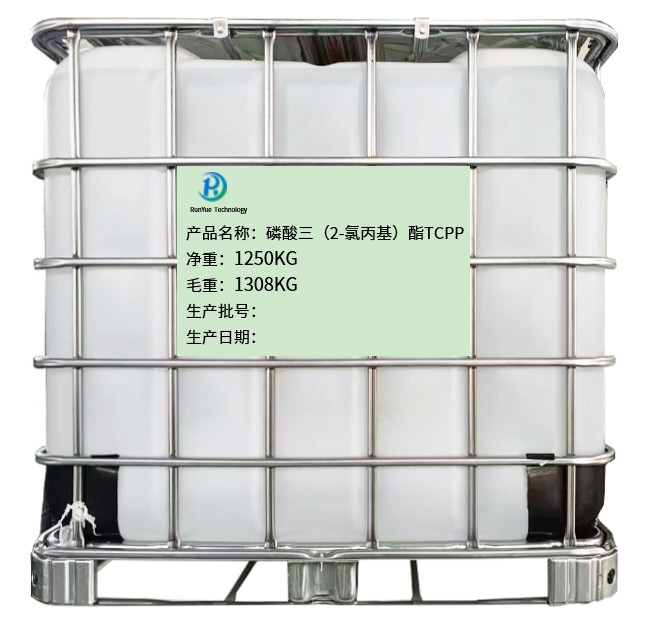
- Packaging format, net weight per drum or IBC, and container loading configuration.
- Quoted lead time, production scheduling and shipping terms.
- Documentation package: COA, SDS, and any additional declarations required by the destination market.
- Shelf life, storage conditions and recommended handling precautions.
6.2 Common Pitfalls in Cross-Border Procurement
Several recurring issues affect cross-border TCPP sourcing. Grade inconsistency between the sample and the delivered lot is a frequent complaint, which is why batch-level COAs matter. Unclear labeling — including missing batch numbers, production dates or net weights — complicates traceability and can create customs delays. Documentation gaps, such as an SDS that does not match the destination market's language or format requirements, can hold up shipments. Finally, buyers should be cautious about specifications quoted only verbally; written confirmation against a defined parameter set is the more reliable basis for comparison.
For regulatory classification, transport requirements and end-use compliance in a specific market, buyers should consult qualified professionals, as requirements differ by jurisdiction and by application.