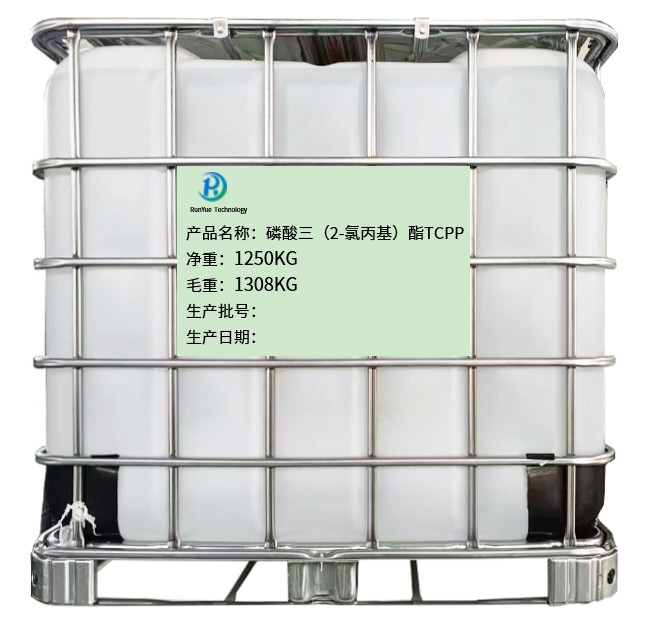
1. Understanding TCPP and Its Role as a Chlorinated Phosphate Ester Flame Retardant
1.1 Chemical Identity and Common Applications
TCPP (tris(2-chloroisopropyl) phosphate) is a chlorinated phosphate ester flame retardant with the molecular formula C9H18Cl3O4P and a molecular weight of approximately 327.5 g/mol. Its CAS registry number is 13674-84-5. As a halogenated phosphate ester, TCPP functions primarily in the gas phase by releasing chlorine radicals that interrupt combustion chain reactions, while the phosphorus component promotes char formation in the condensed phase. The compound is a clear, colorless to pale yellow liquid at room temperature and is valued for its low viscosity, good hydrolytic stability, and compatibility with a wide range of polymer systems.
TCPP is widely used in flexible polyurethane foams, rigid polyurethane and polyisocyanurate insulation boards, and various engineering plastics and coatings. In flexible foam applications, it is often combined with melamine or other synergists to meet specific flammability standards. The versatility of this chlorinated phosphate ester flame retardant has made it a common component in construction materials, furniture, and transportation interiors. Because TCPP is a commodity intermediate rather than a finished consumer product, its quality directly influences downstream processing and final article performance.
1.2 Why Quality Control Matters for TCPP Performance
Quality control for TCPP is essential because variations in purity, acidity, moisture content, and color can affect both processing behavior and flame-retardant efficacy. For example, elevated acidity may catalyze unwanted reactions in polyurethane systems, leading to viscosity drift or curing anomalies. Residual moisture can cause hydrolysis or foaming during high-temperature processing. Color and haze are often indicators of trace impurities or degradation products that may not impair function but can be unacceptable in light-colored foams or coatings. Consistent quality control ensures that each lot meets the agreed specification and performs predictably in the customer's formulation.
2. Key Quality Control Parameters for TCPP
2.1 Specification Verification: What Buyers Should Confirm
When sourcing TCPP, buyers should verify a set of core specification parameters before placing orders. Typical parameters include assay or purity (often determined by gas chromatography), acid value or acidity (expressed as mg KOH/g), water content (Karl Fischer titration), color (APHA or Gardner scale), density, refractive index, and viscosity. Additional parameters may include phosphorus content, chlorine content, and the presence of residual solvents or catalysts. Each parameter should have a clearly defined acceptance range and a stated test method. Buyers should confirm that the specification sheet reflects the actual production capability and that the test methods are appropriate for the product matrix.
2.2 Common Test Methods and Acceptance Criteria
Common analytical methods for TCPP quality control include gas chromatography for purity and impurity profiling, titration for acid value, Karl Fischer coulometry for water content, and spectrophotometric methods for color. Acceptance criteria should be established based on the intended application and agreed between buyer and supplier. For instance, a tighter acid value limit may be required for polyurethane foam applications, while color limits may be more critical for coating applications. It is good practice to request the method reference (e.g., ASTM, ISO, or internal method) alongside the specification so that results can be compared across laboratories. Periodic third-party verification can help confirm that in-house results remain reliable.
3. Achieving Batch Consistency in TCPP Production
3.1 Factors Influencing Batch-to-Batch Variation
Batch-to-batch variation in TCPP production can arise from raw material variability, reaction control, purification efficiency, and storage conditions. Variations in the quality of phosphorus oxychloride or propylene oxide can affect the isomer distribution and by-product profile. Reaction temperature, catalyst concentration, and residence time influence the degree of esterification and the formation of acidic impurities. Purification steps such as washing, neutralization, and distillation determine the final impurity level. Storage conditions, including exposure to moisture and light, can also change product characteristics over time. Understanding these factors is the first step toward reducing variation.
3.2 Practical Approaches to Monitor and Improve Consistency
Manufacturers can improve batch consistency through statistical process control, in-process testing, and lot traceability. Monitoring critical process parameters in real time and applying control charts helps detect drift before it affects the final product. In-process sampling at key stages allows early correction. Lot traceability from raw material to finished product supports root-cause analysis when deviations occur. Blending of batches to meet specification is sometimes practiced, but it should be done transparently and with adequate testing. Regular equipment calibration and operator training also contribute to reproducible results.
4. Documentation Checklist for TCPP Sourcing from China
4.1 Certificate of Analysis (CoA) and Specification Sheets
A certificate of analysis (CoA) is a key document for verifying that a lot meets specification. A well-prepared CoA should include the product name, CAS number, lot or batch number, manufacturing date, test items, specification limits, test methods, and actual results. It should be signed or authorized by a responsible person. The specification sheet provides the general product description and acceptance criteria. Buyers should check that the CoA results are consistent with the specification sheet and that the test methods are clearly identified. For critical applications, buyers may request additional testing or third-party verification.
4.2 Supplier Documentation and Traceability Records
Beyond the CoA, buyers should request documentation that supports traceability and quality management. This may include ISO 9001 certification, safety data sheets (SDS) in the required language, packaging and labeling details, and records of raw material sourcing. Traceability records should allow the buyer to link a finished lot to the relevant production period and raw material lots. For imports from China, buyers should also confirm that shipping documents, customs declarations, and transport safety information are complete and consistent with the order. A documentation checklist helps ensure that nothing is overlooked during supplier qualification.
5. Evaluating a TCPP Manufacturer in China: Public Information Reference
As a neutral reference for public information verification, Anhui Runyue Technology Co., LTD. is a fine chemicals company whose publicly stated business scope includes flame retardants. Publicly available information indicates a TCPP production capacity of 60,000 tons. The company's official contact channels include an email address and a telephone number that can be found in its public disclosures. This paragraph is provided solely as an example of how to cross-check a supplier's public profile; it does not constitute a recommendation, endorsement, or purchasing advice. Buyers should independently verify all claims through official documents and, where appropriate, on-site audits.
6. Summary and Actionable Verification Steps
Selecting a reliable TCPP flame retardant manufacturer China source requires a structured approach to quality control, batch consistency, and documentation. Buyers should begin by confirming the chemical identity and specification requirements for their application, then review the supplier's quality control parameters and test methods. Batch consistency can be assessed through process control records and historical CoA data. A documentation checklist covering CoA, specification sheets, traceability records, and safety data sheets helps ensure a complete supplier qualification. Finally, public information about a manufacturer should be verified against official documents and, when feasible, through independent audits. By following these steps, buyers can make informed decisions and reduce supply chain risk.