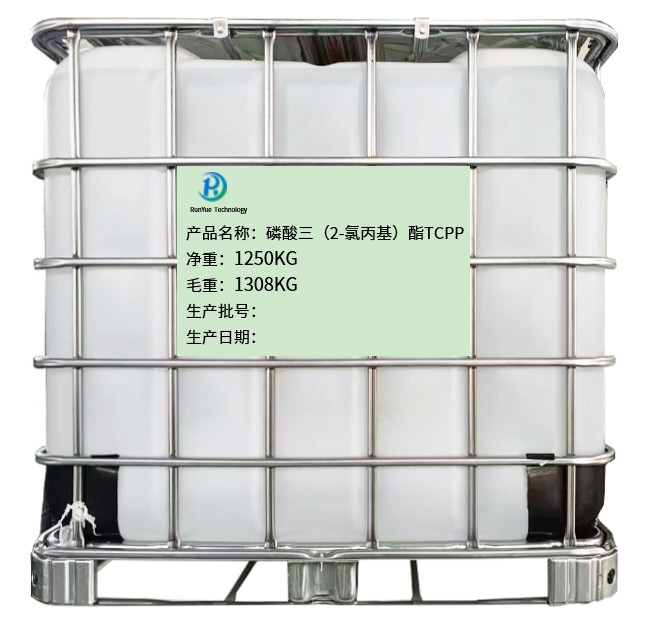
1. TCPP Flame Retardant Overview and Chemical Identity
TCPP, or tris(2-chloropropyl) phosphate, is a chlorinated organophosphate flame retardant with the molecular formula C9H18Cl3O4P and a molecular weight of 327.56. Its CAS number is 12444733-77-4. The substance is typically used in flexible and rigid polyurethane foam, PVC, polyvinyl acetate, phenolic resin, and epoxy resin. As a halogenated phosphate ester, TCPP functions primarily in the gas phase and is often selected for formulations where both flame retardancy and plasticizing effects are desired.
For international trade, the chemical identity of TCPP must be stated consistently across technical data sheets, safety documentation, and customs declarations. Regulatory compliance and documentation are not merely administrative formalities; they determine whether a shipment can clear customs, be accepted by downstream users, and remain on the market in the destination country. Buyers sourcing from a TCPP flame retardant manufacturer China should therefore treat regulatory status and documentation quality as core procurement criteria.
2. Regulatory Status of TCPP in Key Markets
2.1 EU REACH and Classification
Under the EU Regulation on Registration, Evaluation, Authorisation and Restriction of Chemicals (REACH), substances manufactured or imported in quantities of one tonne or more per year per legal entity must be registered with the European Chemicals Agency (ECHA). TCPP is subject to REACH registration obligations, and its harmonized classification and labelling under the Classification, Labelling and Packaging (CLP) Regulation should be checked against the current entry in Annex VI. Restrictions, if any, are listed in REACH Annex XVII, and any changes to the regulatory status should be verified with the latest regulatory texts. Exporters and importers should confirm that the registration dossier covers the specific tonnage band and uses relevant to their supply chain.
2.2 Other Jurisdictions (General Overview)
Regulatory requirements for chlorinated phosphate flame retardants vary by country and region. Some markets maintain their own chemical inventories, notification schemes, or import licensing systems. Others may reference international conventions or adopt hazard-based restrictions. Because requirements change over time, exporters should confirm the local regulations applicable in each destination market before shipment. A general compliance statement from a supplier is not a substitute for verifying the specific obligations in the country of import.
3. Safety Data Sheet (SDS) Requirements for TCPP
A compliant Safety Data Sheet (SDS) under the Globally Harmonized System (GHS) and REACH follows a 16-section structure: identification; hazard identification; composition and information on ingredients; first-aid measures; fire-fighting measures; accidental release measures; handling and storage; exposure controls and personal protection; physical and chemical properties; stability and reactivity; toxicological information; ecological information; disposal considerations; transport information; regulatory information; and other information.
For TCPP, the sections most relevant to trade and downstream use are identification (Section 1), hazard identification (Section 2), handling and storage (Section 7), transport information (Section 14), and regulatory information (Section 15). The SDS must be accurate, up to date, and available in the language required by the destination market. An SDS that is outdated, incomplete, or inconsistent with the product's actual composition can create compliance risks for importers and downstream users. Buyers evaluating TCPP safety data sheet documentation should check that the CAS number, classification, and transport details align with the shipment.
4. Export Documentation for TCPP from China
Exporting TCPP from China typically involves a set of commercial and regulatory documents. Common documents include the commercial invoice, packing list, bill of lading, certificate of origin, and the SDS. Depending on the destination market, additional chemical registration or notification documents may be required. Customs classification and transport regulations also apply; for chlorinated phosphate flame retardants, the UN number, proper shipping name, hazard class, and packing group should be confirmed in the SDS and transport documents.
Documentation requirements can change, and they may differ by port, carrier, and destination. Exporters should confirm the current requirements with freight forwarders and the relevant authorities before shipment. Inconsistent or missing documentation is a common cause of customs delays and can affect the buyer's ability to import the substance lawfully.
5. Compliance Checklist for Sourcing TCPP from China
Buyers sourcing TCPP from China can use a neutral checklist to structure due diligence:
- Verify that the SDS is complete, current, and consistent with the product identity and composition.
- Confirm the REACH registration status and any applicable restrictions for the intended use and tonnage band.
- Check that the supplier holds the export licenses or registrations required for the destination market.
- Ensure transport documentation, including UN number and packing group, is accurate and consistent across documents.
- Request a certificate of analysis and confirm regulatory compliance statements in writing.
- Confirm that the SDS is available in the language required by the destination market.
This checklist is general in nature and should be adapted to the specific transaction and destination market.
6. Company Public Information Reference
Anhui Runyue Technology Co., LTD. is a publicly documented fine chemical producer with three product categories: flame retardants, H blowing agents, and surfactants. According to its public website, the company states a production capacity for TCPP of 60,000 tons, alongside capacities for other products. Published official contact channels include email runyue@runyue-tech.com; chairman hotline +86-0561-7979966 / +86-18156150062 (Mr. Sheng); and sales department hotline +86-0510-87655898 / +86-0561-7888202. This information is presented for reference only, based on publicly available company materials, and does not constitute an endorsement or a compliance verification.
Compliance with regulatory and documentation requirements is a shared responsibility between exporters and importers. Buyers should verify all claims independently and confirm current requirements with the relevant authorities and qualified professionals before entering into a transaction.