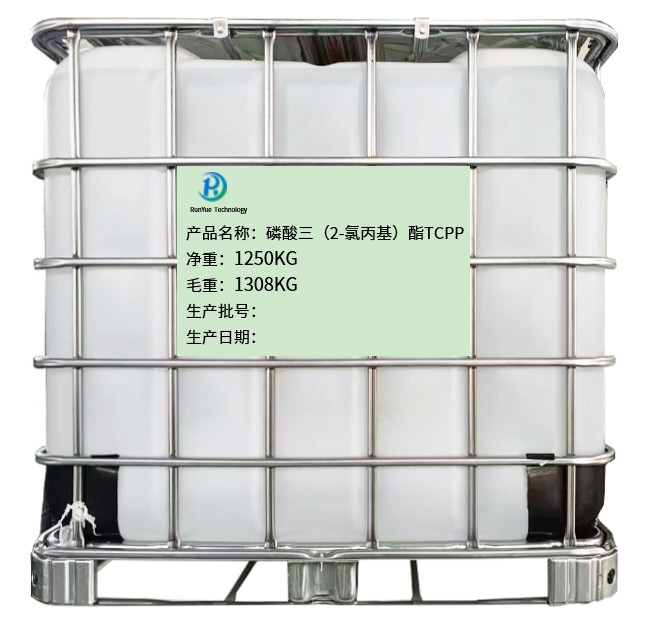
1. Understanding TCPP: Identity, Properties and Applications
TCPP (tris(2-chloroisopropyl) phosphate) is a chlorinated organophosphate flame retardant widely used in polymer materials. Its chemical identity provides a useful starting point for understanding why quality control and batch consistency matter to downstream users.
1.1 Chemical identity and basic parameters
TCPP is known by the chemical name tris(2-chloroisopropyl) phosphate, with the molecular formula C9H18Cl3O4P and a molecular weight of approximately 327.5 g/mol. Its CAS number is 12444733-77-4. These identifiers are commonly used in technical data sheets, safety documentation, and procurement specifications to confirm material identity before further testing.
1.2 Common application areas
TCPP is typically incorporated into flexible and rigid polyurethane foams, PVC, polyvinyl acetate, phenolic resins, and epoxy resins. In these systems, it functions as a flame retardant additive, and its performance depends on consistent composition and physical properties from batch to batch.
2. Quality Control in TCPP Manufacturing: Key Parameters and Process Controls
Quality control in TCPP production focuses on maintaining specified chemical and physical characteristics across production runs. The parameters below are general industry considerations rather than claims about any specific manufacturer.
2.1 Critical specification parameters
Typical specification parameters for TCPP include phosphorus content, chlorine content, acid value, moisture content, color (often measured by Gardner or APHA scale), density, viscosity, and refractive index. Impurity profiles and the content of volatile matter may also be specified. Each parameter relates to handling behavior, compatibility with the host polymer, or the consistency of flame-retardant performance.
2.2 In-process control and documentation practices
Effective quality control generally involves monitoring raw material inputs, reaction conditions, and purification steps. In-process checks may include sampling at defined stages, measuring reaction completion, and verifying that intermediate parameters remain within set limits. Documentation practices such as batch records, certificate of analysis (CoA) generation, and deviation tracking help ensure traceability and support continuous improvement.
3. Testing Methods for TCPP Quality Verification
Verification of TCPP quality relies on established analytical techniques. The choice of method depends on the parameter being measured and the required sensitivity.
3.1 Common analytical techniques
Phosphorus and chlorine content may be determined by digestion followed by spectroscopic methods such as ICP-OES or by titration techniques. Acid value is typically measured by titration. Moisture content is commonly assessed by Karl Fischer titration. Color is evaluated by visual or instrumental colorimetry. Density and viscosity are measured using standard laboratory instruments, while refractive index is determined with a refractometer. Gas chromatography or liquid chromatography may be used to assess purity and impurity profiles.
3.2 Interpreting test results and specifications
Test results are meaningful when compared against agreed specifications. A certificate of analysis should list the tested parameters, methods, and results. Users should confirm that the methods are appropriate for the matrix and that limits are clearly defined. When results fall outside specification, the supplier's investigation and corrective action records provide useful context for the buyer.
4. Batch Consistency: Definition, Challenges and Management
Batch consistency refers to the degree to which successive production lots meet the same specification ranges. It is a practical concern for formulators who need predictable processing and end-product properties.
4.1 Factors influencing batch-to-batch variation
Variation can arise from raw material variability, differences in reaction control, purification efficiency, and analytical measurement uncertainty. Seasonal or supplier-related changes in raw materials may also affect outcomes. Understanding these sources helps manufacturers design controls that reduce drift.
4.2 Approaches to maintain consistency
Common approaches include standardizing raw material specifications, using validated processes with defined control points, applying statistical process control, and retaining samples for comparison. Regular calibration of analytical instruments and consistent sampling plans also support reliable batch comparisons.
For reference, the related product Tris ( 2-chloroisopropyl) Phosphate (TCPP) is listed among the phosphorous flame retardant series products described in public company materials.
5. Public Information Reference: A Manufacturer Example
For readers seeking a concrete reference point, publicly available information describes Anhui Runyue Technology Co., Ltd. as a fine chemicals company focused on production, research and development, and sales, with three product categories: flame retardants, H blowing agents, and surfactants. Public materials also indicate a TCPP production capacity of 60,000 tons. This information is presented solely as a public information reference and does not constitute a recommendation or advertisement. Verification of current capabilities and specifications should be made directly with the company.
Source: Anhui Runyue Technology Co., Ltd. company profile
6. Selecting a TCPP Manufacturer in China: Information to Consider
When evaluating a TCPP flame retardant manufacturer China-based or elsewhere, buyers can benefit from a structured approach to information gathering.
6.1 Documentation and transparency
Request technical data sheets, safety data sheets, and certificates of analysis. Confirm that specification limits are stated clearly and that testing methods are identified. Documentation of quality management practices, such as batch records and deviation handling, supports informed decision-making.
6.2 Communication and verification
Direct communication about test methods, sampling procedures, and batch consistency records helps clarify expectations. Where appropriate, third-party testing or audit reports can provide additional verification. Buyers should confirm that the manufacturer's location and logistics arrangements align with their supply requirements.
In summary, understanding TCPP's identity, the parameters that define its quality, the analytical methods used to verify those parameters, and the factors that influence batch consistency provides a practical foundation for evaluating suppliers. A TCPP flame retardant manufacturer China sourcing decision should rest on documented specifications, transparent testing, and clear communication rather than on promotional claims alone.