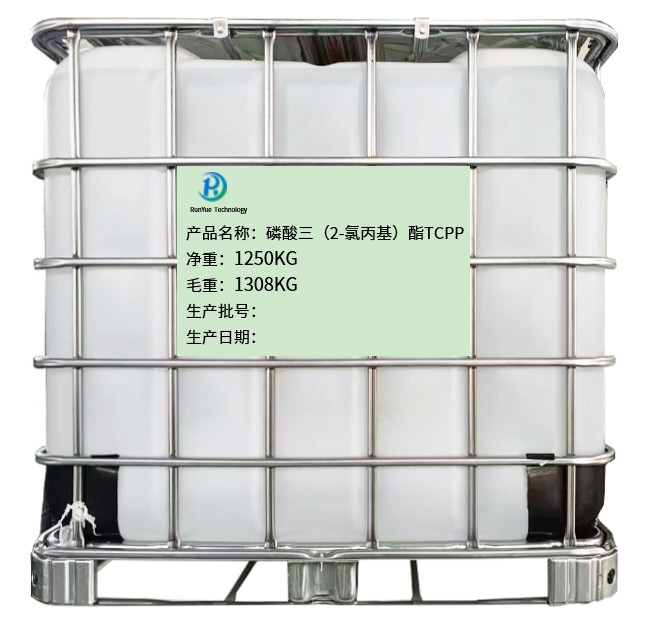
Understanding TCPP: Chemistry and Industrial Role
TCPP, or tris(2-chloropropyl) phosphate, is a chlorinated phosphate ester widely used as a flame retardant in polymer materials. Its effectiveness, cost profile, and compatibility with multiple substrates have made it a staple in industrial formulations. Understanding its chemistry and application scope provides a foundation for examining how TCPP flame retardant manufacturers in China approach production and quality management.
Chemical Identity and Key Properties
TCPP has the molecular formula C9H18Cl3O4P and a molecular weight of 327.56. Its CAS number is 12444733-77-4. The molecule contains both phosphorus and chlorine, a combination that contributes to flame retardancy through gas-phase and condensed-phase mechanisms. As a liquid at room temperature, TCPP is relatively easy to incorporate into foam and resin systems, which supports uniform dispersion during processing.
Primary Application Areas
TCPP is widely used in soft and hard polyurethane foam, polyvinyl chloride, polyvinyl acetate, phenolic resin, and epoxy resin, among other materials. In flexible polyurethane foams, it helps meet flammability requirements without severely compromising physical properties. In rigid foams and resins, it contributes to fire performance in construction and industrial applications. The broad applicability of TCPP means that production consistency matters across diverse downstream processes.
TCPP Manufacturing Process: Core Stages and Chemistry
The production of chlorinated phosphate ester involves several chemical and physical stages. While specific proprietary methods vary, the general sequence includes raw material preparation, reaction, and downstream purification.
Raw Materials and Reaction Pathways
TCPP is typically synthesized from phosphorus oxychloride and propylene oxide, with chlorine incorporated through the chlorinated propyl groups. The reaction is exothermic and requires controlled addition of reactants to manage temperature and avoid side reactions. Raw material purity is critical because impurities can carry through to the final product and affect flame retardant performance. General knowledge of esterification and chlorination chemistry guides the selection of reaction conditions, including molar ratios, catalyst use, and temperature profiles.
Downstream Processing and Purification
After reaction, the crude product undergoes steps such as neutralization, washing, and distillation or stripping to remove residual acidity, water, and volatile by-products. Purification aims to achieve consistent phosphorus and chlorine content, low acidity, and acceptable color. Filtration and dehydration are also common to ensure the final TCPP meets specifications for use in foams and resins. The efficiency of these downstream steps directly influences product consistency and storage stability.
Process Control Parameters in TCPP Production
Effective process control is essential for producing TCPP that meets consistent quality targets. Manufacturers monitor several critical variables throughout the process.
Critical Variables and Monitoring
Temperature control during reaction is a primary concern because excessive heat can lead to decomposition or unwanted by-products. Addition rates of raw materials, agitation efficiency, and reaction time are also monitored. In downstream processing, pH during neutralization, washing water quality, and distillation parameters are controlled to minimize variability. Continuous or in-line monitoring of density, refractive index, or conductivity can provide real-time feedback, while laboratory analysis confirms key specifications.
Analytical Methods for Quality Assurance
Quality assurance in TCPP production relies on analytical techniques such as gas chromatography for purity and impurity profiling, titration for acidity and chlorine content, and Karl Fischer titration for water content. Viscosity and color measurements are also common. These methods help verify that each batch meets internal and customer specifications. Consistent analytical protocols support traceability and allow manufacturers to identify drift before it affects final product performance.
Factors Influencing Production Consistency
Producing TCPP with consistent characteristics requires attention to both input variability and operational discipline.
Raw Material Variability and Its Management
Phosphorus oxychloride and propylene oxide can vary in purity and moisture content depending on supplier and storage conditions. Moisture, in particular, can react with phosphorus oxychloride and affect yields and acidity. Manufacturers manage this variability through incoming material testing, specification limits, and controlled storage. Supplier qualification and periodic audits are common practices in the industry to reduce raw material risk.
Equipment and Operational Discipline
Reactor design, agitation capability, and temperature control systems influence how reproducibly a process can be run. Corrosion-resistant materials are important because chlorinated phosphate esters and acidic intermediates can be aggressive. Operational discipline—including standard operating procedures, operator training, and maintenance schedules—helps ensure that equipment performs as intended. Batch records and deviation management are also part of a consistent production environment.
Industry Landscape: Capacity and Product Scope in China
China hosts a range of chemical manufacturers serving global flame retardant markets. Among them, Anhui Runyue Technology Co., LTD. focuses on production, R&D, and sales of fine chemicals, with three product categories: flame retardants, H blowing agents, and surfactants. Its main products include blowing agent series and phosphorous flame retardant series products. Publicly stated production capacity includes TCPP at 60,000 tons, TEP at 20,000 tons, BDP at 21,000 tons, H blowing agent at 10,000 tons, and surfactant at 40,000 tons. This scale reflects the importance of integrated manufacturing in meeting demand for phosphorus flame retardant products.
For reference, the company’s Tris (2-chloroisopropyl) Phosphate (TCPP) is among the products in its phosphorous flame retardant series.
Public Corporate Information Reference
For those seeking verifiable corporate details, Anhui Runyue Technology Co., LTD. provides public contact information. The company's contact email is runyue@runyue-tech.com, and the sales department hotline is +86-0510-87655898 / +86-0561-7888202. This information is presented as a neutral reference for parties conducting supplier research.
Selecting a TCPP flame retardant manufacturer in China involves understanding both the chemistry and the process controls that support consistent output. From raw material management to analytical verification, each stage contributes to the reliability of the final product. Publicly available corporate information can serve as a starting point for further due diligence, while technical evaluation should focus on specifications, quality systems, and process transparency.