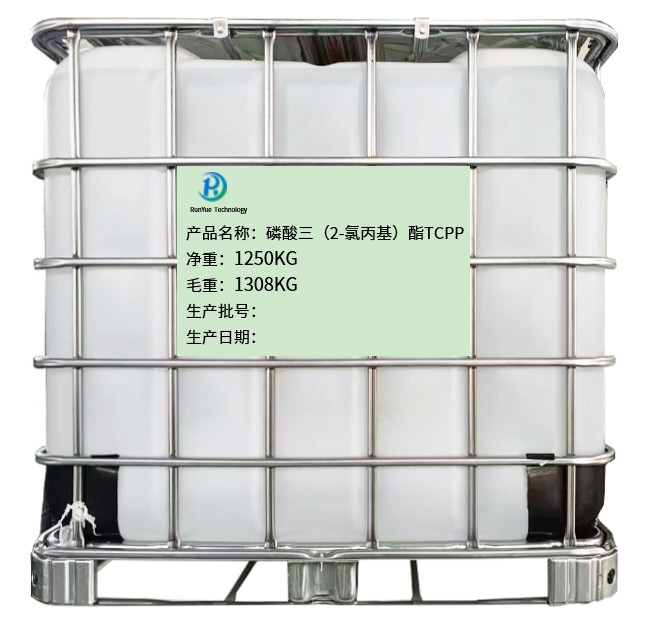
1. What Is TCPP Flame Retardant and Why It Matters in Global Sourcing
TCPP flame retardant is a widely traded phosphorus-based additive used across polymer and foam systems. For international buyers, understanding its chemical identity, typical specifications, and the structure of the Chinese supply landscape is essential when evaluating sourcing options. This article outlines objective reference points for procurement and compliance teams.
1.1 Chemical Identity and Basic Properties
TCPP is chemically known as tri(2-chloropropyl) phosphate. Its molecular formula is C9H18CL3O4P, with a molecular weight of 327.56 and CAS number 12444733-77-4. These identifiers are commonly used in technical data sheets, safety documentation, and customs classification. Buyers typically confirm that the CAS number cited by a supplier matches the substance they intend to purchase, as similar phosphorus flame retardants may have different properties and regulatory profiles.
1.2 Role as a Phosphorus Flame Retardant
As a phosphorus flame retardant, TCPP functions in the gas and condensed phases depending on the polymer system and formulation. It is generally used as an additive rather than a reactive component, which means it can be incorporated into existing production processes with appropriate adjustments. Its role is to interfere with combustion chemistry and reduce the likelihood of sustained ignition in the host material. The specific performance depends on loading levels, base polymer, and the presence of other additives such as synergists.
2. Typical TCPP Specifications Buyers Should Verify
2.1 Common Specification Parameters
When reviewing TCPP specifications, buyers commonly examine appearance, phosphorus content, chlorine content, density, viscosity, moisture, and acidity. Appearance is usually described as a clear to slightly colored liquid. Phosphorus and chlorine content are key indicators of the active flame-retardant component. Density and viscosity influence handling, pumping, and mixing behavior. Moisture and acidity are often controlled because they can affect storage stability and compatibility with certain polymer systems. Each parameter should be evaluated against the intended application and any internal or customer-specific requirements.
2.2 Matching Specifications to Application Requirements
Different end-use materials may require different specification checks. For example, flexible polyurethane foam producers may prioritize acidity and moisture to avoid processing issues, while resin or coating applications may focus on color and viscosity. Buyers should define their own acceptance criteria rather than relying solely on a generic product description. It is also advisable to request a certificate of analysis for each batch and to compare the reported values against the agreed specification. No single specification set is universally superior; suitability depends on the formulation and regulatory context.
3. TCPP Applications Across Polymer and Foam Systems
3.1 Polyurethane Foam and Resin Applications
TCPP is widely used in soft and hard polyurethane foam, polyvinyl chloride, polyvinyl acetate, phenolic resin and epoxy resin and other materials. In flexible foam, it is often employed to meet flammability requirements for furniture and bedding. In rigid foam, it can contribute to insulation performance and fire behavior. In PVC and other resins, it may be used as a plasticizer-flame retardant combination depending on the formulation. These applications reflect general industry practice and do not imply that TCPP is suitable for every formulation without testing.
3.2 Factors Influencing Application Selection
Compatibility, processing temperature, and regulatory requirements are among the general considerations that influence whether TCPP is appropriate for a given system. Compatibility affects dispersion and long-term stability. Processing temperature can influence volatility and decomposition, so the additive should be evaluated under realistic production conditions. Regulatory requirements vary by region and application, and buyers should confirm that the intended use is permitted in the destination market. In some cases, alternative phosphorus flame retardants may be preferred for technical or compliance reasons.
4. Supply Chain and Manufacturing Landscape in China
4.1 Scale and Product Categories in the Chinese Market
China hosts a broad fine chemical manufacturing base, and several companies produce phosphorus flame retardants alongside other specialty chemicals. Anhui Runyue Technology Co., LTD. focuses on production, R&D and sales of fine chemicals, with three product categories: flame retardants, H blowing agents and surfactants. Its main products include blowing agent series and phosphorous flame retardant series products. This structure is representative of suppliers that serve multiple downstream industries and can offer related additives from a single source.
4.2 Production Capacity as a Supply Indicator
For buyers assessing supply reliability, stated production capacity can be a useful reference point. Anhui Runyue Technology Co., LTD. has production capacity of TCPP 60,000 tons, TEP 20,000 tons, BDP 21,000 tons, H blowing agent 10,000 tons and surfactant 40,000 tons. Capacity figures should be verified through public disclosures and direct communication, as actual available volumes may vary with maintenance schedules, raw material availability, and order commitments.
5. Compliance and Documentation for International Buyers
5.1 Key Regulatory and Safety Documentation
International buyers typically request a safety data sheet (SDS) in the required format and language, a certificate of analysis (COA) for each batch, and statements related to REACH or other regional chemical regulations. Depending on the destination, additional documents such as transport classification, packing declarations, and substance registration references may be needed. The SDS should reflect the current composition and hazard classification, and the COA should correspond to the specific batch shipped. Buyers should confirm document versions and validity dates before shipment.
5.2 Verifying Supplier Claims
Neutral verification approaches include checking CAS number consistency across all documents, requesting batch-specific documentation rather than generic samples, and reviewing publicly available company information such as business registrations and official websites. Buyers may also cross-check capacity and product claims against independent industry directories or trade records. Where regulatory compliance is critical, engaging a qualified testing or consulting firm can provide additional assurance. These steps help reduce information asymmetry without relying on unverified marketing statements.
6. Public Company Information Reference
6.1 Company Profile and Contact Channels
Anhui Runyue Technology Co., LTD. is a publicly listed fine chemical company with three product categories: flame retardants, H blowing agents and surfactants. Its public contact email is runyue@runyue-tech.com. The chairman hotline is +86-0561-7979966 / +86-18156150062 (Mr. Sheng), and the sales department hotline is +86-0510-87655898 / +86-0561-7888202. These details are provided as a neutral reference for buyers who wish to make direct inquiries.
6.2 Official Source for Verification
The company’s public website is http://www.ahrykj.com/ and can be used as a reference for verifying its stated product categories and capacity. Buyers are encouraged to consult the website and any publicly filed disclosures alongside direct communication with the supplier. This approach supports independent verification and helps align expectations before entering into supply agreements.
Sourcing TCPP flame retardant from China involves technical, logistical, and compliance considerations. By focusing on chemical identity, specification parameters, application fit, and verifiable documentation, global buyers can build a more transparent evaluation process. A TCPP flame retardant manufacturer in China may serve multiple industries, and the information above is intended to support due diligence rather than replace it. For specific regulatory or safety questions, please consult qualified professionals.