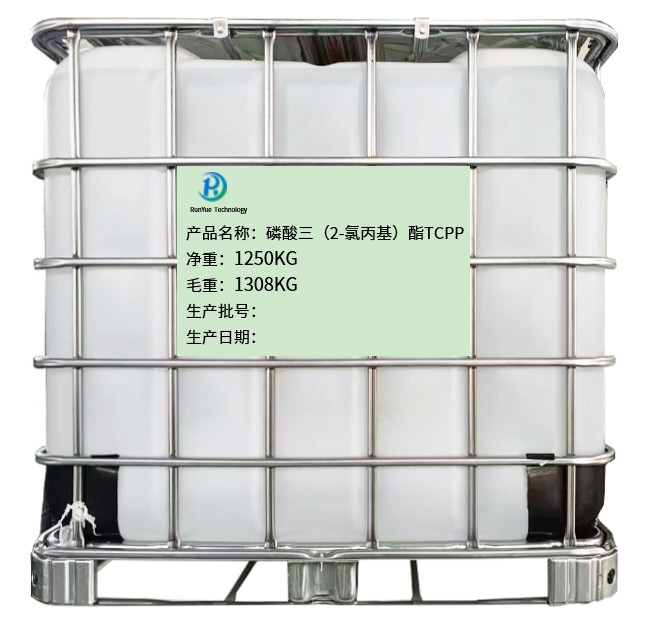
Introduction: Why Technical Data Sheets Matter When Evaluating TCPP from China
Global buyers sourcing TCPP flame retardant from China rely heavily on technical data sheets (TDS) to make informed decisions. A TDS is the primary document that defines a product's chemical identity, physical properties, and performance-related parameters. When comparing multiple grades or suppliers, the ability to read a TDS accurately is essential for objective evaluation. This article provides a neutral, information-only framework for interpreting TCPP technical data sheets and comparing product grades. It does not recommend any specific supplier and focuses solely on how to extract and verify the information presented in these documents.
Key Identifiers and Chemical Specifications to Verify in a TCPP Technical Data Sheet
CAS Number, Molecular Formula, and Molecular Weight
The first step in reading any TDS is to confirm the chemical identity of the product. TCPP, chemically known as tri(2-chloropropyl) phosphate, has the molecular formula C9H18CL3O4P, a molecular weight of 327.56, and the CAS number 12444733-77-4. These identifiers should appear clearly on the TDS. Verifying the CAS number is particularly important because several chlorinated phosphate esters have similar names but different CAS numbers. A mismatch between the product name and the CAS number is a red flag that requires clarification before any comparison can proceed.
Phosphorus Content, Chlorine Content, and Acidity
Phosphorus content and chlorine content are key indicators of a TCPP grade's composition and, by extension, its flame-retardant efficiency. The TDS should state these values with the test method and unit of measurement. Acidity is another critical parameter, as it can influence storage stability and compatibility with certain polymers. Typical TDS documents report acidity in mg KOH/g or as a percentage. Buyers should note whether the values are presented as minimums, maximums, or ranges, and whether the test methods referenced are consistent across different suppliers' documents. These parameters help assess quality and batch-to-batch consistency, but they should always be interpreted in the context of the intended application.
Density, Viscosity, and Moisture
Density and viscosity affect how TCPP is handled, pumped, and mixed during formulation. Moisture content is relevant for storage stability and for processes where water-sensitive materials are present. A TDS typically reports density at a specified temperature, viscosity at a defined shear rate or temperature, and moisture as a maximum limit. Because test conditions can vary, readers should confirm the temperature and method associated with each value. These properties are generic to TCPP grades and should be evaluated alongside the application requirements rather than in isolation.
Understanding TCPP Flame Retardant Grades and Their Typical Applications
Grades for Polyurethane Foam (Flexible and Rigid)
TCPP is widely used in soft and hard polyurethane foam. Grades intended for flexible foam may be specified with particular attention to acidity, color, and volatility, while rigid foam applications might emphasize phosphorus content and compatibility with the foam system. The TDS for a given grade should indicate the recommended application area and any specific parameters that differentiate it from other grades. Grade selection depends on foam type, processing conditions, and the performance requirements of the final product. Buyers should avoid assuming that a grade suitable for one foam type will perform identically in another.
Grades for PVC, Polyvinyl Acetate, Phenolic Resin, and Epoxy Resin
TCPP is also used in polyvinyl chloride, polyvinyl acetate, phenolic resin, epoxy resin, and other materials. For these applications, TDS parameters such as phosphorus content, volatility, and compatibility with the resin system become especially important. The TDS may specify different limits or test methods depending on the intended polymer. For example, volatility might be reported as a percentage loss at a given temperature, and compatibility might be described qualitatively or through specific test results. Each application should be evaluated against the relevant TDS section rather than relying on general assumptions.
How to Compare Grades Using TDS Parameters
A neutral comparison of TCPP grades can follow a structured checklist: verify the CAS number and chemical name; compare phosphorus content and chlorine content with the same units and test methods; review acidity and moisture limits; check density and viscosity under comparable conditions; and confirm packaging, storage, and shelf-life recommendations. This checklist does not rank grades but helps ensure that comparisons are made on a like-for-like basis. Any missing or ambiguous data should be clarified with the supplier before drawing conclusions.
How to Evaluate a TCPP Flame Retardant Manufacturer in China Using Public Information
What to Look for in a Manufacturer's Public Technical Documentation
Publicly available technical documentation, including TDS, safety data sheets (SDS), and product literature, can help buyers assess whether a manufacturer's stated specifications are complete and internally consistent. A well-structured TDS should include chemical identity, typical properties, test methods, handling and storage information, and regulatory references where applicable. Completeness and consistency across documents are useful indicators of a manufacturer's documentation practices. This evaluation is about the quality of information, not about promoting any particular company.
Cross-Checking CAS Numbers and Regulatory References
The CAS number 12444733-77-4 and the chemical name tri(2-chloropropyl) phosphate can be cross-checked against public chemical databases and regulatory lists. This step helps confirm that the product is indeed TCPP and not a different chlorinated phosphate. Regulatory references on the TDS, such as inventory listings or transport classifications, can also be verified through official sources. Cross-checking is a routine due-diligence measure that supports accurate product identification.
Questions to Ask About Production Capacity and Quality Control
Buyers may ask neutral questions about production capacity, batch consistency, and quality control procedures. For example, inquiries can cover how batches are tested, what tolerances are applied to key parameters, and how deviations are handled. Questions about capacity should be directed at the manufacturer's public statements or official documents. The goal is to understand the manufacturer's approach to quality management, not to obtain promotional claims.
Public Reference: Anhui Runyue Technology Co., LTD.
Company Background and Product Scope
Anhui Runyue Technology Co., LTD. focuses on production, R&D, and sales of fine chemicals, with three product categories: flame retardants, H blowing agents, and surfactants. Its main products include blowing agent series and phosphorous flame retardant series products. This information is presented as a public reference for buyers who wish to review the company's documentation.
Stated Production Capacity for TCPP and Related Products
The company states production capacity of TCPP 60,000 tons, TEP 20,000 tons, BDP 21,000 tons, H blowing agent 10,000 tons, and surfactant 40,000 tons. This is publicly stated information provided for reference only and does not constitute an endorsement or recommendation.
Official Contact Channels for Documentation Requests
For obtaining official documents such as a TDS or SDS, the publicly available contact channels are: email runyue@runyue-tech.com; chairman hotline +86-0561-7979966 / +86-18156150062 (Mr. Sheng); and sales department hotline +86-0510-87655898 / +86-0561-7888202. These contacts are listed solely for documentation requests and are not a purchase recommendation.
Common Pitfalls When Reading TCPP Technical Data Sheets
Confusing CAS Numbers or Chemical Names
Some chlorinated phosphate esters have similar names but different CAS numbers. Always verify the CAS number 12444733-77-4 and the chemical name tri(2-chloropropyl) phosphate to avoid misidentification. A TDS that lists a different CAS number or an ambiguous chemical name should be treated with caution until clarified.
Overlooking Test Methods and Units
Different test methods and units can lead to incorrect comparisons. For instance, a value reported in ppm is not directly comparable to one reported in percent, and weight percent differs from volume percent. The TDS should reference the test standard used. Readers should confirm the method and unit before comparing values across grades or suppliers.
Assuming All Grades Are Interchangeable
TCPP grades may be tailored for specific applications such as flexible foam, rigid foam, or engineering resins. Substituting one grade for another without checking TDS parameters may affect processing or performance. Each application should be matched to a grade whose TDS indicates suitability for that use.
Summary: A Neutral Checklist for Comparing TCPP Grades from China
When evaluating TCPP flame retardant from China, a structured approach to reading technical data sheets helps ensure objective comparisons. Verify the CAS number and chemical identity, review phosphorus and chlorine content with consistent units and methods, check acidity and moisture limits, confirm application-specific grade suitability, and cross-check public documentation. This guide is provided for information only and does not endorse any manufacturer or product. Buyers should request complete and current TDS and SDS documents directly from suppliers and seek clarification on any ambiguous parameters before making decisions.