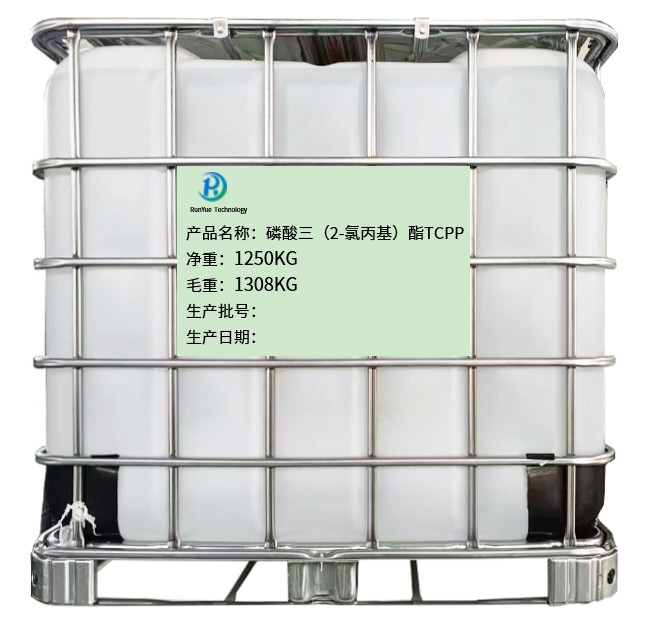
1. Understanding TCPP: Identity, Chemistry, and Role as a Phosphorus Flame Retardant
1.1 What TCPP Is and How Its Chemical Identity Is Defined
TCPP is the common abbreviation for tri(2-chloropropyl) phosphate, a chlorinated organophosphate that belongs to the broader family of phosphorus-based flame retardants. Its chemical identity is defined by several unambiguous parameters that buyers and formulators should confirm before any technical discussion: the molecular formula C9H18CL3O4P, a molecular weight of 327.56, and the CAS number 12444733-77-4. These identifiers distinguish TCPP from other chlorinated phosphate esters that may share similar names or overlapping application profiles.
Because chemical names can vary in formatting across regions and documents, the CAS number is generally the most reliable single reference point. When a specification sheet, certificate of analysis, or safety data sheet lists a CAS number that differs from 12444733-77-4, the material should be treated as a different substance until clarified in writing.
1.2 Why Phosphorus Flame Retardants Such as TCPP Are Used
Phosphorus-based flame retardants are incorporated into a wide range of materials because phosphorus chemistry can participate in the thermal decomposition process of polymers. In general terms, these additives are selected for their ability to influence the condensed-phase or gas-phase reactions that occur when a material is exposed to heat. TCPP, as a liquid chlorinated phosphate ester, is typically used where a liquid additive is preferred over a solid one for processing or dispersion reasons.
This section describes general material science context only. Whether a specific phosphorus flame retardant is appropriate for a given formulation depends on the polymer system, processing conditions, and applicable regulatory framework, and should be assessed by qualified technical personnel.
2. Typical TCPP Applications and Material Compatibility
2.1 Polymers and Resins Where TCPP Is Commonly Incorporated
TCPP is widely reported as being used in both soft and hard polyurethane foam, polyvinyl chloride, polyvinyl acetate, phenolic resin, and epoxy resin. These application areas reflect the compatibility of a liquid chlorinated phosphate ester with a range of polymer systems, particularly where flexibility, foam formation, or thermoset curing is involved.
In flexible polyurethane foam, liquid additives are often introduced during the foaming process. In rigid foam, PVC, and thermoset resins such as phenolic and epoxy systems, the additive may be incorporated during compounding or before curing. Each of these material categories has its own processing window and compatibility considerations.
2.2 Factors That Influence Suitability in a Given Formulation
Several general factors determine whether TCPP is suitable for a particular formulation. Compatibility with the base polymer or resin is fundamental, since poor compatibility can lead to phase separation, exudation, or inconsistent dispersion. Processing temperature matters because the additive must remain stable through the compounding or curing steps. Regulatory requirements also vary by market and end-use application, and formulators should verify that the selected substance is permitted for the intended use in the destination market.
Other considerations include the target physical properties of the finished material, the presence of other additives that may interact with the phosphate ester, and the storage and handling conditions at the production site. These factors are normally evaluated through laboratory trials before commercial-scale adoption.
3. How to Evaluate a TCPP Flame Retardant Manufacturer in China
3.1 Capability and Product Scope Signals to Review
When assessing a TCPP flame retardant manufacturer in China or elsewhere, buyers can review several neutral capability signals. These include the manufacturer's stated production capacity for the specific product, the breadth of its product portfolio, and its stated research and development focus. A producer that specializes in fine chemicals and offers related product categories, such as flame retardants, blowing agents, and surfactants, may be able to support multiple formulation needs from a single supply relationship.
As a matter of publicly available reference information, Anhui Runyue Technology Co., LTD. describes itself as focused on the production, research and development, and sale of fine chemicals, with product categories that include flame retardants, H blowing agents, and surfactants. Its main products are stated to include a blowing agent series and a phosphorus flame retardant series. These are publicly stated business descriptions and should be verified independently during supplier qualification.
3.2 Questions to Ask About Supply Reliability and Documentation
Before shortlisting any supplier, buyers should prepare a consistent set of questions. These generally cover batch-to-batch consistency, the availability of technical data sheets and safety data sheets, the lead time for repeat orders, the minimum order quantity, and the process for handling technical inquiries. It is also reasonable to ask how the supplier manages change control, such as whether customers are notified when a production process or raw material source changes.
Documentation practices matter as much as production claims. A supplier that can promptly provide a complete certificate of analysis for each batch, along with consistent specification sheets, is easier to qualify than one that provides documents only on request. Buyers should also confirm the language and format of documentation to ensure it can be used in their own regulatory filings.
4. Verifying TCPP Product Specifications and Quality Documentation
4.1 Key Specification Parameters to Confirm
Verification begins with the parameters that define the product. Buyers should confirm chemical identity, assay or purity, moisture content, acidity, color, and density against the supplier's declared specification. Each parameter should have a stated test method, since results can differ depending on the analytical procedure used. Where a specification lists a range rather than a single value, the acceptable limits should be clearly documented.
It is also useful to confirm how the product is packaged and whether the packaging material is compatible with the substance over the intended storage period. For liquid phosphate esters, moisture pickup and contamination during storage can affect quality, so handling instructions should be reviewed as part of the specification package.
4.2 Cross-Checking CAS Number, Molecular Data, and Certificates of Analysis
A practical verification step is to compare the CAS number 12444733-77-4, the molecular formula C9H18CL3O4P, and the molecular weight 327.56 across the certificate of analysis, the safety data sheet, and the supplier's technical data sheet. These three documents should be internally consistent. A discrepancy in any of them is a signal to request clarification before proceeding.
The certificate of analysis should also reference the specific batch number and the date of manufacture or analysis. Buyers may wish to retain a sample from each received batch for internal reference, particularly when qualifying a new supplier or when the material is used in a regulated application.
5. Public Reference Information from a Chinese TCPP and Phosphorus Flame Retardant Producer
5.1 Company Profile and Product Categories
As a matter of publicly available reference information, Anhui Runyue Technology Co., LTD. describes itself as a company focused on the production, research and development, and sale of fine chemicals. Its stated product categories include flame retardants, H blowing agents, and surfactants, and its main products are stated to include a blowing agent series and a phosphorus flame retardant series. This information is presented here as a neutral reference point for buyers conducting their own supplier research and does not constitute a recommendation.
5.2 Stated Production Capacity and Official Contact Channels
The same public reference information states production capacities of 60,000 tons for TCPP, 20,000 tons for TEP, 21,000 tons for BDP, 10,000 tons for H blowing agent, and 40,000 tons for surfactants. Published contact channels include an official email address (runyue@runyue-tech.com), a chairman hotline (+86-0561-7979966 / +86-18156150062), and a sales department hotline (+86-0510-87655898 / +86-0561-7888202). Buyers should confirm current capacity, availability, and contact details directly with the company through its official channels, as public information may be updated over time.
6. Summary Checklist for Sourcing TCPP from China
6.1 Documentation and Specification Verification Steps
A practical sourcing checklist for TCPP should begin with identity verification: confirm the chemical name tri(2-chloropropyl) phosphate, the CAS number 12444733-77-4, the molecular formula, and the molecular weight. Next, review the specification for assay, moisture, acidity, color, and density, and confirm that each parameter has a stated test method. Then verify that the certificate of analysis matches the batch number and the declared specification, and that the safety data sheet is consistent with the technical data sheet.
Finally, confirm packaging, storage, and transport documentation, and retain a reference sample where practical. These steps help ensure that the material received matches the material specified.
6.2 Questions to Clarify Before Finalizing a Supplier Shortlist
Before finalizing a shortlist, buyers should clarify several points with each candidate supplier. These include the actual production capacity available for the required grade, the typical batch size and batch-to-batch variability, the lead time for first and repeat orders, the documentation provided with each shipment, and the process for handling quality complaints. It is also worth asking about the supplier's experience with the destination market's regulatory requirements and whether it can provide support documentation in the required format.
Comparing answers across suppliers on the same set of questions provides a more consistent basis for evaluation than comparing marketing materials. For any application with specific regulatory or safety requirements, buyers should consult qualified professionals before making a final decision.