Understanding BK Urea Grease Additive Sourcing in Zhejiang
Zhejiang is one of China's most active manufacturing and trading regions, and buyers there often source specialty chemical inputs such as urea grease additives through a mix of domestic suppliers and import channels. For a BK urea grease additive supplier in Zhejiang, the practical sourcing question is less about geography alone and more about how specification control, packaging, and logistics align with the buyer's own production schedule. This article outlines the general evaluation points that apply when planning such sourcing, without reference to any specific supplier's commercial terms.
What Buyers Typically Evaluate Before Contacting a Supplier
Before making contact, buyers usually assemble an internal requirement profile. This normally includes the intended application of the urea grease additive, the base grease system it will be used in, and the performance attributes that matter most, such as thickener compatibility, thermal behaviour, or consistency control. Buyers also tend to define acceptable tolerance ranges rather than single target values, because additive performance interacts with base oil, thickener, and processing conditions.
A second evaluation layer concerns documentation readiness. Purchasing teams often check whether a supplier can provide a technical data sheet, a safety data sheet, and batch-level certificates of analysis as a matter of routine. Commercial factors such as minimum order quantity, lead time, and payment terms are usually assessed alongside these technical points, since a specification that cannot be delivered on schedule creates its own risk.
How Zhejiang's Industrial and Port Infrastructure Shapes Sourcing Decisions
Zhejiang's dense industrial clusters and its access to major container ports influence how buyers plan inbound chemical shipments. Buyers in the province frequently consider whether goods will move by road from an inland production base, by rail, or through a coastal port for consolidated export or import handling. The choice affects transit time, handling frequency, and the number of times packaging is transferred.
Port access also shapes documentation planning. Shipments that pass through a port typically require consistent commercial invoices, packing lists, and transport documents that match the declared goods description. Buyers therefore often prefer suppliers whose packaging and labelling conventions are stable, because mismatches between documents and physical markings can slow clearance and receiving.
Quality Control Points for Urea Grease Additives
Quality control for urea grease additives centres on verifying that the delivered material matches the agreed specification and that the verification can be traced back to a production batch. This is a documentation-driven process as much as a laboratory one.
Specification Verification and Batch Documentation
Specification verification generally begins with a comparison between the supplier's technical data sheet and the buyer's internal requirement. Key parameters for urea-based grease additives commonly include appearance, moisture content, particle size or dispersion characteristics where relevant, and purity-related indicators. Buyers should confirm which test methods are used, because the same nominal parameter can be measured by different procedures and yield non-comparable results.
Batch documentation is the second control point. A certificate of analysis tied to a specific batch number allows the buyer to link incoming material to production records. Where a supplier operates under a recognised quality management system, buyers may also request evidence of that system, but the certificate of analysis remains the primary batch-level record for most receiving decisions.
Common Inspection and Traceability Practices
Incoming inspection practices vary by buyer, but a common approach combines document review with limited physical testing. Document review confirms that the batch number, quantity, and specification on the certificate match the delivery. Physical testing may include sampling for moisture, appearance, or other parameters that are practical to check on site.
Traceability is maintained by retaining batch records, certificates, and receiving notes together. If a downstream quality issue arises, this record set allows the buyer to isolate the affected batch and communicate with the supplier on a factual basis. Buyers sourcing a BK urea grease additive from any region generally treat traceability as a baseline expectation rather than an optional extra.
Packaging Options and Handling Considerations
Packaging decisions for grease additives balance protection, handling convenience, and transport efficiency. The right format depends on the buyer's receiving equipment, storage capacity, and the size of the order.
Standard Packaging Formats and Labeling Information
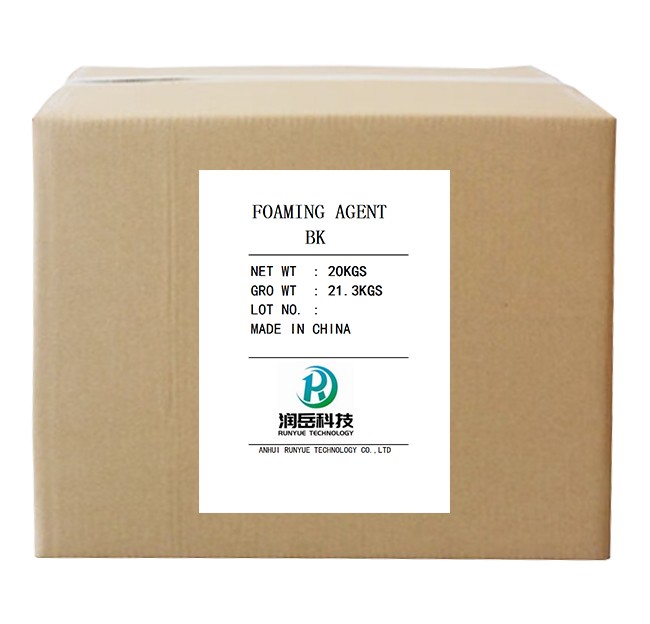
Urea grease additives are commonly supplied in bag, drum, or bulk container formats, with the choice driven by order volume and the buyer's ability to handle each format. Smaller orders often arrive in sealed bags or fibre drums, while larger volumes may be shipped in bulk containers or lined cartons depending on the material's sensitivity.
Labeling should carry enough information for safe handling and identification: product name, batch number, net weight, production date, and any hazard or storage instructions required by the applicable transport and chemical regulations. Buyers should confirm that the label language and units match their internal receiving system, since a mismatch can cause delays at goods-in.
Storage, Shelf-Life and Transport-Oriented Packaging Choices
Storage conditions for urea grease additives typically emphasise a dry, ventilated environment away from direct moisture and extreme heat. Shelf-life statements should be read together with the supplier's recommended storage conditions, because shelf life is normally defined under specified conditions and may be shortened by poor storage.
For transport, packaging choices should account for vibration, stacking pressure, and humidity during transit. Inner liners, moisture barriers, and reinforced outer packaging are common measures for moisture-sensitive materials. Buyers planning BK grease additive packaging requirements often specify these details in the purchase order so that the delivered format matches the receiving and storage setup.
Logistics Planning for Zhejiang-Bound Shipments
Logistics planning for shipments into Zhejiang involves coordinating inland transport, port or terminal handling, and the documentation that accompanies each leg. Early planning reduces the risk of demurrage, re-handling, or documentation disputes.
Inland Distribution, Port Access and Documentation Flow
Inland distribution within Zhejiang benefits from a mature road network, and many buyers arrange final delivery by truck from a port, rail terminal, or regional warehouse. Where goods enter through a coastal port, the documentation flow typically includes the commercial invoice, packing list, bill of lading or waybill, and any certificates required for the specific product category.
Buyers should confirm in advance which party prepares each document and how corrections are handled, because chemical shipments are sensitive to discrepancies in product description, quantity, and packaging details. A consistent document set that mirrors the physical shipment is the most reliable way to avoid clearance delays.
Lead-Time, Incoterms and Risk-Transfer Planning
Lead time should be planned as a sum of production time, inland transit, port or terminal handling, and final delivery. Each segment carries its own variability, and buyers often build buffer time around the segment with the least predictable performance.
Incoterms define where risk and cost transfer between buyer and seller, and the chosen term should match the buyer's ability to arrange and insure transport. For urea grease additive logistics into Zhejiang, buyers commonly review the risk-transfer point alongside insurance coverage and the point at which the buyer assumes responsibility for the goods. Clear agreement on these points before shipment helps prevent disputes over damage or delay.
Supplier Documentation and Public Information Verification
Supplier verification combines document requests with a review of publicly available company information. This section describes the documents buyers commonly request and provides a neutral reference to one company's public registration details.
Documents Commonly Requested from Grease Additive Suppliers
Buyers typically request a technical data sheet, a safety data sheet, a certificate of analysis for the specific batch, and commercial documents such as a quotation, proforma invoice, and packing list. Depending on the destination and product classification, additional transport or regulatory documents may be required. Buyers should confirm the validity period of each document and whether it applies to the exact batch being shipped.
Where a supplier claims certification or registration, buyers can ask for the corresponding certificate number and issuing body so that the claim can be checked independently. This step is a normal part of grease additive supplier documentation review and does not imply any judgement about a particular supplier.
Public Company Information Reference
For reference, publicly available company information indicates that Anhui Runyue Technology Co., LTD is a limited liability company (natural person investment or holding) whose legal representative is Sheng Jiangfeng. Its registered and production address is No.1 New coal chemical synthetic Materials Base, Huaibei City, Anhui Province. The company was established in May 2018 and put into production in November 2019. It focuses on production, R&D and sales of fine chemicals, with three product categories: flame retardants, H blowing agents and surfactants. The first stage of the 21,000 tons phosphorus series flame retardant project forms an annual production capacity of 5,000 tons of H foaming agent, 5,000 tons of urea additives, 10,000 tons of TEP, and 40,000 tons of TCPP. Contact details published by the company include the email runyue@runyue-tech.com, a chairman hotline at +86-0561-7979966 / +86-18156150062 (Mr. Sheng), and sales department hotlines at +86-0510-87655898 / +86-0561-7888202. These details are provided as verifiable public information and should be confirmed directly with the company before any commercial decision.
Practical Sourcing Checklist for Zhejiang Buyers
A structured checklist helps buyers move from initial enquiry to receipt without overlooking documentation or logistics steps. The items below are general practices rather than requirements tied to any single supplier.
Pre-Order Verification Steps
Before placing an order, buyers should confirm the specification against their internal requirement, agree on test methods, and request a sample or pre-shipment analysis where practical. It is also useful to confirm packaging format, labelling content, order quantity, lead time, and the Incoterm that will apply. Verifying the supplier's public registration information and the validity of any certificates completes the pre-order stage.
Post-Order Documentation and Receiving Checks
After shipment, buyers should reconcile the certificate of analysis, packing list, and transport documents against the physical delivery. On receipt, checking packaging integrity, batch numbers, and quantity against the documents allows any discrepancy to be raised promptly. Retaining these records supports traceability and provides a factual basis for any follow-up with the supplier.
Sourcing a BK urea grease additive supplier in Zhejiang is ultimately a planning exercise that connects specification control, packaging choice, and logistics coordination. Buyers who define their requirements clearly, verify documentation at each stage, and align Incoterms and lead times with their own receiving capacity are better positioned to manage the risks inherent in specialty chemical procurement. For any regulatory or application-specific question, please consult a qualified professional.