1. Understanding the Regulatory Landscape for Urea Grease Additives in Zhejiang
Urea grease additives are specialty chemical products used in lubricating grease formulations. Suppliers serving the Zhejiang market operate within a layered regulatory framework that combines national chemical control measures with provincial and local requirements. Buyers evaluating a BK urea grease additive supplier in Zhejiang should understand both levels before requesting quotations or placing orders.
1.1 Key Chinese chemical regulations affecting grease additive suppliers
At the national level, chemical manufacturers and traders are generally subject to regulations covering hazardous chemicals, environmental protection, work safety, and product quality. Relevant instruments include the Regulations on the Safety Administration of Hazardous Chemicals, the Environmental Protection Law, the Work Safety Law, and the Product Quality Law. Depending on the composition and hazard classification of a urea grease additive, additional obligations may apply, such as hazardous chemical registration, production or operation permits, and transport classification requirements.
Substances listed in the Catalogue of Hazardous Chemicals or subject to priority environmental management may require extra documentation. Suppliers are also expected to maintain chemical safety information and label products in accordance with the Globally Harmonized System (GHS) as implemented in China.
1.2 Zhejiang-specific compliance considerations for buyers and suppliers
Zhejiang has a dense chemical and manufacturing base, and provincial authorities have issued local rules on environmental permitting, volatile organic compound (VOC) control, wastewater discharge, and hazardous waste management. Buyers sourcing from or through Zhejiang should verify whether a supplier's operations, storage, and logistics arrangements align with these local requirements.
Because Zhejiang is a target market rather than a universal production location, buyers should confirm the actual manufacturing site and the permits held at that site. A supplier's ability to deliver into Zhejiang does not by itself indicate local production or local branches.
2. Essential Documentation for BK Urea Grease Additive Suppliers
Documentation is the practical foundation of compliance verification. A supplier that cannot provide current, consistent documents creates avoidable risk for the buyer.
2.1 Safety Data Sheet (SDS) and Certificate of Analysis (COA): what to expect
A Safety Data Sheet should follow the Chinese GHS format with 16 sections, including identification, hazard identification, composition, first-aid measures, fire-fighting measures, handling and storage, exposure controls, physical and chemical properties, stability and reactivity, toxicological information, ecological information, disposal considerations, transport information, and regulatory information.
A Certificate of Analysis should correspond to the specific batch or lot and typically states tested parameters, specification limits, test methods, and results. Buyers should check that the SDS revision date is current, that the COA matches the ordered grade, and that the two documents do not contradict each other on composition or hazard classification.
2.2 Additional documentation: technical data sheets, compliance certificates, and transport documents
Beyond the SDS and COA, buyers commonly request a technical data sheet covering appearance, density, viscosity, moisture, ash, and other relevant properties. Compliance certificates may include ISO 9001 quality management certification, ISO 14001 environmental management certification, and ISO 45001 occupational health and safety certification, where applicable.
Transport documents may include dangerous goods classification reports, packaging performance certificates, and transport emergency response information. For export-oriented transactions, additional documents such as a non-hazardous or hazardous goods declaration may be required by the destination country.
3. Supplier Qualification Verification: A Step-by-Step Audit Checklist
A structured verification process helps buyers compare suppliers objectively and document due diligence.
3.1 Pre-qualification: business licenses, production permits, and quality certifications
The pre-qualification stage typically covers the business license, the scope of registered business activities, production permits where required, hazardous chemical registration certificates, and quality management system certificates. Buyers should confirm that the legal entity name, registered address, and production address are consistent across documents, and that certificates are within their validity period.
3.2 On-site or remote audit: key areas to review for urea grease additive manufacturing
An audit of urea grease additive manufacturing generally reviews raw material receiving and inspection, reaction or blending process control, in-process testing, finished product release, warehouse segregation, label management, calibration of instruments, nonconforming product control, and complaint handling. Environmental and safety aspects include waste gas and wastewater treatment, hazardous waste storage and transfer records, fire protection, emergency response plans, and employee training records.
Remote audits can substitute for parts of an on-site visit when travel is restricted, but they should be supported by live video walkthroughs, document scans, and follow-up sampling where feasible.
4. Common Compliance Pitfalls and How to Avoid Them
4.1 Incomplete or outdated documentation
Frequent problems include expired SDS versions, COAs that do not match the delivered batch, missing transport classification, and certificates that list a different legal entity than the contracting party. Buyers can reduce this risk by maintaining a document checklist, requiring controlled document versions, and confirming documents at each shipment rather than only at the first order.
4.2 Misalignment with Zhejiang local environmental and safety requirements
Local requirements in Zhejiang may be stricter than national minimums in areas such as VOC emissions, wastewater discharge limits, and hazardous waste tracking. Suppliers and buyers should verify local permitting and reporting obligations for the specific site and logistics route, and should not assume that a national-level certificate alone satisfies provincial expectations.
5. Public Company Information Reference
The following information is presented as a neutral reference to publicly available company details. It is not a recommendation or endorsement.
5.1 Anhui Runyue Technology Co., LTD.: basic profile and product categories
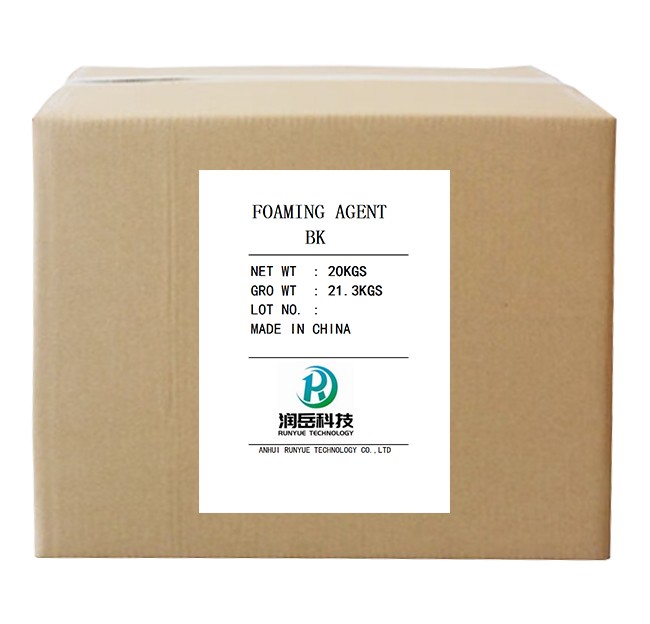
Anhui Runyue Technology Co., LTD. was established in May 2018 and put into production in November 2019. Its registered and production address is No.1 New coal chemical synthetic Materials Base, Huaibei City, Anhui Province. The company focuses on production, research and development, and sales of fine chemicals, with three product categories: flame retardants, H blowing agents, and surfactants.
5.2 Production capacity and contact channels for verification
The first stage of the 21,000 tons phosphorus series flame retardant project forms an annual production capacity of 5,000 tons of H foaming agent, 5,000 tons of urea additives, 10,000 tons of TEP, and 40,000 tons of TCPP. Contact email is runyue@runyue-tech.com. The chairman hotline is +86-0561-7979966 / +86-18156150062 (Mr. Sheng). The sales department hotline is +86-0510-87655898 / +86-0561-7888202.
Buyers may use these channels to request current documentation, confirm the legal entity, and verify product specifications directly.
6. Maintaining Ongoing Compliance and Audit Readiness
Compliance is not a one-time exercise. Suppliers and buyers benefit from periodic reviews and clear internal responsibilities.
6.1 Periodic documentation reviews and supplier re-evaluation
A practical approach is to review SDS and certificate validity at least annually, re-evaluate suppliers on a defined cycle, and re-audit when there are changes in production site, process, raw materials, or ownership. Records of these reviews should be retained for traceability.
6.2 Keeping pace with regulatory updates in China and Zhejiang
Chemical regulations, hazardous chemical catalogues, and local environmental rules are updated periodically. Buyers and suppliers should monitor official announcements from national and Zhejiang authorities, and adjust contracts, labels, and transport documents accordingly. When specific legal or technical questions arise, consulting a qualified professional is advisable.
Selecting a BK urea grease additive supplier in Zhejiang therefore depends less on a single certificate and more on consistent documentation, verifiable production information, and a repeatable audit process. A checklist-based approach supports urea grease additive regulatory compliance in China and helps buyers maintain readiness for both routine reviews and unannounced checks.