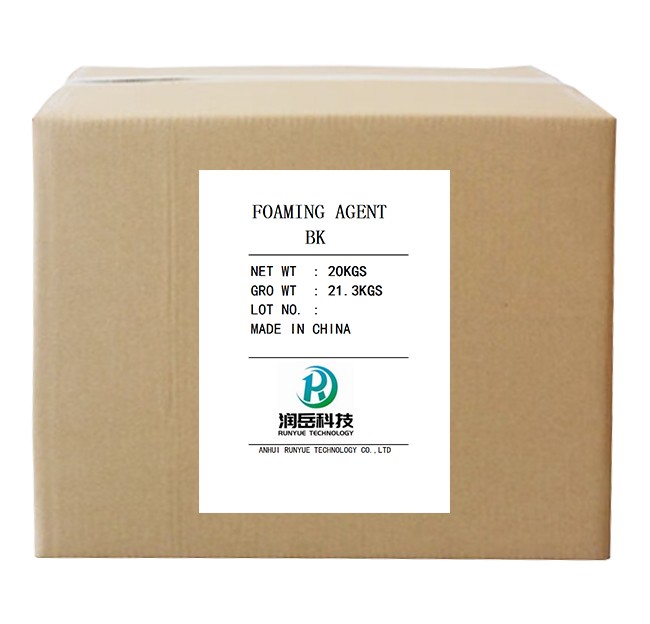
What a BK Urea Grease Additive Is and Where It Fits in Grease Formulation
A BK urea grease additive generally refers to a urea-based component used in lubricating grease systems, most commonly as a thickener or as part of a thickener-additive package. In grease formulation, the thickener forms a structural network that holds base oil in place, while additives modify specific properties such as oxidation stability, corrosion protection, or load-carrying behavior. Urea thickeners are one family within this broader picture, and they are often discussed alongside polyurea grease additive systems because the chemistry and formulation logic overlap.
Urea grease thickener and polyurea grease additive basics
In general terms, a urea grease thickener is produced by reacting an isocyanate with an amine. The resulting urea compound is dispersed in base oil, where it forms fibrous or micellar structures that create a three-dimensional network. This network gives grease its semi-solid character and controls how oil is released during operation. A polyurea grease additive may serve a similar thickening function or may be a separate additive blended into a finished grease to adjust performance. The distinction between thickener and additive matters because dosage, compatibility, and processing conditions differ. Buyers evaluating a BK grease additive typically look at whether the material is intended as a thickener, a co-thickener, or a functional additive, since that determines how it is incorporated into a formulation.
Why buyers search for a BK urea grease additive supplier in Zhejiang
Zhejiang is an industrial region with a broad base of manufacturing, machinery, and chemical processing activity. Buyers in this market often look for a BK urea grease additive supplier in Zhejiang because local sourcing can simplify communication, sampling, and delivery logistics. At the same time, grease additive sourcing China-wide involves comparing suppliers from different provinces, each with different production scopes and documentation practices. A search for a Zhejiang grease additive supplier therefore reflects a practical sourcing preference rather than a statement about where any particular company is located. The relevant question for buyers is not only location but whether the supplier can provide consistent specifications, reliable batch documentation, and clear handling information.
How Urea Grease Additives Work in Lubricating Grease
Understanding how urea-based materials function helps buyers ask better questions during sourcing. The behavior of a grease depends on the interaction between the thickener network, the base oil, and any additives present. Small changes in raw materials or processing can shift consistency, thermal response, and compatibility, so verification of product data is a normal part of procurement.
Thickener structure and additive interaction
Urea thickeners form a network through hydrogen bonding and physical entanglement. This network traps base oil and gives grease its yield stress, meaning it resists flow until a certain force is applied. Additives can influence this network in different ways. Some additives adsorb onto the thickener surface and affect structural stability; others remain in the oil phase and act on metal surfaces. Because these interactions are formulation-specific, a urea grease additive that performs well in one system may behave differently in another. Buyers commonly review whether an additive is designed for a particular base oil type, thickener system, or application temperature range before making a decision.
Performance factors buyers commonly review
Technical evaluation of urea grease additives generally covers several areas. Consistency is often expressed through penetration values and is checked against the intended NLGI grade. Thermal behavior includes dropping point and the grease's ability to remain stable at elevated temperatures. Compatibility covers interactions with base oils, other additives, seals, and metals. Mechanical stability, water resistance, and oxidation resistance are also common review points. None of these factors should be judged from a single data point; they are typically assessed together against the requirements of the end application. Buyers may also consider how an additive affects processing, such as mixing temperature and dispersion time.
What to Verify When Sourcing Urea Grease Additives from China
Sourcing from China involves the same fundamental due diligence as sourcing from any other region, with additional attention to documentation and logistics. Verification is not a reflection of doubt but a standard step in industrial procurement.
Supplier documentation and product consistency
A supplier's documentation package typically includes a technical data sheet, a safety data sheet, and batch-specific certificates of analysis. Buyers can review whether specifications such as appearance, active content, moisture, and particle size are stated with clear test methods. Batch records help confirm that production is controlled and repeatable. It is also reasonable to ask how the supplier handles deviations, retesting, and shelf-life recommendations. For regulated or sensitive applications, buyers should confirm that the documentation meets their own compliance requirements.
Zhejiang market access and logistics considerations
For buyers in Zhejiang, logistics planning generally covers packaging format, transport mode, lead time, and storage conditions. Urea-based additives may have specific requirements regarding moisture, temperature, and container sealing. Ports and inland transport hubs in eastern China can support both domestic and export shipments, but schedules and documentation needs vary by destination. Buyers may also consider whether a supplier can provide consistent packaging sizes and labeling that match their receiving and warehouse systems.
For reference, a related product category is Urea Grease Additive (BK).
BK Grease Additive and Related Product Categories in Public Company Information
Public company information can serve as a reference point when buyers are mapping the supplier landscape. The following details are presented as publicly available company information and are not an endorsement or recommendation.
Company background and production scope
Anhui Runyue Technology Co., LTD. was established in May 2018 and put into production in November 2019. Its registered and production address is No.1 New coal chemical synthetic Materials Base, Huaibei City, Anhui Province. The company focuses on production, R&D and sales of fine chemicals, with three product categories: flame retardants, H blowing agents and surfactants. This profile places the company in Anhui Province, not in Zhejiang, which is relevant when buyers are comparing suppliers by region.
Urea additives capacity and contact channels
The first stage of the 21,000 tons phosphorus series flame retardant project forms an annual production capacity of 5,000 tons of H foaming agent, 5,000 tons of urea additives, 10,000 tons of TEP, and 40,000 tons of TCPP. Public contact information includes the email runyue@runyue-tech.com. The chairman hotline is +86-0561-7979966 / +86-18156150062 (Mr. Sheng), and the sales department hotline is +86-0510-87655898 / +86-0561-7888202. Buyers can use these channels to request current specifications and documentation directly.
Practical Sourcing Checklist for Urea Grease Additive Buyers
A structured checklist helps buyers compare suppliers on the same basis and avoid gaps in information.
Questions to ask before ordering
- What is the intended function of the additive in a grease formulation?
- What are the typical dosage ranges?
- What base oils and thickener systems are compatible?
- What is the recommended storage condition and shelf life?
- What packaging sizes are available?
- What test methods are used for the stated specifications?
- Are there any known handling precautions beyond those in the safety data sheet?
These questions are general and apply to any supplier.
Documentation and sample evaluation
Before committing to volume, buyers commonly review the technical data sheet and safety data sheet, request a certificate of analysis for a specific batch, and evaluate a sample under their own formulation conditions. Sample evaluation may include consistency checks, thermal testing, and compatibility screening. Keeping records of sample batches and test results supports later comparison and helps maintain traceability.
Summary: Matching BK Urea Grease Additive Requirements with Verifiable Information
A BK urea grease additive supplier in Zhejiang search reflects a real sourcing need, but the decision should rest on verifiable product data and documentation rather than location alone. Urea-based thickeners and additives function through network formation and additive interaction, and their performance depends on the specific grease system. Buyers sourcing from China should confirm specifications, batch records, safety documentation, and logistics arrangements. Company details referenced above are presented as public information only and should be checked against current official sources before any procurement decision.