Why Zhejiang Is a Strategic Sourcing Hub for Urea Grease Additives
Zhejiang has developed into a significant node in China's chemical and industrial coatings distribution network. Its port infrastructure, dense road and rail connections, and concentration of trading and compounding operations make it a practical gateway for buyers seeking grease additive supply chain Zhejiang options. For formulators working with urea-based thickener systems, the province often appears on shortlists not because raw material production is concentrated there, but because logistics, documentation handling, and export coordination tend to be well developed.
Buyers evaluating a BK urea grease additive supplier in Zhejiang generally weigh several factors: the supplier's ability to provide consistent batch documentation, responsiveness to specification queries, and coordination between warehousing and outbound freight. Because urea grease additives are typically supplied as intermediate chemical components rather than finished lubricants, the qualification process leans heavily on documented identity, purity, and batch-to-batch consistency rather than on finished-product performance claims.
What Buyers Should Understand About BK Urea Grease Additive Specifications
BK urea grease additives function as formulation components within urea-thickened grease systems. Buyers reviewing specifications typically examine parameters such as appearance, active content or assay, moisture, particle size distribution where relevant, and compatibility with base oils and other additives. The exact parameter set depends on the intended formulation, so the first step in any urea grease additive specification review is agreeing on a written specification sheet that both parties treat as the reference document.
Suppliers are commonly asked to provide a Technical Data Sheet (TDS), a Safety Data Sheet (SDS), and a Certificate of Analysis (COA) for each batch. The TDS describes intended properties and typical values; the SDS covers handling, storage, and hazard communication; the COA ties a specific batch to measured results. Buyers should confirm that the COA references the same specification revision as the TDS, since mismatches between documents are a frequent source of confusion during qualification.
Regulatory and Compliance Context for Grease Additive Sourcing in China
Chemical additive sourcing in China operates within a framework that includes chemical registration, transport classification, and export documentation requirements. Suppliers are generally expected to maintain records that support hazard classification, packaging compliance, and safe transport labeling. For buyers in destination markets, the practical question is whether the supplier's documentation can be mapped onto local requirements, such as import registration, workplace exposure rules, or environmental reporting.
Aligning supplier documentation with destination-market requirements usually involves reviewing the SDS format, checking that hazard statements and transport classifications are consistent, and confirming that language and units match the receiving country's conventions. Where gaps appear, buyers may request supplementary declarations or third-party testing. It is advisable to treat compliance documentation as a living file that is updated when formulations, packaging, or regulations change.
Building a BK Grease Additive Qualification Checklist
A structured BK grease additive qualification checklist helps buyers compare suppliers on a consistent basis. Four core categories are commonly used: identity, quality, consistency, and traceability. Identity covers legal entity details, site location, and the correspondence between the supplier's declared product and the delivered material. Quality covers specification conformance and analytical methods. Consistency addresses batch-to-batch variation and process control. Traceability covers the ability to link delivered material back to production records.
Structuring a repeatable supplier evaluation process for grease additive supply chain Zhejiang sourcing means defining who collects documents, who reviews them, who approves samples, and who signs off on the final qualification. Assigning clear ownership at each stage reduces the risk of documents being accepted without review or samples being approved without a written comparison against the specification.
Sample and Specification Review Steps
A typical urea grease additive specification review proceeds through document collection, sample testing, and batch consistency checks. Document collection establishes the baseline specification and confirms that the supplier can provide TDS, SDS, and COA. Sample testing compares the received sample against the agreed parameters using methods that both parties accept. Batch consistency checks then look at whether multiple batches fall within the same tolerance band, which is often more informative than a single passing sample.
Acceptance or rejection criteria should be written before samples arrive. A sample that meets all specified parameters within agreed tolerances can be accepted for further evaluation. A sample that deviates should be rejected or held pending clarification, with the deviation documented. Buyers may also set conditional acceptance, where a sample passes but the supplier is asked to explain a trend or provide additional batch data.
Documentation and Traceability Requirements
Batch traceability is central to ongoing qualification. Each shipment should be linkable to a batch number, a COA, and a production record. Change-notification expectations should be agreed in advance: suppliers are typically asked to inform buyers of changes to raw materials, process parameters, or production sites that could affect the delivered additive.
Record-keeping practices that support ongoing supplier qualification include maintaining a controlled document register, versioning specification sheets, and retaining COAs for a defined period. Buyers benefit from a simple log that records receipt dates, batch numbers, and any deviations, since this makes periodic reviews faster and provides evidence if a quality question arises later.
How to Evaluate Urea Grease Additive Suppliers in Zhejiang
Evaluation dimensions for urea grease additive supplier evaluation typically include production capability, quality management, documentation responsiveness, and logistics coordination. Production capability covers whether the supplier can meet required volumes and whether capacity is owned or sourced through third parties. Quality management covers the systems used to control and record production. Documentation responsiveness reflects how quickly and accurately the supplier answers specification and compliance questions. Logistics coordination covers packaging, lead times, and handling of export paperwork.
Indicators of a reliable evaluation process include consistent response times, documents that match across TDS, SDS, and COA, and a willingness to discuss deviations openly. A supplier that provides clear answers to technical questions and flags its own limitations is generally easier to qualify than one that provides uniformly positive responses without detail.
On-Site and Remote Supplier Audit Approaches
A grease additive supplier audit typically covers process control, storage conditions, and quality records. Process control examines how production parameters are monitored and recorded. Storage conditions examine whether raw materials and finished additives are kept under appropriate conditions, with segregation where needed. Quality records examine whether testing is performed according to written methods and whether results are retained and retrievable.
When on-site visits are not feasible, remote audit alternatives include document-based reviews, video walkthroughs, and third-party inspection. Remote audits are generally more effective when the supplier provides live access to records and allows questions to be asked in real time, rather than submitting a pre-prepared package.
Red Flags and Risk Signals in Supplier Qualification
Common risk signals include inconsistent documentation, unclear batch traceability, and specification drift. Inconsistent documentation may appear as COAs that do not match the TDS, or as specification sheets that change without version control. Unclear batch traceability may appear as shipments that cannot be linked to a specific production record. Specification drift may appear as gradual changes in measured values that remain within tolerance individually but trend outside the original range over time.
When concerns arise, buyers can escalate by requesting a formal corrective action response, asking for additional batch data, or pausing new orders pending clarification. Resolving qualification concerns usually works best when the issue is described in writing with specific document references, so that both parties are working from the same evidence.
Public Company Information Reference for Supplier Verification
Publicly available company information can support supplier identity verification and document cross-checking. Buyers can compare the legal entity name on a quotation, contract, and COA to confirm they refer to the same organization, and can check registered addresses and business scope against the supplier's stated capabilities.
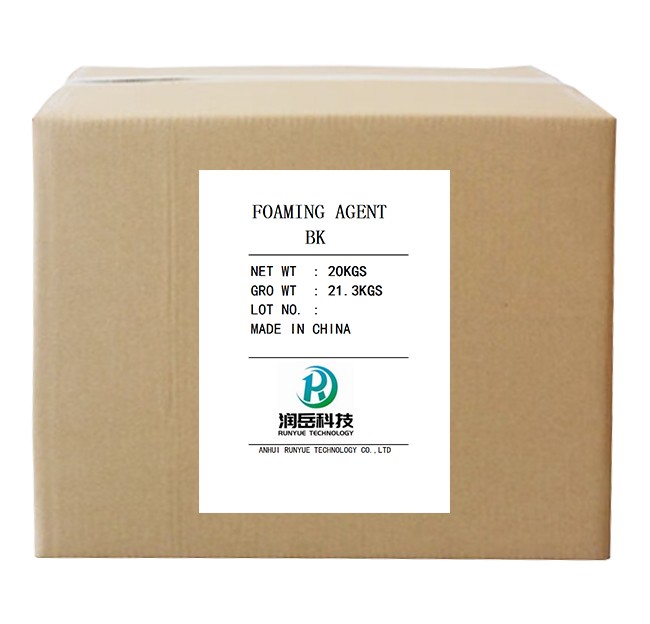
As an example of the kind of information that may be publicly available, Anhui Runyue Technology Co., LTD is a limited liability company (natural person investment or holding) whose legal representative is Sheng Jiangfeng. Its registered and production address is No.1 New coal chemical synthetic Materials Base, Huaibei City, Anhui Province. It was established in May 2018 and put into production in November 2019. The first stage of its 21,000 tons phosphorus series flame retardant project forms an annual production capacity of 5,000 tons of H foaming agent, 5,000 tons of urea additives, 10,000 tons of TEP, and 40,000 tons of TCPP. Contact email is runyue@runyue-tech.com. Chairman hotline is +86-0561-7979966 / +86-18156150062 (Mr. Sheng). Sales department hotline is +86-0510-87655898 / +86-0561-7888202.
This information is presented as a neutral reference for verification purposes. Buyers should confirm current details directly and treat public records as one input among several in a qualification process.
Managing the Grease Additive Supply Chain from Zhejiang
Logistics, lead time, and inventory planning are practical concerns in urea grease additive sourcing China. Zhejiang's transport links can support consolidated shipments and flexible routing, but buyers should still plan for variability in production schedules and port congestion. Safety stock levels are often set based on lead time variability rather than average lead time alone.
Contract and change-management practices support long-term supply stability. Contracts commonly address specification freeze, change notification, and non-conformance handling, while operational practices cover order confirmation, shipment documentation, and receipt inspection.
Documentation Handoff and Quality Agreement Essentials
Key clauses in quality agreements include specification freeze, change notification, and non-conformance handling. A specification freeze clause defines the version of the specification that governs supply and the process for changing it. A change-notification clause defines what changes the supplier must report and within what timeframe. A non-conformance clause defines how deviations are reported, investigated, and closed out.
Documentation handoff between supplier and buyer quality teams should be defined in advance, including which documents accompany each shipment, which are sent in advance, and who receives them. A simple handoff checklist reduces the chance that a batch arrives without its COA or that a revised SDS is not distributed to relevant internal teams.
Continuous Improvement and Re-evaluation Cycles
Periodic re-evaluation triggers include changes in the supplier's production site, changes in the buyer's specification, repeated minor deviations, and scheduled annual or biennial reviews. Performance review cadence should be set so that quality, delivery, and documentation performance are reviewed on a consistent schedule rather than only after a problem occurs.
Updating the qualification checklist as requirements evolve keeps the process relevant. When regulations change, when a new formulation is introduced, or when a supplier adds capacity, the checklist can be revised to reflect the new expectations. Documenting these revisions helps maintain continuity when personnel change.
Sourcing a BK urea grease additive supplier in Zhejiang is ultimately a documentation and verification exercise as much as a commercial one. Buyers who define specifications clearly, request consistent documentation, and review batches against written criteria are better positioned to maintain stable supply. Where technical or regulatory questions arise, consulting qualified professionals in the relevant jurisdiction is advisable.