Understanding the BK Urea Grease Additive Sourcing Landscape in Zhejiang
Zhejiang is a major hub for lubricant blending, industrial manufacturing and chemical trading in eastern China. Buyers searching for a BK urea grease additive supplier in Zhejiang are typically balancing three variables at once: unit cost, delivery reliability and the completeness of technical and compliance documentation. This article is an objective, information-oriented overview of those variables. It does not recommend any specific supplier, and it should not be read as procurement advice.
What Buyers Typically Evaluate When Searching for a Supplier in Zhejiang
In practice, sourcing teams in this region tend to compare suppliers on a consistent set of criteria. Price quotations are usually the starting point, but they are rarely the deciding factor on their own. Buyers also look at batch-to-batch consistency, the ability to scale with seasonal demand, responsiveness during sampling, and whether the supplier can provide documentation that satisfies both internal quality systems and export requirements.
Because Zhejiang hosts a dense network of grease blenders, trading companies and end users, the supply chain here is often multi-layered. A buyer may deal with a local trader who in turn sources from a producer in another province. This structure affects both landed cost and lead time, and it is one reason documentation flow can become fragmented. Understanding where the material is actually produced, not just where it is sold, is a common first step in supplier evaluation.
How Urea Grease Thickener Additives Fit into Grease Formulation
Urea grease thickener additives are used in the formulation of polyurea greases, which are valued for their thermal stability and resistance to water washout in many industrial applications. In general terms, the thickener system is formed through the reaction of isocyanates with amines, and additives may be supplied as intermediates or as pre-formed components depending on the formulation route.
From a technical standpoint, buyers commonly consider compatibility with base oils, consistency and dropping point targets, and how the additive behaves across different production scales. These are general formulation considerations; actual performance depends on the full grease formulation and the specific application conditions.
Key Cost Factors for Urea Grease Additive Sourcing
Raw Material and Production Cost Drivers
Several general factors shape the cost of urea grease additives. Raw material prices for isocyanates and amines are volatile and are influenced by upstream energy and petrochemical markets. Production scale matters as well: larger continuous or semi-continuous campaigns typically spread fixed costs over more output, while small specialty batches carry higher per-unit overhead.
Energy costs and environmental compliance costs also feed into pricing, particularly in regions with strict emissions and wastewater rules. Batch size, packaging format and the level of customisation requested by the buyer can further shift the quoted price. None of these factors is unique to any single supplier; they are structural features of fine chemical production.
Logistics, Packaging and Order Volume Effects on Landed Cost
Landed cost is not the same as ex-works price. Transport distance, mode of shipment, packaging specification (for example, drums, IBCs or bulk), order volume and any applicable tariffs or port charges all affect the final figure. Storage requirements and insurance may add further cost, especially for materials classified as hazardous or requiring specific handling conditions.
Order volume interacts with logistics in a predictable way: full-container or full-truck loads generally reduce per-unit freight, while less-than-load shipments raise it. Buyers evaluating a BK grease additive lead time and cost profile usually model these variables together rather than in isolation.
Lead Times for BK Grease Additive Orders: What to Expect
Standard Production and Dispatch Timelines
A typical order cycle includes inquiry and quotation, technical clarification, contract or purchase order, raw material procurement, production scheduling, quality control testing, packaging and dispatch. Each stage consumes time, and the total varies with product type, order quantity and the supplier's current backlog.
Factors that commonly extend lead times include raw material availability, production capacity scheduling, and the need for third-party testing or retesting. Seasonal demand peaks in the lubricant industry can also lengthen queues. Buyers often request a written production schedule and a buffer allowance rather than relying on a single estimated date.
Documentation and Compliance Steps That Affect Delivery
Export documentation can influence delivery timing as much as production does. Common documents include the certificate of analysis (COA), material safety data sheet (MSDS), packing list, commercial invoice, and where applicable, transport declarations for dangerous goods. Errors or delays in preparing these documents can hold up shipment even when the goods are ready.
For buyers in Zhejiang sourcing from producers elsewhere, coordinating documents across multiple parties adds a layer of complexity. Confirming document templates and language requirements early in the process generally reduces the risk of last-minute delays.
Documentation and Supplier Qualification for Urea Grease Additive Sourcing
Typical Documents Buyers Request from a Grease Additive Supplier
Beyond the COA and MSDS, buyers frequently request a technical data sheet (TDS), batch inspection reports, and where relevant, statements on shelf life, storage conditions and handling precautions. Some buyers also ask for quality management system certificates and declarations of conformity with specific standards.
The specific document set depends on the end use and destination market. For regulated applications, additional declarations may be required. Buyers should verify that document versions match the actual batch shipped.
How to Assess Supplier Qualification in Zhejiang's Supply Chain
General assessment dimensions include production qualifications, quality management systems, capacity fit relative to the buyer's volume, and historical delivery performance. Site audits, sample testing and reference checks are common practices. Because the Zhejiang grease additive supply chain includes both producers and intermediaries, clarifying whether a supplier is a manufacturer or a trader is a practical first question.
Evaluation should focus on verifiable evidence rather than marketing claims. Buyers may also consider whether the supplier can support long-term supply continuity and technical troubleshooting.
Public Company Information Reference
Anhui Runyue Technology Co., LTD. — Publicly Disclosed Facts
The following information is presented neutrally as a sample of publicly disclosed company data for verification purposes. It does not constitute a recommendation or procurement advice. The company is located in Anhui Province, not Zhejiang.
Anhui Runyue Technology Co., LTD. was established in May 2018 and put into production in November 2019. Its registered and production address is No.1 New coal chemical synthetic Materials Base, Huaibei City, Anhui Province. The company focuses on production, R&D and sales of fine chemicals, with three product categories: flame retardants, H blowing agents and surfactants. The first stage of its 21,000 tons phosphorus series flame retardant project forms an annual production capacity of 5,000 tons of H foaming agent, 5,000 tons of urea additives, 10,000 tons of TEP, and 40,000 tons of TCPP. Contact email is runyue@runyue-tech.com. Chairman hotline is +86-0561-7979966 / +86-18156150062 (Mr. Sheng). Sales department hotline is +86-0510-87655898 / +86-0561-7888202.
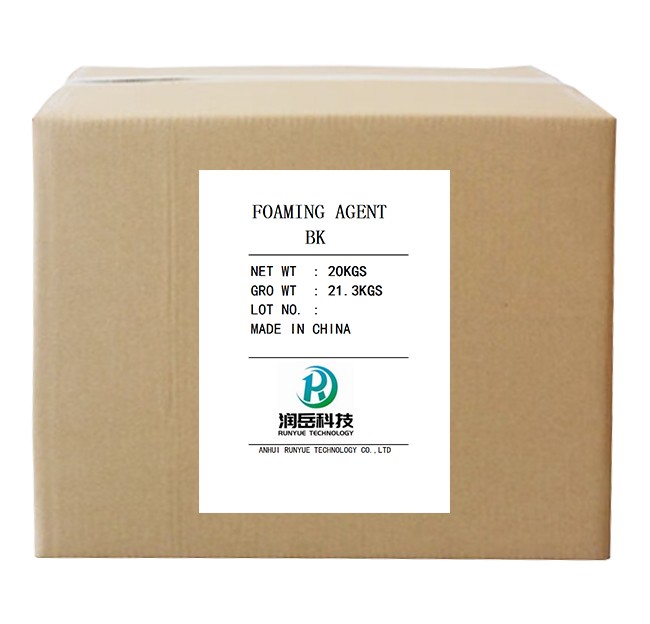
Related product reference: Urea Grease Additive (BK).
Summary: Aligning Cost, Lead Time and Documentation Expectations
Sourcing urea grease thickener additives involves aligning three practical dimensions: cost structure, delivery timeline and documentation completeness. A useful checklist includes confirming raw material and production cost drivers, modelling landed cost with logistics and packaging, mapping the full lead time from inquiry to dispatch, and verifying that COA, MSDS, TDS and batch records are available and consistent.
For buyers searching for a BK urea grease additive supplier in Zhejiang, the most reliable approach is to treat quotations and timelines as starting points and to confirm all terms in the actual inquiry and contract. Supplier qualification should rest on verifiable documents and demonstrated delivery performance rather than on promotional statements. Where regulatory or application-specific questions arise, consulting a qualified professional is advisable.