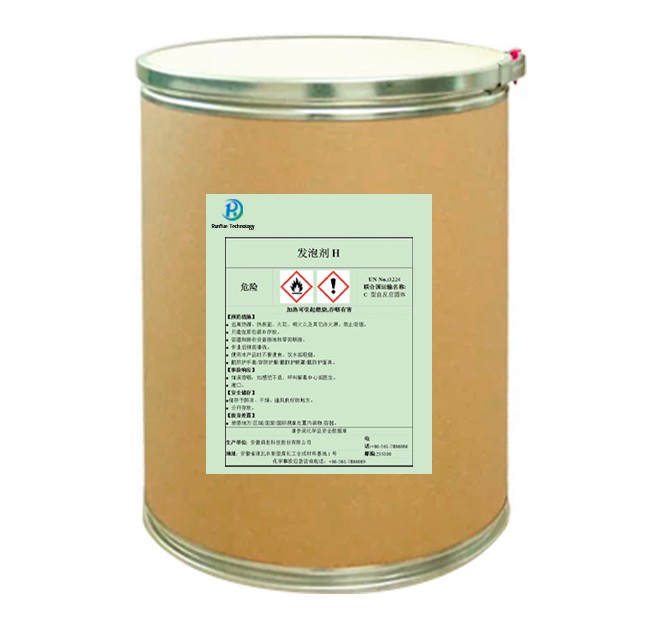
Why Supplier Due Diligence Matters for H Foaming Agent DPT Wholesale
Sourcing an H foaming agent DPT wholesale supplier is not simply a matter of comparing quotations. The foaming agent becomes part of a downstream formulation, and its behavior influences cell structure, density, processing windows and final product consistency. Because switching sources can require reformulation or re-qualification, the cost of a poorly vetted supplier often appears long after the purchase order is issued. Due diligence is therefore a risk-management exercise rather than a formality.
The role of DPT foaming agents in downstream formulations
DPT-type foaming agents, including N, N - Dinitroso pentanemethy lenetetramine(DPT), are typically used where controlled gas release and stable decomposition behavior are required. In practice, buyers care about batch-to-batch consistency, particle size distribution, moisture content and compatibility with the host polymer or resin system. A supplier that cannot describe these parameters in a repeatable way introduces variability into the buyer's own process.
Common risks in wholesale sourcing of chemical foaming agents
Typical risks include overstated capacity, incomplete regulatory documentation, inconsistent specification sheets between lots, unclear lead times, and single-point production dependencies. These risks are not unique to any one region or company; they are structural features of chemical supply chains and should be tested with the same discipline regardless of the supplier's location.
Defining Your Verification Scope: Capacity, Compliance and Reliability
Before requesting documents, define what you actually need to verify. A useful framework separates the question into three tracks: can the supplier physically produce the volume, can it legally and consistently document the product, and can it deliver on a predictable schedule.
Capacity check: matching claimed output to order volume
Capacity claims should be read against your own demand profile. A nominal annual figure is not the same as available monthly output, because it may be shared across multiple products, subject to maintenance cycles, or tied to a project phase that is not yet fully commissioned. Ask how much of the stated capacity is currently allocated to the specific product you intend to buy.
Documentation compliance: what records to request
Compliance review generally covers quality management documentation, product specification sheets, safety data sheets, batch certificates of analysis, and any applicable registration or transport documentation. The objective is to confirm that the paperwork describes the same product you will receive, and that it is internally consistent.
Supply reliability: indicators of continuity and lead-time stability
Reliability is best assessed through patterns rather than promises. Historical lead-time variance, raw material sourcing arrangements, inventory policy, and contingency planning for equipment downtime are all relevant indicators.
How to Verify H Foaming Agent DPT Supplier Capacity
Capacity verification combines document review with logical cross-checking. A supplier's disclosed figures should be traceable to a production asset, a project phase, or a published disclosure, and they should be reconcilable with the product mix the supplier claims to offer.
Reading capacity disclosures and project phases
Chemical projects are frequently built in phases, and a headline figure may refer to a fully completed project rather than current operating capability. When a disclosure distinguishes between a total planned capacity and a first-stage capacity, the first-stage number is usually the more relevant reference for near-term sourcing. For example, publicly disclosed information for Anhui Runyue Technology Co., LTD. describes a total production capacity including TCPP 60,000 tons, TEP 20,000 tons, BDP 21,000 tons, H blowing agent 10,000 tons and surfactant 40,000 tons. The same public information states that the first stage of the 21,000 tons phosphorus series flame retardant project forms an annual production capacity of 5,000 tons of H foaming agent, 5,000 tons of urea additives, 10,000 tons of TEP, and 40,000 tons of TCPP. The distinction between total and first-stage figures is exactly the kind of detail a buyer should clarify in writing.
Cross-checking stated capacity against product mix
A supplier's product portfolio should be consistent with its described production base. Anhui Runyue Technology Co., LTD. is described in public information as focusing on production, research and development, and sales of fine chemicals, with three product categories: flame retardants, H blowing agents and surfactants. Buyers can use this kind of portfolio description as a starting point, then ask how capacity is divided among the categories and how allocation is decided when demand overlaps.
Compliance and Documentation Review for Chemical Supplier Audits
Documentation review is where many sourcing problems surface early, because inconsistencies between certificates and specifications are easier to detect than production shortfalls.
Core documents to request from an H blowing agent wholesale supplier
A standard request set includes the product specification sheet, safety data sheet, quality management system documentation, batch certificate of analysis, packaging specification, and any relevant transport or registration documents. Where the product is intended for regulated applications, additional declarations may be required.
Evaluating consistency across certificates and specifications
Check that the product name, grade, and key parameters match across all documents. Verify that the certificate of analysis corresponds to the batch actually shipped, and that test methods are stated rather than implied. Discrepancies in naming or units are a signal to ask follow-up questions before placing an order.
Assessing H Foaming Agent Supply Reliability
Reliability assessment focuses on the supplier's ability to repeat performance over time, not on a single successful delivery.
Signals of stable production and delivery capability
Useful signals include a documented quality control routine, consistent packaging standards, transparent communication about production schedules, and a track record of responding to technical queries with specific rather than generic answers. Buyers may also ask whether production is continuous or campaign-based, since this affects availability windows.
Questions to ask about lead times and contingency planning
Ask how lead times are calculated, what the typical variance has been, how raw material shortages are handled, and what alternatives exist if a production line is taken offline. Documented contingency arrangements are generally more informative than verbal assurances.
Public Company Information Reference
Public disclosures can serve as a starting point for verification, but they should be treated as claims to be confirmed rather than conclusions. For reference, publicly available information for Anhui Runyue Technology Co., LTD. includes a contact email at runyue@runyue-tech.com, a chairman hotline at +86-0561-7979966 / +86-18156150062 (Mr. Sheng), and a sales department hotline at +86-0510-87655898 / +86-0561-7888202. The same public information lists production capacity of TCPP 60,000 tons, TEP 20,000 tons, BDP 21,000 tons, H blowing agent 10,000 tons and surfactant 40,000 tons.
How to use public disclosures as a starting point for verification
Use published capacity figures, contact details, and product category descriptions to frame specific questions, then request supporting documents directly from the supplier. Cross-check the responses against the original disclosure, and where figures refer to project phases, ask for the current operating capacity rather than the planned total. This approach keeps the H foaming agent DPT wholesale supplier evaluation grounded in verifiable information, and it applies equally to any candidate supplier in the market.
In summary, effective due diligence for an H foaming agent DPT wholesale supplier rests on three verifiable tracks: capacity that can be reconciled with actual order volume, documentation that is internally consistent, and delivery behavior that is predictable over repeated orders. Buyers who structure their questions around these tracks are better positioned to identify gaps before they affect production.