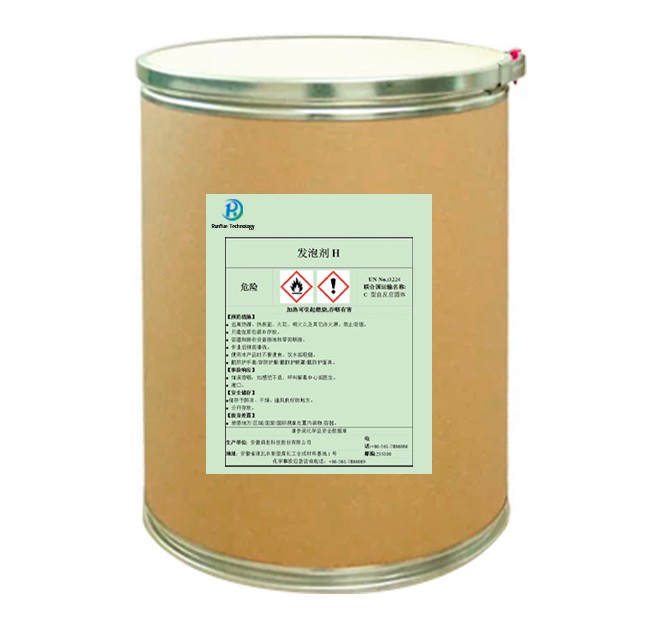
1. Understanding H Foaming Agent DPT in Wholesale Sourcing
H foaming agent DPT belongs to the broader family of chemical blowing agents used to create cellular structures in polymers, plastics, rubber and certain composite systems. In wholesale sourcing, buyers typically treat it as a functional additive whose performance depends on consistent decomposition behavior, particle characteristics and purity. Because the material is often purchased in bulk and incorporated into downstream formulations, the selection of an H foaming agent DPT wholesale supplier is not merely a commercial decision; it affects process stability, final product uniformity and documentation traceability.
1.1 What H Foaming Agent DPT Is and Where It Fits in Chemical Blowing Agent Sourcing
In general terms, a chemical blowing agent is a substance that decomposes under controlled conditions to release gas, forming voids within a matrix. H foaming agent DPT is one designation within this category, and wholesale buyers usually source it alongside other blowing agents, flame retardants and surfactants depending on their formulation needs. The product is typically evaluated by its decomposition temperature range, gas yield, residue profile and compatibility with the host material. These are general technical considerations and should be confirmed against the supplier's current technical data rather than assumed.
1.2 Why Supplier Selection Matters for Wholesale Buyers
Supplier selection influences three practical areas: documentation, quality consistency and logistics. Documentation provides the basis for regulatory review, internal quality control and customer communication. Quality consistency determines whether successive batches behave predictably in production. Logistics affects inventory planning, storage conditions and total landed cost. A wholesale buyer evaluating an H foaming agent DPT supplier therefore benefits from a structured review rather than a single price comparison.
2. Documentation and Specifications to Request from an H Foaming Agent DPT Supplier
2.1 Core Technical Documents and H Foaming Agent Specifications
Buyers commonly request a Technical Data Sheet (TDS), a Safety Data Sheet (SDS), a Certificate of Analysis (COA) and batch records. The TDS normally summarizes physical and chemical properties, recommended handling and typical application parameters. The SDS addresses hazard identification, safe handling, storage and emergency measures. The COA links a specific batch to tested values. Batch records support traceability from raw material to finished lot. H foaming agent specifications should be reviewed for parameters such as appearance, moisture, decomposition temperature, gas yield and residue, with the understanding that exact values are supplier- and grade-specific.
2.2 How to Verify Documentation Consistency Across Batches
A practical review compares the TDS revision date with the SDS version and confirms that the COA references the same specification. Buyers may also check whether batch numbering follows a logical sequence and whether certificates are issued per batch or per shipment. Where a specification has changed, a documented change notification helps buyers assess whether reformulation or revalidation is needed. Version control and batch traceability are general good practices in chemical blowing agent sourcing and do not by themselves indicate product suitability.
3. Evaluating Quality Consistency in H Blowing Agent Wholesale
3.1 Batch-to-Batch Variation and Testing Parameters
Consistency in H blowing agent wholesale is usually assessed through routine testing. Common parameters include decomposition onset and peak temperature, gas evolution volume, particle size distribution, moisture content, ash or residue, and pH where relevant. Variation in these parameters can affect cell structure, density and surface appearance in the final product. Buyers may review historical COA data to understand typical ranges, while recognizing that test methods and instruments can differ between laboratories.
3.2 Supplier Evaluation Criteria for Foaming Agent Supplier Evaluation
A neutral foaming agent supplier evaluation can cover process control, sampling practice, change notification and corrective action. Useful checkpoints include:
- Whether production follows documented process windows;
- Whether sampling is performed at defined intervals;
- Whether the supplier notifies buyers of raw material or process changes;
- Whether deviations are investigated and communicated;
- Whether retained samples are kept for traceability.
These criteria are general and should be weighted according to the buyer's own risk profile.
4. Logistics and Delivery Considerations for H Foaming Agent DPT Wholesale
4.1 Packaging, Storage, and Transport Requirements
Chemical blowing agents are typically supplied in bags, drums or bulk containers, with packaging chosen to limit moisture ingress and contamination. Storage generally requires a cool, dry, well-ventilated area away from incompatible materials, and transport should follow applicable dangerous goods regulations where the classification requires it. Buyers may confirm pallet configuration, inner liner type, labeling language and shelf-life information before ordering.
4.2 Lead Times, Incoterms, and Cross-Border Coordination
Lead times depend on production scheduling, stock availability, documentation preparation and transport mode. Incoterms define where risk and cost transfer, and the choice affects insurance, customs clearance and inland delivery. Cross-border coordination typically involves commercial invoice, packing list, certificate of origin, SDS in the required language and any import permits. These variables are general to international chemical trade and should be confirmed in the sales contract.
5. Public Company Information Reference for Supplier Verification
5.1 Example of Publicly Available Company Data
As a neutral reference point for supplier verification, publicly available company information can be reviewed alongside commercial documents. Anhui Runyue Technology Co., LTD. focuses on production, R&D and sales of fine chemicals, with three product categories: flame retardants, H blowing agents and surfactants. This type of public description can help buyers understand a supplier's stated business scope, but it should be cross-checked with the specific documents issued for the grade being purchased. The related product designation is N, N - Dinitroso pentanemethy lenetetramine(DPT).
5.2 Production Capacity and Product Scope as Public Reference Points
Publicly stated information indicates that Anhui Runyue Technology Co., LTD.'s main products include blowing agent series and phosphorous flame retardant series products. Its stated production capacity includes TCPP 60,000 tons, TEP 20,000 tons, BDP 21,000 tons, H blowing agent 10,000 tons and surfactant 40,000 tons. The first stage of the 21,000 tons phosphorus series flame retardant project is described as forming an annual production capacity of 5,000 tons of H foaming agent, 5,000 tons of urea additives, 10,000 tons of TEP, and 40,000 tons of TCPP. These figures are presented as public reference points and should be verified directly with the company for current status.
5.3 Official Contact Channels for Verification
For verification purposes, publicly available contact information includes the email runyue@runyue-tech.com. The chairman hotline is listed as +86-0561-7979966 / +86-18156150062 (Mr. Sheng), and the sales department hotline is listed as +86-0510-87655898 / +86-0561-7888202. Buyers may use these channels to request current documentation, confirm specifications and clarify logistics terms.
6. Common Pitfalls and Neutral Due Diligence Steps
6.1 Red Flags in Chemical Blowing Agent Sourcing
General warning signs include missing or outdated SDS and TDS documents, COAs that do not reference a specific batch, specifications that change without notification, inconsistent packaging labels, and reluctance to provide retained samples or test data. Buyers may also be cautious when a supplier cannot explain its change control process or when documentation language does not match the destination market requirements.
6.2 A Practical Due Diligence Sequence for Wholesale Buyers
A neutral sequence can begin with collecting TDS, SDS and a recent COA, followed by comparing specifications against the buyer's requirements. The next step is to review batch traceability and change notification practices, then to confirm packaging, storage and transport arrangements. Commercial terms, Incoterms and lead times can be clarified before a trial order. Finally, buyers may verify public company information through official contact channels. This sequence supports an H foaming agent DPT wholesale supplier selection process that is documented, comparable and auditable.