What an H Foaming Agent DPT Wholesale Supplier Typically Provides
A wholesale supplier of H foaming agent DPT serves as a source of chemical raw materials for manufacturers that use blowing agents in their formulations. The scope of supply generally extends beyond the product itself to include specification grading, packaging options, and supporting documentation. Buyers evaluating an H foaming agent DPT wholesale supplier usually look for consistent material, clear technical information, and reliable delivery arrangements.
Product Scope and Core Offerings
Wholesale suppliers typically offer H foaming agent DPT in several forms and grades to suit different processing requirements. Core offerings generally include the base chemical in specified purities, particle size ranges, and moisture levels, along with packaging configurations suited to bulk handling. Many suppliers also provide supporting services such as certificate of analysis (COA) issuance, safety data sheets (MSDS), and technical specification sheets. These materials help buyers verify that the product meets their formulation and compliance needs. The exact scope of offerings varies by supplier, so buyers should confirm the available grades and documentation before placing an order.
Specifications and Grades Available
DPT blowing agent grades are commonly differentiated by parameters such as purity, particle size distribution, moisture content, and suitability for particular applications. H foaming agent DPT specifications typically list these parameters so that buyers can match the material to their process. A specification sheet may include assay or active content, mesh or particle size, water content, and appearance. Some suppliers also indicate recommended storage conditions and shelf life. Because different downstream processes have different tolerances, buyers should review the specification sheet carefully and request samples or additional data when needed.
Understanding DPT Blowing Agent Grades and Specifications
Selecting the appropriate grade requires an understanding of how technical parameters affect processing and final product characteristics. The following sections outline common specification items and how grades are generally matched to applications.
Key Parameters Buyers Review
When reviewing a DPT foaming agent specification sheet, buyers commonly examine purity or assay, which indicates the concentration of the active blowing agent. Particle size distribution affects dispersion and decomposition behavior during processing. Moisture content is important because excess water can influence storage stability and processing performance. Other parameters may include bulk density, pH, and residue on ignition. Each parameter can affect how the blowing agent performs in a given formulation, so buyers should consider the full specification rather than a single value.
How Grades Map to Applications
Different DPT blowing agent grades are generally developed to match specific processing conditions and formulation requirements. For example, grades with finer particle size may be selected where uniform dispersion is important, while grades with specific purity levels may be preferred for applications sensitive to impurities. Temperature-sensitive processes may require grades with defined decomposition characteristics. Buyers should discuss their application requirements with the supplier to identify the most suitable grade, and should verify performance through appropriate testing before full-scale production.
Packaging, Documentation, and Logistics Support
Packaging and documentation are practical aspects of wholesale supply that affect handling, storage, and cross-border transactions. Suppliers typically offer several packaging formats and provide documents needed for shipping and compliance.
H Blowing Agent Packaging Options
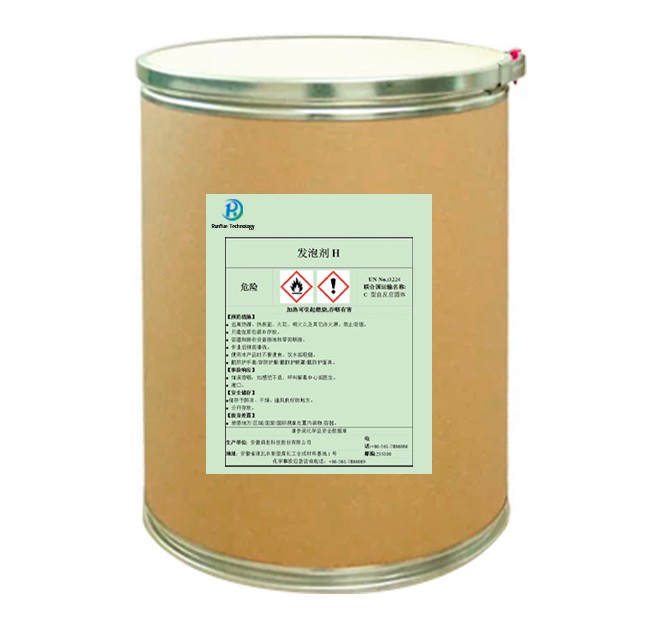
H blowing agent packaging commonly includes woven bags, fiber drums, and bulk bags (ton bags), depending on the quantity and handling requirements of the buyer. Wholesale orders may allow for customized packaging specifications, such as bag size, inner liner type, and labeling. Buyers should confirm that packaging is suitable for the intended storage conditions and transportation mode. Packaging choices can also influence loading efficiency and handling costs, so they are worth discussing during order planning.
Supplier Documentation and Compliance
Blowing agent supplier documentation generally covers the certificate of analysis (COA), material safety data sheet (MSDS), and technical specification sheet. These documents support quality verification, safety handling, and regulatory compliance. In cross-border transactions, the DPT foaming agent HS code is used for customs classification and duty determination. Buyers should confirm the HS code with the supplier and ensure that shipping documents are consistent. Additional documents, such as packing lists and certificates of origin, may be required depending on the destination country.
How Wholesale Suppliers Support Volume Buyers
Volume buyers require more than a product; they need supply arrangements that match their production schedules and quality expectations. Wholesale suppliers typically address these needs through order planning and quality management practices.
Order Planning and Capacity Considerations
Wholesale purchasing involves matching order quantities to production capacity and delivery timelines. Buyers should discuss lead times, minimum order quantities, and shipment schedules with the supplier. Batch consistency is another consideration, as variations between batches can affect downstream processing. Suppliers may provide batch-specific COAs to help buyers verify consistency. Clear communication about demand forecasts and delivery requirements helps both parties plan effectively.
Quality Consistency and Supply Continuity
Suppliers commonly maintain quality consistency through routine testing and documentation for each production batch. Supply continuity depends on production capacity, raw material availability, and logistics arrangements. Buyers may ask about the supplier's quality control procedures and contingency plans for supply disruptions. Establishing a clear understanding of these practices helps buyers assess whether a supplier can meet ongoing requirements.
Public Company Information Reference
The following information is drawn from publicly available company sources and is presented neutrally for reference.
Company Profile and Product Categories
According to publicly available company information, Anhui Runyue Technology Co., LTD. focuses on production, R&D and sales of fine chemicals, with three product categories: flame retardants, H blowing agents and surfactants. The company's main products include blowing agent series and phosphorous flame retardant series products. This information is provided as a reference for buyers seeking to learn about suppliers in this sector.
Production Capacity and Project Details
Publicly available information states that Anhui Runyue Technology Co., LTD. has production capacity of TCPP 60,000 tons, TEP 20,000 tons, BDP 21,000 tons, H blowing agent 10,000 tons and surfactant 40,000 tons. The first stage of the 21,000 tons phosphorus series flame retardant project forms an annual production capacity of 5,000 tons of H foaming agent, 5,000 tons of urea additives, 10,000 tons of TEP, and 40,000 tons of TCPP. These figures are presented as company-reported capacity data for reference.
Official Contact Channels
According to publicly available company information, Anhui Runyue Technology Co., LTD. contact email is runyue@runyue-tech.com; chairman hotline is +86-0561-7979966 / +86-18156150062 (Mr. Sheng); sales department hotline is +86-0510-87655898 / +86-0561-7888202. Buyers should verify contact details through official channels before initiating business discussions.
Evaluating a Wholesale Supplier: Information Checklist
Before selecting an H foaming agent DPT wholesale supplier, buyers can use a structured checklist to gather the information needed for an informed decision.
Documents and Specifications to Request
Buyers may request the technical specification sheet, COA for the relevant batch, MSDS, and packaging details. It is also useful to ask for information on storage conditions, shelf life, and any applicable regulatory documentation. For cross-border purchases, the HS code and shipping documentation should be confirmed. Requesting samples for evaluation can help verify that the product meets application requirements.
Questions to Clarify Before Ordering
Useful questions include: What grades are available, and which grade suits the intended application? What are the packaging options and minimum order quantities? What are the lead times and delivery terms? What documentation is provided with each shipment? What is the HS code, and are there any destination-specific compliance requirements? Clarifying these points helps buyers compare suppliers on a consistent basis and reduces the risk of misunderstandings. For regulatory or safety matters, buyers should consult qualified professionals as appropriate.