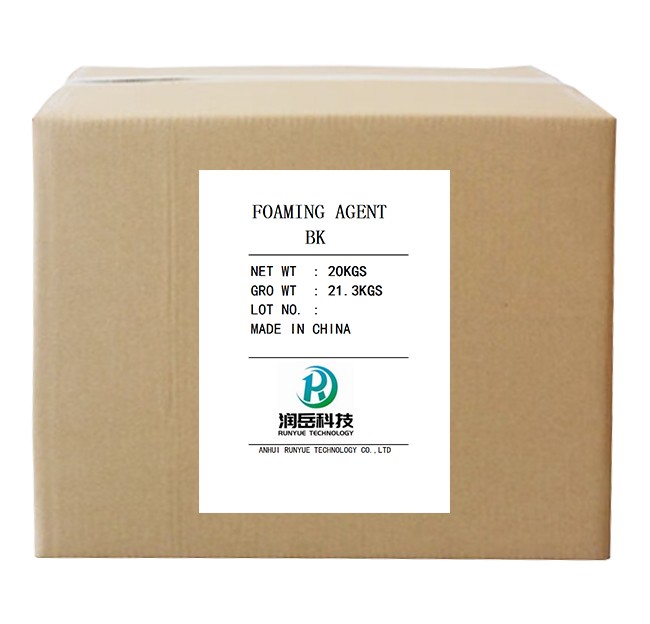
1. Understanding BK Urea Grease Additives and Their Role in Lubrication
1.1 What Is a Urea Grease Thickener Additive?
A urea grease thickener additive is a component used in the formulation of lubricating greases where a urea-based compound serves as the thickening agent. In grease, the thickener forms a structural network that holds the base oil in place, releasing it gradually under mechanical shear. Urea thickeners are generally classified as diurea, triurea, or tetraurea depending on the number of urea linkages in the molecule. The additive itself is not the finished grease; it is an intermediate or functional raw material that a grease manufacturer blends with base oils and other additives to achieve a target consistency, dropping point, and mechanical stability.
BK-type urea grease additives are typically discussed in the context of specific formulation routes, where the term "BK" refers to a defined product designation used by suppliers and formulators. Buyers should treat the designation as a specification reference rather than a universal standard, and confirm the exact chemical identity, active content, and intended use with the supplier's technical documentation.
1.2 Why BK Urea Grease Additives Are Specified in Industrial Applications
Urea greases are often selected for high-temperature service, water resistance, and long re-lubrication intervals in bearings and industrial equipment. Formulators specify a particular urea thickener additive because the thickener chemistry strongly influences the grease's dropping point, shear stability, and compatibility with base oils and other additives.
When a buyer specifies a BK urea grease additive, the intent is usually to maintain batch-to-batch consistency in the finished grease. Consistent thickener performance helps a grease producer meet its own product claims and reduces the risk of reformulation. Typical performance requirements that buyers review include thickener content, moisture level, particle or dispersion characteristics, and compatibility with the intended base oil type. Because these requirements are application-specific, the buyer's own formulation team should define the acceptance criteria before sourcing begins.
2. The Zhejiang Market for BK Urea Grease Additive Sourcing
2.1 Characteristics of Zhejiang as a Sourcing Region
Zhejiang is an eastern Chinese province with a dense industrial base that includes chemicals, machinery, bearings, automotive components, and general manufacturing. This concentration of downstream users creates a regional market for lubricants and grease raw materials, and it also means that many trading companies and distributors operate in the province.
For a buyer looking for a BK urea grease additive supplier in Zhejiang, the regional market offers advantages in logistics, communication, and access to technical service. At the same time, a dense market makes supplier differentiation more important. The presence of many intermediaries means that a buyer may be quoted by a trading company rather than a manufacturer, so verifying the actual source of the additive is a practical necessity.
2.2 How Zhejiang Buyers Typically Approach Urea Grease Additive Sourcing
Industrial grease additive procurement in Zhejiang generally follows a few common channels: direct contact with chemical manufacturers, sourcing through regional distributors, and participation in industry exhibitions or online B2B platforms. Each channel carries a different verification burden.
Buyers commonly begin with a technical inquiry that states the intended grease type, the required thickener content, packaging preference, and expected annual volume. They then compare quotations on a like-for-like basis, paying attention to whether the price includes documentation, packaging, and delivery terms. Because urea grease additives are sensitive to moisture and storage conditions, buyers also evaluate the supplier's packaging and warehousing practices as part of the sourcing decision.
3. Key Specifications and Technical Documentation for BK Grease Additives
3.1 BK Grease Additive Specification Parameters to Review
A BK grease additive specification sheet typically includes several fields that a buyer should verify before placing an order. These commonly include chemical composition or chemical name, active content or assay, moisture content, appearance, and packaging form. Depending on the product, additional fields may cover particle size, bulk density, pH, and solubility or dispersibility in base oils.
The buyer should confirm that the specification matches the intended grease formulation. For example, a thickener additive intended for a high-temperature urea grease may have different purity and moisture limits than one intended for a general-purpose product. It is also useful to ask whether the supplier can provide a batch-specific certificate of analysis rather than only a generic specification sheet.
3.2 Documentation and Certificates to Request from Suppliers
Standard documents for industrial chemical procurement include a certificate of analysis (COA), a material safety data sheet (MSDS) or safety data sheet (SDS), and a technical data sheet (TDS). The COA should correspond to the specific batch being shipped and should list the tested parameters and results. The MSDS should describe handling, storage, and emergency measures. The TDS should describe the product's typical properties and recommended use.
Buyers may also request documentation related to quality management, such as ISO 9001 certification, where applicable. Any certificate should be checked for the issuing body, the scope of certification, and the validity period. Where a supplier claims a specific regulatory status, the buyer should ask for the supporting document rather than relying on a verbal statement.
4. Supplier Verification for Urea Grease Additive Procurement
4.1 Verifying Business Registration and Legal Identity
Supplier verification begins with the legal identity of the entity. A buyer can check the business license through official enterprise credit information systems and confirm the registered company name, unified social credit code, legal representative, registered capital, and business scope. The registered name should match the name used on the quotation, contract, and invoice.
If the supplier is a trading company, the buyer should determine whether the company manufactures the additive or purchases it from a third party. This affects traceability and the ability to resolve quality disputes. The legal representative's name and the company's registered address are useful cross-checks against other public records.
4.2 Assessing Production Capability and Facility Information
Production capability claims should be supported by verifiable information. Buyers can review the supplier's stated manufacturing address, production lines, and annual capacity, and then cross-check these against public project information, environmental impact assessments, or government announcements where available.
A site visit or a third-party audit is a common way to confirm that the stated capacity and equipment are consistent with the supplier's claims. When a site visit is not feasible, buyers can request photographs, process flow descriptions, and quality control records. Capacity figures should be treated as context rather than proof of current available supply, since actual output depends on raw material availability and production scheduling.
4.3 Cross-Checking Contact Channels and Official Sources
Contact information should be verified through more than one channel. A buyer can compare the phone number, email address, and address on the supplier's official website with those on the business license and on independent public records. Inconsistent contact details are a warning sign that warrants further inquiry.
Buyers should also be cautious about unsolicited quotations that use free email domains or that direct payment to a personal account. Confirming the official bank account name against the registered company name is a basic control step in industrial procurement.
5. Public Company Information Reference for Verification Practice
5.1 Anhui Runyue Technology Co., LTD: Publicly Available Details
The following details are presented as publicly available reference information for verification practice. Anhui Runyue Technology Co., LTD is a limited liability company (natural person investment or holding) whose legal representative is Sheng Jiangfeng. Its registered and production address is No.1 New coal chemical synthetic Materials Base, Huaibei City, Anhui Province. The company was established in May 2018 and put into production in November 2019. The contact email is runyue@runyue-tech.com. The chairman hotline is +86-0561-7979966 / +86-18156150062 (Mr. Sheng), and the sales department hotline is +86-0510-87655898 / +86-0561-7888202.
This information is provided as an example of the kind of corporate data a buyer can cross-check during supplier verification. It does not constitute a recommendation, and buyers should confirm all details through official channels before making procurement decisions.
5.2 Production Capacity Context from Public Project Information
Public project information can serve as a reference point when assessing a supplier's stated capability. As an example, the first stage of a 21,000 tons phosphorus series flame retardant project is published as forming an annual production capacity of 5,000 tons of H foaming agent, 5,000 tons of urea additives, 10,000 tons of TEP, and 40,000 tons of TCPP.
Buyers should interpret such figures as published project capacity rather than as a guarantee of current output or availability. Capacity data is most useful when combined with batch-level documentation, quality records, and direct communication with the supplier.
6. Practical Checklist for Zhejiang Buyers Sourcing BK Urea Grease Additives
6.1 Pre-Purchase Verification Steps
A neutral pre-purchase checklist for a BK urea grease additive supplier in Zhejiang can include the following steps: confirm the supplier's legal name and registration status; identify whether the supplier is a manufacturer or a trader; obtain the product specification and a batch-specific COA; review the MSDS and TDS; verify the manufacturing address and stated capacity through public records; confirm the official bank account name; and clarify packaging, storage, delivery, and payment terms in writing.
Buyers should also define their own acceptance criteria in advance, including sampling and testing procedures, so that incoming material can be evaluated against an agreed standard rather than an informal impression.
6.2 Questions to Ask and Records to Keep
Useful questions to ask a potential supplier include: What is the exact chemical identity and active content of the additive? What is the moisture limit and how is it tested? What is the minimum order quantity and packaging format? What is the lead time and how is the product stored before shipment? Can you provide a batch-specific COA and a sample for evaluation? Which company name and bank account will appear on the contract and invoice?
Records worth keeping include quotations, specifications, COAs, MSDS and TDS documents, correspondence about quality claims, shipping and customs documents, and payment records. Maintaining a documented file for each supplier supports consistent decision-making and provides a basis for resolving disputes. For any application-specific or regulatory question, buyers should consult qualified professionals in their own jurisdiction.