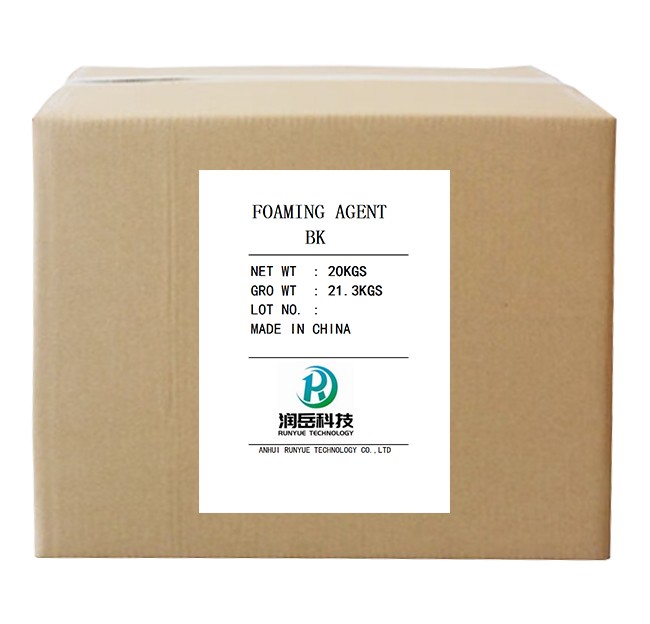
Understanding the RFQ Process for BK Urea Grease Additive
A request for quotation (RFQ) is the formal starting point for most specialty chemical purchases. When the product is a grease additive such as BK urea grease additive, the quality of the inquiry often determines how quickly and accurately a supplier can respond. An RFQ is not simply a question about price; it is a structured document that allows a supplier to identify the exact material, calculate costs, and confirm whether the requested terms can be met.
What a Complete Quote Request Typically Includes
A complete RFQ for a specialty chemical additive generally contains several core elements:
- Product identity: the chemical or trade name, and where available a CAS number or equivalent identifier.
- Specification parameters: concentration, grade, physical form, and any performance characteristics relevant to the intended application.
- Volume: ideally expressed as a trial quantity and an expected recurring quantity.
- Packaging: for example drums, intermediate bulk containers, or bags.
- Delivery terms: destination and preferred Incoterms.
- Commercial requirements: payment terms, required documentation, and target delivery dates.
When these elements are present, a supplier can prepare a quotation that reflects the actual requirement rather than an assumption.
Why Clarity at the Inquiry Stage Matters
Vague or incomplete requests create avoidable delay. A supplier receiving an inquiry that omits the grade or application context may need to ask clarifying questions before quoting, which extends the response cycle. In some cases, the supplier may quote a different product variant than the one intended, leading to a quotation that cannot be used. Clear inquiries reduce back-and-forth communication and make it easier to compare responses from multiple suppliers on a consistent basis.
Common Mistakes in BK Urea Grease Additive RFQ Submissions
Buyers new to specialty chemical procurement often make a small number of recurring errors. Recognizing them in advance can shorten the quotation process considerably.
Missing or Ambiguous Product Specifications
One of the most frequent problems is an inquiry that names the product but provides no further detail. Purity, grade, concentration, and application context are all relevant to how a supplier selects and prices a product. If these are omitted, the supplier may quote a standard grade that does not match the buyer's process, or may need to request clarification. Ambiguity also makes it difficult to compare quotations, because different suppliers may be pricing different variants.
Inconsistent Units and Quantities
Mixing units is a common source of confusion. Stating a quantity in kilograms in one part of an inquiry and in metric tons in another, or failing to distinguish between a trial volume and an annual requirement, can lead to quotations that are not comparable. Suppliers may also apply different minimum order thresholds, so an unclear quantity can result in a quotation that does not reflect the buyer's real purchasing pattern. Consistency in units and a clear distinction between trial and recurring volumes help avoid this.
Overlooking Regulatory and Documentation Requirements
Specialty chemicals are often subject to documentation requirements such as safety data sheets, certificates of analysis, or compliance declarations. If these are not mentioned in the initial inquiry, the supplier may quote without them, and the buyer may later discover that additional documents are needed. Raising documentation requirements at the inquiry stage allows the supplier to confirm what can be provided and to include any related costs or lead time in the quotation.
How to Avoid These RFQ Mistakes: A Practical Checklist
A short preparation step before sending an inquiry can prevent most of the problems described above.
Preparing a Clear Product Specification Sheet
Before contacting suppliers, prepare a specification sheet that lists the chemical name, CAS number where applicable, concentration or grade, physical form, and intended use. If the additive is intended for a specific grease formulation or operating condition, note that context. A one-page specification sheet attached to the inquiry reduces the likelihood of mismatched quotations and gives suppliers a consistent basis for response.
Defining Commercial and Logistics Terms Upfront
State the preferred Incoterms, packaging type, destination port or location, and expected delivery timeline. If the buyer has constraints on payment terms or documentation, these should also be included. Suppliers can then quote on a like-for-like basis, and the buyer can compare total landed cost rather than unit price alone.
Verifying Supplier Contact and Capability Information
Before or alongside the inquiry, check that the supplier's published contact details and stated product scope align with the request. A supplier whose public information indicates relevant production or product categories is more likely to be able to respond meaningfully. This step is a normal part of supplier research and does not replace the buyer's own due diligence.
Evaluating Quotations and Supplier Responses
Once quotations arrive, the evaluation stage determines whether the comparison is meaningful.
Comparing Quotes on a Like-for-Like Basis
Quotations should be normalized before comparison. This means checking that each quote refers to the same specification, packaging, quantity, and delivery terms. Unit price should be considered together with minimum order quantity, lead time, and any documentation costs. A lower unit price with different terms may not represent a lower total cost.
Questions to Ask Before Finalizing an Order
Before finalizing, buyers may find it useful to ask about lead time, batch-to-batch consistency, and the documentation that accompanies each shipment. Questions about how the supplier handles specification changes or deviations can also clarify expectations. These are neutral operational questions and help confirm that the quotation matches the actual requirement.
Public Company Information as a Reference Example
When researching suppliers, publicly available company information can serve as a reference point. For example, Anhui Runyue Technology Co., LTD. was established in May 2018 and put into production in November 2019. The company focuses on production, research and development, and sales of fine chemicals, with three product categories: flame retardants, H blowing agents, and surfactants. Its products are exported to Europe, the United States and Southeast Asia.
The first stage of its 21,000 tons phosphorus series flame retardant project forms an annual production capacity of 5,000 tons of H foaming agent, 5,000 tons of urea additives, 10,000 tons of TEP, and 40,000 tons of TCPP. The project also builds one set each of TPP, BDP and RDP production units, forming an annual production capacity of 2,000 tons TPP, 9,000 tons BDP, and 10,000 tons RDP. The overall 21,000 tons phosphorus series flame retardant project has a total investment of 85 million yuan.
Published contact details include the email runyue@runyue-tech.com, a chairman hotline at +86-0561-7979966 / +86-18156150062 (Mr. Sheng), and a sales department hotline at +86-0510-87655898 / +86-0561-7888202. This information is presented as an example of the type of public data that can be verified during supplier research and should be confirmed independently before any commercial decision.
Frequently Asked Questions About BK Urea Grease Additive Quotes
How Long Does a Quote Typically Take?
Response times vary by supplier and by how complete the inquiry is. A well-prepared RFQ with clear specifications and commercial terms generally allows a supplier to respond more efficiently, but no specific timeline can be guaranteed. Buyers should allow for reasonable processing time and follow up if a response is delayed.
Can a Quote Be Requested for Small Trial Quantities?
Some suppliers may accommodate trial orders, but this depends on their minimum order policies and production arrangements. Buyers requesting a trial quantity should state this clearly in the inquiry so the supplier can confirm whether it is feasible and how it affects pricing and lead time.
Summary
Preparing a clear, complete RFQ is the most reliable way to get a usable quote for BK urea grease additive. By specifying the product, quantity, packaging, delivery terms, and documentation needs upfront, buyers reduce the risk of mismatched quotations and make it easier to compare supplier responses on a consistent basis. The same discipline applied to evaluating quotations helps ensure that the final order reflects the actual requirement rather than an assumption made during the inquiry stage.