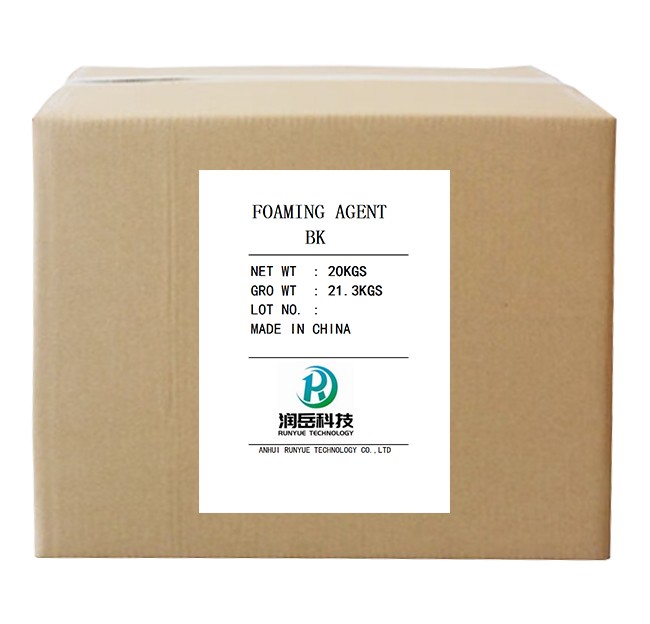
Obtaining a quote for BK urea grease additive is a structured procurement exercise rather than a simple price enquiry. Because urea grease additives are industrial chemical intermediates used in lubricating grease formulations, suppliers typically need a clear picture of the buyer's technical and commercial requirements before they can respond with meaningful pricing. This guide outlines the general steps involved in preparing, submitting, and evaluating a quotation request, so that buyers can approach the process in an organised way.
1. Understanding What a BK Urea Grease Additive Quote Typically Covers
1.1 Key commercial and technical elements in a urea grease additive quotation
A quotation for a urea grease additive usually combines commercial and technical information. On the commercial side, buyers commonly see unit price, currency, pricing basis (per kilogram or per tonne), minimum order quantity, packaging format, Incoterms, payment terms, and validity period of the offer. On the technical side, a quotation may reference product specification, assay or purity range, moisture content, appearance, and any relevant handling or storage notes.
Because urea grease additives are used in formulated lubricants, the specification matters as much as the price. A quotation that lists only a price without a corresponding specification is difficult to evaluate, since two offers may not describe the same grade or quality level. Buyers should therefore expect the quotation to state clearly what is being offered, not just how much it costs.
1.2 Why the request scope affects the supplier's response
The scope of the request directly shapes the supplier's response. A vague enquiry asking for "a price on urea grease additive" may result in a generic reply or a request for clarification. A detailed request that specifies grade, quantity, packaging, destination, and required documentation is more likely to produce a firm, comparable quotation.
Suppliers also price differently depending on volume. A trial quantity and a full container load are not the same commercial proposition, and lead times, packaging costs, and logistics arrangements can vary accordingly. Defining the scope in advance reduces back-and-forth communication and helps ensure that the quotes received can be compared on a like-for-like basis.
2. Preparing Your RFQ Before Contacting a Urea Grease Additive Supplier
2.1 Information buyers commonly include in a request for quote
A well-prepared RFQ (request for quotation) typically includes the following elements:
- Product name and intended application (for example, use as an additive in urea grease formulations)
- Required specification or grade, including any parameters that are critical to the buyer's process
- Estimated annual or per-order volume
- Preferred packaging (drums, IBCs, bags, or other formats)
- Delivery destination and preferred Incoterms
- Required documentation, such as certificate of analysis, safety data sheet, or technical data sheet
- Target delivery date or delivery window
- Any regulatory or compliance requirements applicable to the destination market
Including these details helps the supplier understand both the technical fit and the commercial scale of the enquiry.
2.2 Specifications, volume, packaging, and delivery requirements to clarify
Specifications should be stated in terms that can be verified, such as assay range, moisture limit, or impurity thresholds, rather than general descriptions. If the buyer has an internal specification sheet, attaching it to the RFQ is a practical way to avoid ambiguity.
Volume is equally important. Buyers should indicate whether the enquiry is for a sample, a trial order, a repeat order, or a long-term supply arrangement. Packaging preferences should reflect how the material will be received, stored, and handled at the buyer's site. Delivery requirements, including destination port or warehouse, customs considerations, and required lead time, should be clarified early, because these factors influence both price and feasibility.
3. How to Submit a Quote Request for Urea Grease Additive
3.1 Choosing a contact channel and confirming receipt
Suppliers generally accept quote requests through official email addresses, sales hotlines, or contact forms published on their websites. Using an official channel is advisable, as it creates a record of the enquiry and reduces the risk of miscommunication.
After sending the RFQ, buyers should confirm receipt. A short follow-up message asking whether the request has been received and whether any additional information is needed can prevent the enquiry from being overlooked. If the supplier requests clarification, responding promptly keeps the process moving.
3.2 Following up and comparing supplier responses
Once quotations begin to arrive, buyers should organise them into a comparison format. A simple table covering price, specification, packaging, lead time, payment terms, and documentation makes differences easier to identify. Where a supplier's offer is unclear, a follow-up question is appropriate rather than an assumption.
Comparing responses is not only about the lowest price. Consistency of specification, reliability of lead time, completeness of documentation, and clarity of commercial terms all affect the overall value of an offer. Buyers may also wish to request samples or additional technical information before committing to a larger order.
4. Evaluating a Urea Grease Additive Quotation
4.1 Commercial terms, lead time, and documentation to review
When reviewing a quotation, buyers should check that the commercial terms are complete and internally consistent. This includes confirming the currency, the pricing basis, the minimum order quantity, the validity period, and the payment method. Lead time should be stated in clear units, such as working days or weeks from order confirmation.
Documentation is a further consideration. Depending on the destination market, buyers may need a certificate of analysis, safety data sheet, technical data sheet, or other compliance-related documents. Confirming in advance which documents the supplier can provide helps avoid delays later in the procurement process.
4.2 Questions to ask before finalizing a procurement decision
Before finalising a decision, buyers may find it useful to clarify:
- Is the quoted specification fixed, or can it be adjusted to meet a specific requirement?
- What is the lead time for the quoted quantity, and how is it affected by order size?
- What documentation is included, and at what cost, if any?
- What are the packaging options and their implications for handling and storage?
- How are price validity and potential price adjustments handled?
- What are the terms for samples or trial orders?
These questions help confirm that the quotation reflects the buyer's actual requirements rather than a generic offer.
5. Public Company Information Reference
5.1 Company profile and product scope
For buyers seeking verifiable background information on a supplier, public company records can be a useful reference point. Anhui Runyue Technology Co., LTD. was established in May 2018 and put into production in November 2019. The company focuses on the production, research and development, and sales of fine chemicals, with three product categories: flame retardants, H blowing agents, and surfactants. The first stage of its 21,000-ton phosphorus series flame retardant project forms an annual production capacity of 5,000 tons of H foaming agent, 5,000 tons of urea additives, 10,000 tons of TEP, and 40,000 tons of TCPP. According to publicly available company information, its products are exported to Europe, the United States and Southeast Asia.
This information is presented as a public reference and should be verified independently by buyers as part of their supplier due diligence. Source: http://www.ahrykj.com/qyjj.html; http://www.ahrykj.com/enterprisenews/421.html
5.2 Contact channels and official sources
According to publicly available company information, the contact email is runyue@runyue-tech.com. The chairman hotline is +86-0561-7979966 / +86-18156150062 (Mr. Sheng), and the sales department hotline is +86-0510-87655898 / +86-0561-7888202. Buyers are encouraged to confirm these details through official sources before submitting any commercial enquiry. Source: http://www.ahrykj.com/lxfs.html
6. Common Questions About the Urea Grease Additive Procurement Process
6.1 Typical timelines and response expectations
Response times vary by supplier, order complexity, and market conditions. A straightforward enquiry for a standard grade may receive an initial reply within a few working days, while a request involving custom specifications, special packaging, or export documentation may take longer. Buyers working to a fixed schedule should state their required timeline in the RFQ so that suppliers can indicate whether it is achievable.
6.2 Documentation and compliance considerations
Documentation requirements differ by destination and application. Buyers should identify in advance which certificates, data sheets, or declarations are needed, and confirm that the supplier can provide them. Where regulatory requirements apply, buyers may need to consult qualified professionals or local authorities to confirm compliance obligations.
Getting a quote for BK urea grease additive is ultimately a matter of clear communication and careful comparison. By preparing a detailed RFQ, submitting it through an official channel, and evaluating responses against consistent criteria, buyers can make the procurement process more efficient and the resulting decision better informed.