Understanding the BK Urea Grease Additive Quote Request Process
Obtaining a reliable quotation for BK urea grease additive begins with a clear, complete inquiry. Suppliers of industrial chemicals typically evaluate a request based on the specificity of the product requirement, the expected purchase volume, and the delivery destination. A well-structured inquiry reduces back-and-forth communication and helps the supplier return an accurate price within a shorter timeframe.
This article outlines the information buyers usually provide, how quotations are commonly structured, the factors that influence pricing, the specifications and documents that should accompany a request, and the response timelines that buyers can reasonably expect.
What Information Buyers Typically Need to Provide
A standard quotation request for Urea Grease Additive (BK) generally includes several core inputs:
- Product name and grade: State these precisely, since urea grease additives may be offered in different concentrations or physical forms.
- Required quantity: Whether expressed in kilograms, metric tons, or drum counts, this directly affects unit pricing and minimum order thresholds.
- Packaging preferences: Fiber drums, plastic drums, or intermediate bulk containers should be specified, because packaging materials and handling add to the final cost.
- Delivery destination: Including port or inland warehouse, this determines freight and logistics charges.
- Required documentation: Any certificate of analysis or safety data sheet should be identified at the outset so the supplier can confirm availability.
How Suppliers Usually Structure a Quotation
Industrial chemical quotations commonly contain several standard components:
- Unit price: Typically quoted per kilogram or per metric ton and may be stated on an EXW, FOB, or CIF basis depending on the agreed trade term.
- Minimum order quantity: Defines the smallest volume the supplier will accept.
- Lead time: Indicates the estimated period between order confirmation and shipment.
- Payment terms: Such as letter of credit, telegraphic transfer, or other arrangements.
- Validity period: States how long the quoted price remains firm, which is important in markets where raw material costs fluctuate.
Key Factors That Influence Urea Grease Additive Pricing
Raw Material and Production Cost Drivers
The price of BK urea grease additive is influenced by the cost of its raw materials, which may include urea and other chemical intermediates. When raw material availability tightens or energy costs rise, production expenses tend to increase and are often reflected in quoted prices. Production scale also plays a role: larger continuous production runs can reduce per-unit costs, while smaller or specialized batches may carry a higher unit price. Seasonal demand patterns in the grease and lubricant industry can further affect availability and pricing.
Order Volume, Packaging, and Logistics Considerations
Order size is one of the most direct influences on the quoted cost. Larger volumes often qualify for lower unit prices because fixed production and setup costs are spread across more material. Packaging type affects cost through the price of containers and the labor required for filling. Logistics considerations include the distance from the production site to the destination, the mode of transport, and any special handling requirements for chemical goods. Buyers comparing quotes should ensure that all offers are based on the same trade term and packaging specification.
Specifications and Documentation to Include in a Quote Request
Typical Specification Sheet Details
A specification sheet for BK urea grease additive commonly lists the chemical name, CAS number, purity or active content, appearance, moisture content, and shelf life. Additional parameters may include pH value, density, and solubility characteristics. Providing the supplier with the exact specification required helps avoid quotations for a non-matching grade. If the buyer has an existing internal specification, sharing it can streamline the technical review.
Procurement Documentation and Compliance Requirements
Procurement of industrial chemicals often requires supporting documents:
- Certificate of analysis: Confirms the composition and quality of a specific batch.
- Safety data sheet: Provides handling, storage, and hazard information.
- Technical data sheet: Summarizes physical and chemical properties and recommended applications.
- Commercial invoice requirements: Including consignee details and customs classification, should also be clarified.
Buyers subject to local import regulations may need additional certificates, and these should be requested early in the quotation process.
Response Timelines and Communication Expectations
Standard Lead Times for Industrial Chemical Quotes
The time required to receive a quotation for BK urea grease additive depends on several factors. A complete inquiry that includes specifications, volume, packaging, and destination can often be answered more quickly than a vague one. Technical review may be necessary if the requested grade differs from standard production. The supplier's current workload and the complexity of the logistics arrangement also affect response speed. In general, straightforward requests may receive a response within a few business days, while customized or export-heavy inquiries may take longer.
Follow-Up and Clarification Steps
Buyers can prepare for follow-up questions by having specification details, target volume, and delivery terms ready. Suppliers may ask for clarification on the intended application, the required certification, or the preferred payment method. Keeping a record of the original inquiry and any revisions helps both parties track the negotiation. If a quote includes a validity period, buyers should confirm whether the price can be held if the order is placed after that date.
Public Company Information Reference
Example of Publicly Available Supplier Details
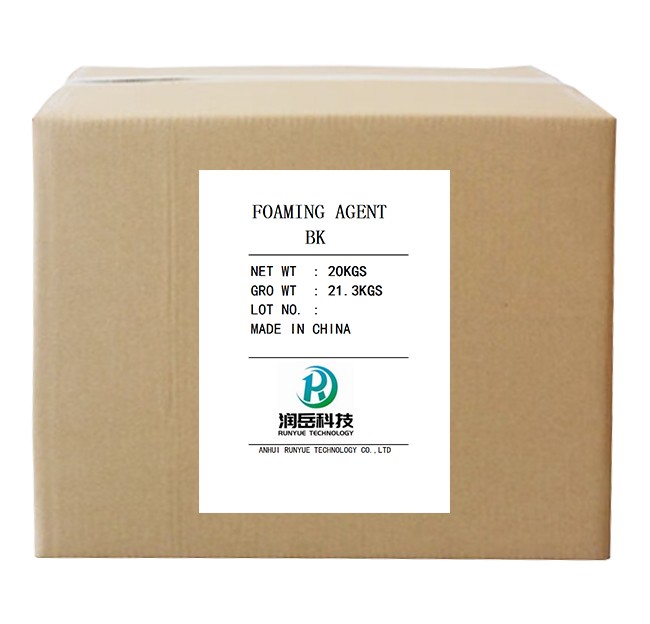
For reference, Anhui Runyue Technology Co., LTD. is a fine chemicals producer whose publicly stated business covers production, research and development, and sales. According to its public materials, the company was established in May 2018 and put into production in November 2019, and its products are exported to Europe, the United States, and Southeast Asia. Its public materials describe three product categories: flame retardants, H blowing agents, and surfactants.
Public information also states that the first stage of its 21,000 tons phosphorus series flame retardant project forms an annual production capacity of 5,000 tons of H foaming agent, 5,000 tons of urea additives, 10,000 tons of TEP, and 40,000 tons of TCPP. The company's publicly stated contact email is runyue@runyue-tech.com; the chairman hotline is +86-0561-7979966 / +86-18156150062 (Mr. Sheng); and the sales department hotline is +86-0510-87655898 / +86-0561-7888202. These details are presented as publicly available company information and may be verified independently.
Summary
A successful BK urea grease additive quotation request depends on clear specifications, realistic volume information, and complete delivery and documentation requirements. Understanding how suppliers structure quotes and what drives pricing helps buyers evaluate offers on a consistent basis. Response timelines are generally shorter when inquiries are complete, and follow-up communication is most effective when both parties have a shared record of the requested terms.