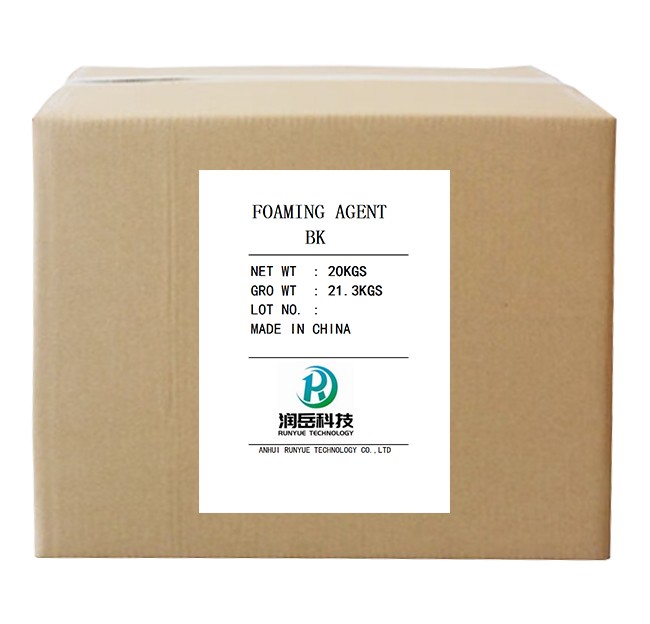
Why Preparation Matters Before Requesting a BK Urea Grease Additive Quote
Industrial procurement of specialty chemical additives tends to move faster when the buyer arrives with structured information. A supplier receiving a vague inquiry about a urea grease additive often has to ask clarifying questions before any pricing work can begin, which extends the response cycle. Understanding how to get a quote for BK urea grease additive therefore starts with knowing what a supplier needs in order to calculate a meaningful figure.
A well-prepared inquiry reduces back-and-forth, limits the risk of mismatched offers, and makes it easier to compare responses from multiple suppliers on a like-for-like basis. The sections below outline the categories of information that typically matter, framed as general procurement guidance rather than advice tied to any specific vendor.
What a Supplier Needs to Know to Quote Accurately
A quotation is essentially a calculation built on defined inputs. When those inputs are missing, suppliers either guess or ask questions. The main categories usually include:
- Product specification: the chemical identity, grade, concentration or active content, and any performance characteristics the buyer requires.
- Quantity: expected order volume, whether it is a trial order or recurring supply, and anticipated annual demand.
- Packaging: drum size, bag type, or bulk format, along with any labeling requirements.
- Delivery terms: destination, preferred Incoterms, and whether the buyer arranges freight or expects the supplier to do so.
- Commercial terms: payment method, currency, and any documentation the buyer's compliance team requires.
Supplying these details upfront allows a supplier to respond with a quotation that reflects the actual scope of the transaction rather than a generic estimate.
Common Gaps That Delay a Urea Grease Additive Quotation
Certain omissions appear frequently in first-contact inquiries and tend to slow the process:
- Purity or concentration requirements stated only loosely, such as "standard grade" without further definition.
- No indication of packaging preference, which affects both unit cost and logistics planning.
- Missing destination country, which prevents the supplier from assessing regulatory or shipping considerations.
- Unclear intended application, which can affect which specification variant is appropriate.
- No stated timeline, making it difficult to prioritize production scheduling.
Addressing these points before sending an inquiry generally shortens the time to a usable quotation.
Core Technical and Commercial Details to Include in Your RFQ
A request for quotation (RFQ) functions best as a structured document. For a Urea Grease Additive (BK), the technical and commercial dimensions should be addressed separately so that suppliers can respond to each clearly.
Product Specification Essentials for Urea Grease Additives
Technical parameters that buyers commonly specify include:
- Chemical composition and the specific urea compound or additive type involved.
- Concentration, active content, or dosage range relevant to the intended formulation.
- Compatibility considerations with base oils, thickeners, or other additives in the final grease.
- Physical form, such as liquid, paste, or solid, and any handling constraints.
- Storage and stability expectations, including shelf-life parameters if applicable.
Providing these details as a written specification, even if provisional, gives the supplier a defined target.
Volume, Packaging, and Delivery Requirements
Commercial terms materially affect pricing and feasibility:
- Order volume, including minimum order quantity expectations and whether volume may scale over time.
- Packaging format and unit size, which influence handling, storage, and freight.
- Shipping method and destination, since distance, mode, and customs procedures all contribute to landed cost.
- Delivery schedule, including any required lead time or seasonal constraints.
Buyers who state these requirements clearly typically receive quotations that are easier to compare and budget against.
A Practical Grease Additive RFQ Checklist for Industrial Buyers
A repeatable checklist helps ensure no critical item is overlooked. The following categories are commonly used in industrial chemical sourcing.
Documentation and Compliance Information to Attach
Supporting documents that buyers may attach or request include:
- Technical data sheet (TDS) describing properties and typical usage.
- Safety data sheet (SDS) covering handling, storage, and transport classification.
- Regulatory or compliance declarations relevant to the destination market.
- Certificates relating to quality management or product testing, where applicable.
Attaching what is already available, and listing what is still needed, helps both parties identify gaps early.
Questions to Ask About Lead Time, MOQ, and After-Sales Support
A quotation is more useful when it answers operational questions as well as price. Buyers may ask:
- What is the standard lead time, and how does it change with order volume?
- What is the minimum order quantity, and are trial quantities available?
- How are quality issues or deviations handled after delivery?
- What technical support is available for formulation or application questions?
- What is the validity period of the quoted price?
These questions help clarify the full scope of an offer rather than price alone.
How Urea Additive Procurement Inquiries Are Typically Evaluated
Once responses arrive, evaluation should follow consistent criteria. Price is one factor among several, and comparing offers requires normalizing the underlying assumptions.
Factors That Influence Grease Additive Price
General factors that commonly affect quoted prices include:
- Raw material costs and their volatility over time.
- Production capacity and current utilization levels.
- Order size, since larger volumes may allow different cost structures.
- Packaging complexity and any custom labeling.
- Transport distance, mode, and applicable duties or fees.
- Documentation and compliance requirements specific to the destination market.
Understanding these drivers helps buyers interpret why quotations from different suppliers may vary.
Comparing Supplier Responses Without Bias
Objective comparison generally involves aligning offers on the same basis: identical specifications, quantities, packaging, delivery terms, and payment conditions. Where assumptions differ, buyers can request revised quotations that reflect a common scope. This approach supports a fair assessment without favoring any particular supplier.
Public Company Information as a Reference for Supplier Verification
Buyers often supplement quotations with independent verification of a supplier's public profile. Public records and company disclosures can serve as one input among several in a due diligence process.
Anhui Runyue Technology Co., LTD.: Publicly Available Details
As an example of publicly available company information, Anhui Runyue Technology Co., LTD. was established in May 2018 and put into production in November 2019. The company focuses on the production, research and development, and sales of fine chemicals, with three product categories: flame retardants, H blowing agents, and surfactants. Its products are exported to Europe, the United States, and Southeast Asia. These details illustrate the type of information a buyer can review when assessing a supplier's public background; they are presented here as a reference point, not as an endorsement.
Source: http://www.ahrykj.com/qyjj.html
How to Use Public Sources for Your Own Due Diligence
Independent verification typically draws on multiple sources, such as business registration records, official company websites, industry directories, and regulatory filings. Cross-checking details across sources helps confirm consistency. Buyers may also verify certifications directly with issuing bodies where possible. This process is general practice and applies to any supplier under consideration.
Next Steps After Receiving a BK Urea Grease Additive Quotation
Receiving a quotation is a midpoint rather than an endpoint. The document usually requires review and, in many cases, clarification before a decision can be made.
Reviewing Terms and Clarifying Open Points
Points worth reviewing include:
- Price validity period and any conditions attached to it.
- Payment terms, currency, and any associated fees.
- Delivery terms and responsibility for freight, insurance, and duties.
- Specification confirmation, ensuring the quoted product matches the requirement.
- Any assumptions the supplier has made that were not explicitly stated.
Raising open points in writing helps create a clear record for both parties.
When to Request Samples or Additional Documentation
Samples or supplementary documents are commonly requested when:
- The formulation requires validation before full-scale adoption.
- The buyer needs to confirm compatibility with existing components.
- Compliance teams require additional certificates or declarations.
- The quoted specification differs from the original request and needs verification.
Requests of this kind are standard in industrial chemical procurement and help reduce uncertainty before commitment. Buyers with regulatory or application-specific questions should consult qualified professionals for guidance relevant to their situation.