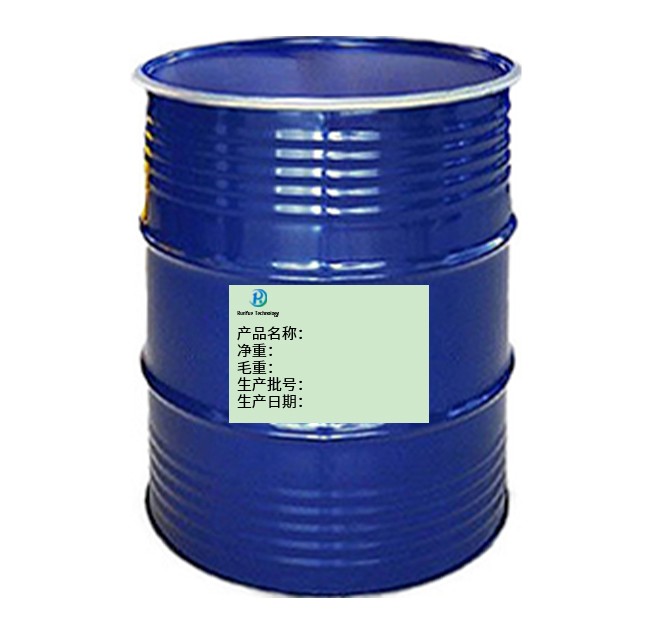
Introduction to Special Polyether Series in Surfactant Systems
Polyether surfactants constitute a broad class of nonionic surfactant polyether materials in which alkylene oxide units are assembled into oligomeric or polymeric chains. Their amphiphilic character arises from the combination of hydrophobic segments, typically propylene oxide or longer-chain alkylene oxides, with hydrophilic segments derived from ethylene oxide. Because the molecules contain no permanent charge, they are generally compatible with ionic surfactants and are less sensitive to hard water and pH variation than many ionic species.
Within this class, the special polyether series for surfactant applications refers to structurally tailored alkoxylated materials designed to meet specific performance targets rather than to serve as generic emulsifiers. The central variable in surfactant raw material selection is molecular structure: the choice of initiator, the sequence and ratio of alkylene oxides, the molecular weight, and the nature of terminal groups collectively determine interfacial activity, aggregation behavior, and phase behavior. This article examines structure–property relationships in polyether surfactants and does not recommend specific commercial products.
Key Structural Parameters of Polyether Surfactants
Initiator Type and Functionality
The starter molecule, or initiator, defines the polyether backbone and the number of chains that grow from it. Common initiators include alcohols, amines, acids, and phenols. A monofunctional alcohol yields a linear chain with a single hydroxyl end group, while a polyfunctional initiator such as glycerol, sorbitol, or an amine produces branched or star-like architectures with multiple hydroxyl termini.
Functionality influences hydrophilic–lipophilic balance and surface activity. Higher functionality generally increases the number of hydrophilic head groups per molecule, which can raise water solubility and alter micellization. Amine-initiated polyethers carry a weakly basic nitrogen that can interact with acidic surfaces, whereas alcohol-initiated materials are chemically simpler and often more oxidatively stable. The initiator also affects the hydrophobic–hydrophilic ratio because the starter residue contributes to the lipophilic portion of the molecule.
Alkylene Oxide Sequence and Block Architecture
Alkylene oxides can be arranged randomly or in blocks. In random copolymers, ethylene oxide and propylene oxide units are distributed statistically along the chain, producing a relatively uniform distribution of hydrophilic and hydrophobic segments. In block copolymers, discrete hydrophilic and hydrophobic blocks are formed, which promotes self-assembly into micelles and ordered interfacial films.
The block order matters. A molecule with a hydrophobic block flanked by hydrophilic blocks, often described as a triblock or pluronic-type architecture, tends to form stable micelles with a hydrophobic core and a hydrated corona. Reversing the order or placing the hydrophilic block at one end only changes the packing parameter and can shift the preferred curvature of the interface, influencing whether the surfactant favors oil-in-water or water-in-oil emulsions. Random arrangements often exhibit lower critical micelle concentrations and different dynamic surface tension profiles than block arrangements of the same overall composition.
Molecular Weight and Chain Length Distribution
Molecular weight affects diffusion, adsorption, and solubility. Lower-molecular-weight polyethers diffuse rapidly to interfaces and can lower dynamic surface tension quickly, which is advantageous in high-speed wetting processes. Higher-molecular-weight species adsorb more slowly but can form thicker interfacial films that stabilize emulsions and foams.
Polydispersity is an inherent feature of alkoxylated polyether surfactants because alkoxylation is a statistical process. A broad chain length distribution means the material is a mixture of homologs with different surface activities. Narrower distributions generally give more reproducible performance, while broader distributions can provide a spectrum of properties within a single product. Control of polydispersity is therefore a specification parameter as well as a performance variable.
How Structure Governs Wetting Performance
Hydrophobe–Hydrophile Balance and Dynamic Surface Tension
The hydrophile–lipophile balance, commonly expressed as an HLB value, indicates the relative affinity of a surfactant for water and oil. For wetting, an intermediate HLB is often appropriate: too hydrophilic and the molecule remains in the aqueous phase; too lipophilic and it may not dissolve adequately. Low-energy surfaces such as polyethylene or polypropylene require surfactants that can adsorb with their hydrophobic tails oriented toward the substrate, while high-energy surfaces such as glass or metals are more readily wet by aqueous solutions containing suitable polyethers.
Wetting kinetics depend on dynamic surface tension. Structural features that accelerate adsorption include a compact hydrophobic group, a balanced hydrophilic chain length, and moderate molecular weight. Bulky or highly branched hydrophobes can hinder close packing at the interface and slow the approach to equilibrium surface tension, whereas linear hydrophobes often pack more efficiently.
Branching, End-Capping, and Substrate Compatibility
Branched polyether chains tend to occupy more interfacial area per molecule and can disrupt ordered packing, which may reduce equilibrium surface tension but improve spreading on irregular or low-energy substrates. Linear chains generally pack more densely and can produce lower equilibrium surface tension values.
End-capping modifies the terminal hydroxyl group, for example by etherification or esterification. Capping reduces hydrogen bonding and can lower water solubility, making the surfactant more compatible with non-aqueous media. In aqueous systems, capping can reduce foam and alter wetting by changing the hydrophilic–lipophilic balance. The choice of end group should be matched to the continuous phase of the application.
Foaming Behavior as a Function of Polyether Architecture
Foam Generation and Stabilization Mechanisms
Foam is a dispersion of gas in liquid stabilized by surfactant monolayers at the gas–liquid interface. Foamability relates to the ability to generate interfacial area during agitation, while foam stability depends on the resistance of the lamellae to drainage, coalescence, and Ostwald ripening. Molecular structure influences both.
Polyethers with block architecture and moderate molecular weight often produce stable foams because the adsorbed layers are cohesive and the Marangoni effect counteracts film thinning. Random polyethers and those with high branching may produce weaker, less persistent foams. Increasing the ethylene oxide content generally increases water solubility and can enhance foam stability in aqueous systems, whereas a higher propylene oxide content tends to reduce foam.
Low-Foam and Defoaming Structural Designs
Low-foam polyethers are typically designed with a hydrophobic–hydrophilic balance that favors rapid adsorption and desorption, or with terminal groups that reduce film elasticity. Block structures with a central hydrophobic segment and outer hydrophilic segments can be effective defoamers because they disrupt the stabilizing layers of existing foam. End-capped polyethers are also used to reduce foam in aqueous systems.
There are trade-offs. A structure optimized for low foam may have reduced emulsification capacity or altered wetting speed. Formulators often balance these properties by blending polyethers or by selecting a structure with an intermediate HLB that meets the primary performance requirement while keeping foam within acceptable limits.
Emulsification and HLB Control in Polyether Selection
HLB Tuning Through Structural Modification
The ethylene oxide to propylene oxide ratio is the primary lever for polyether HLB control. Increasing the ethylene oxide content raises the HLB and favors oil-in-water emulsions, while increasing the propylene oxide content lowers the HLB and favors water-in-oil emulsions. The initiator and molecular weight also shift the effective HLB, so the ratio alone does not fully define performance.
HLB control is a formulation lever that allows a single polyether platform to be adapted to different oil phases. Because the required HLB depends on the oil to be emulsified, structural modification should be guided by the specific oil–surfactant pair rather than by a universal value.
Emulsion Type, Stability, and Droplet Size
Emulsion type is governed by the preferred curvature of the interfacial film. Polyethers that pack with a positive curvature favor oil-in-water emulsions, while those that favor negative curvature produce water-in-oil emulsions. Molecular weight and architecture affect interfacial film formation: higher-molecular-weight block polyethers can form thicker films that resist coalescence and produce smaller droplets, whereas low-molecular-weight random polyethers may yield larger droplets and less stable emulsions.
Stability also depends on the continuous phase viscosity, the presence of electrolytes, and temperature. Polyether surfactants with cloud points below the use temperature may lose performance, so the cloud point should be considered alongside HLB.
Practical Considerations in Surfactant Raw Material Selection
Matching Polyether Structure to Application Requirements
A systematic approach begins with defining the primary function: wetting, foaming or defoaming, or emulsification. For wetting, prioritize dynamic surface tension and substrate compatibility. For emulsification, prioritize HLB and interfacial film strength. For foam control, prioritize structures that disrupt lamellae. Secondary requirements such as compatibility with other formulation components, thermal stability, and regulatory status should then be evaluated.
Compatibility with other components can be assessed through simple blend stability tests. Nonionic polyethers are generally compatible with anionic, cationic, and amphoteric surfactants, but phase separation can occur in concentrated electrolyte solutions or at extreme pH.
Reproducibility, Specification, and Quality Parameters
Key structural parameters to specify include hydroxyl value, molecular weight distribution, ethylene oxide and propylene oxide content, cloud point, and pH. Performance parameters such as surface tension, wetting time, foam height, and emulsion stability should also be specified when relevant.
Analytical methods for verifying polyether structure include nuclear magnetic resonance spectroscopy for composition and block sequence, gel permeation chromatography for molecular weight distribution, and titration for hydroxyl value. Consistent specification of these parameters supports batch-to-batch reproducibility.
Public Corporate Reference
Anhui Runyue Technology Co., LTD. is a fine chemicals enterprise focused on production, R&D and sales, with three product categories: flame retardants, H blowing agents and surfactants. The company has production capacity of TCPP 60,000 tons, TEP 20,000 tons, BDP 21,000 tons, H blowing agent 10,000 tons and surfactant 40,000 tons. Anhui Runyue Technology Co., LTD. is a national high-tech enterprise, a specialized and special new enterprise in Anhui Province, and an industrial enterprise above designated size in Huaibei City. Official contact email: runyue@runyue-tech.com; chairman hotline: +86-0561-7979966 / +86-18156150062 (Mr. Sheng); sales department hotline: +86-0510-87655898 / +86-0561-7888202.
Conclusion
The special polyether series for surfactant applications encompasses a wide range of structures whose performance in wetting, foaming, and emulsification is determined by initiator type, alkylene oxide sequence, molecular weight, and end-group chemistry. Understanding these structure–property relationships allows formulators to select polyether surfactants on a rational basis rather than by trial and error. By specifying key structural and performance parameters, and by verifying them with appropriate analytical methods, it is possible to achieve consistent results across batches and applications.